El Niño fueled record-breaking Pacific activity but suppressed the Atlantic

Key facts
The 2026 hurricane season officially ends on November 30, shaped by an exceptionally strong El Niño.1
Below-normal activity in the Atlantic basin was offset by above-average activity in the Pacific, including two disasters in Hawaii.1
Atlantic season shaped by El Niño
The Atlantic basin produced 10 named storms, one of which (Isaias) became a hurricane.1
Isaias was also the only major hurricane of the season, with maximum sustained winds of 120 mph.1
An average season has 14 named storms (winds of 39 mph or greater), seven hurricanes (winds of 74 mph or greater), and three major hurricanes (winds of 111 mph or greater).1
Tropical Storm Arthur kicked off the season, forming near the Texas coast on June 17, close to the average date for the development of the first tropical storm of the Atlantic hurricane season.1
Although it was a short-lived tropical storm, its remnants contributed to heavy rainfall and widespread flooding across the southeastern United States, along with numerous tornadoes and other severe weather events.1
More than a month passed before the next named storm, Tropical Storm Bertha, formed along the northern Gulf Coast on July 20.1
Bertha was a heavily sheared tropical storm that brought gusty winds, rough surf and minor to moderate coastal flooding from Florida to Louisiana.1
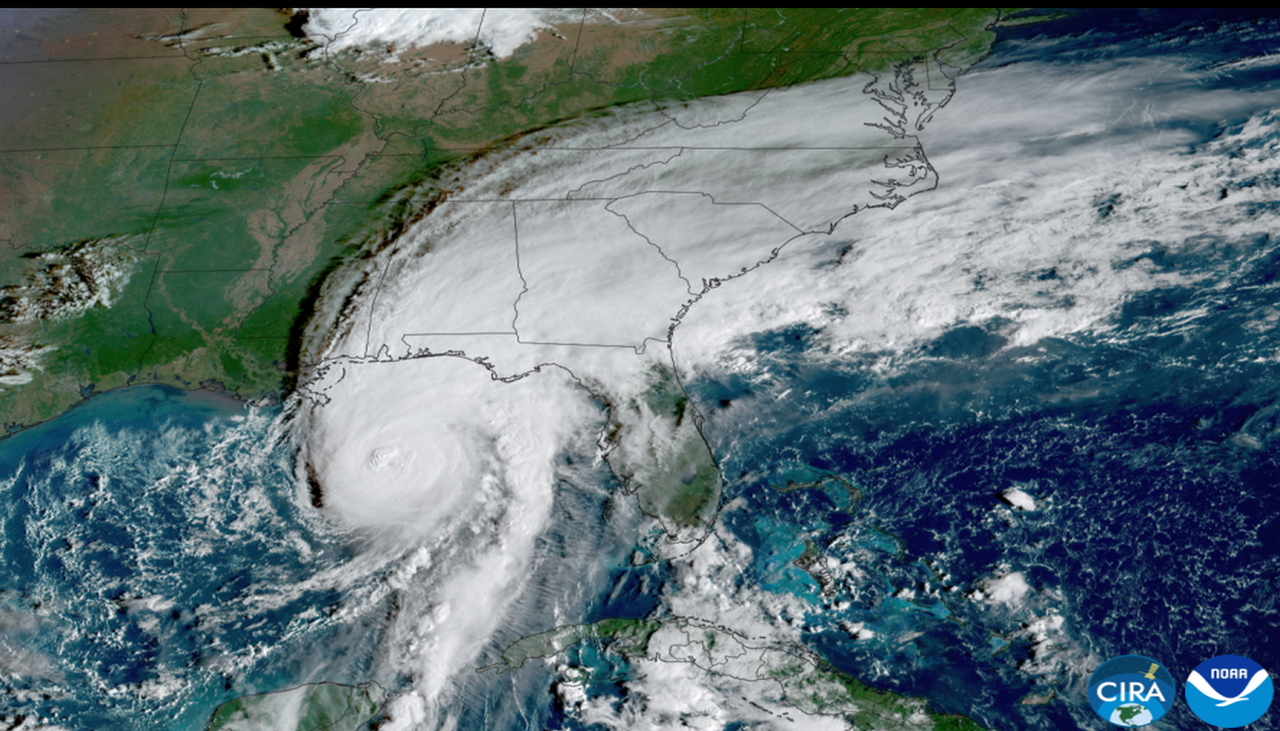
The most notable storm of the season, Hurricane Isaias, made landfall on October 9 as a Category 2 hurricane near Destin, Florida, becoming the first hurricane to make landfall in the continental United States since Milton in October 2024.1
Isaias brought significant storm surge to Panama City Beach, Florida, along with powerful wind gusts and torrential rainfall across much of the southeastern United States.1
Record-breaking Pacific season
The eastern Pacific basin produced 20 named storms, 10 of which became hurricanes, including eight major hurricanes.1
An average season produces 15 named storms, eight hurricanes and four major hurricanes.1
Hurricane Polo became the strongest hurricane of the season after forming in the eastern Pacific on September 20.1
The storm first made landfall in Baja California as a Category 2 hurricane on the evening of September 28, before making a second landfall near Guaymas, Mexico, on September 29 as a Category 1 hurricane.1
Polo impacted coastal regions of Mexico and Baja California Sur, bringing destructive winds, storm surge, and heavy rainfall.1
At its peak, Polo recorded the second-lowest central pressure ever observed in the eastern Pacific basin, at 892 mb, surpassed only by Hurricane Patricia’s record minimum pressure of 872 mb in 2015.1
Storm activity tends to be higher during El Niño years.1
Two disasters in Hawaii
Eight tropical cyclones were recorded in the central Pacific, which includes the Hawaiian Islands.1
Five of the central Pacific cyclones moved into the basin from the eastern Pacific.1
Five of these became named storms within the central Pacific.1
Five hurricanes were recorded in the basin, three of which reached major hurricane status.1
The central Pacific averages four to five tropical cyclones per season.1
On August 16, Hurricane Lala made its closest approach to the Big Island, bringing hurricane-force winds, destructive waves along the coastline, and catastrophic flooding across the island and Maui County, with impacts later extending to Oahu and Kauai County.1
Hurricane Lala’s impacts prompted a major disaster declaration for the City and County of Honolulu, as well as Hawaii and Maui counties.1
In late August, the Hawaiian Islands were impacted once again.1
Hurricane Lowell prompted Hawaii’s second major disaster declaration of the season, affecting Kauai and Maui counties.1
Sources
Every number in the story points here. Each links to the original reporting.
LocalMeteored United States
See a sentence its source doesn’t back up?
Tell us the source number and what’s wrong. We check every report. If we change the story, the fix goes on the corrections page with the old wording.