A ‘Silent War’ Grips Iran as Its Economy Strains Under U.S. Blockade

Key facts
- Cuts to subsidies for fuel and food have put new pressure on the Iranian public.1
- Meanwhile, tensions internally between relative moderates within Iran’s theocracy and hard-liners have burst into the open as officials weigh further.1
- Authorities cut food and electricity subsidies while workers protest unpaid salaries.1
Cuts to subsidies for fuel and food have put new pressure on the Iranian public, while highlighting internal political divides.1
Iran’s president recently went on national television to say what people in the streets already see, as authorities cut food and electricity subsidies while workers protest unpaid salaries: “We have no money.”1
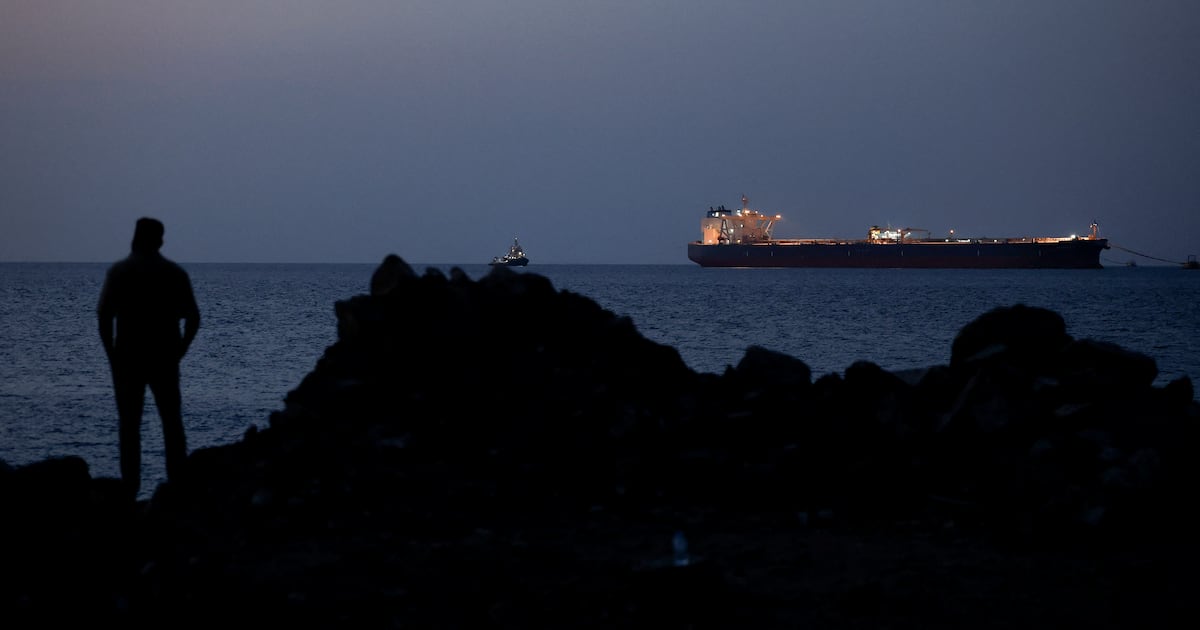
President Masoud Pezeshkian’s comments served as an acknowledgment of the economic pain a U.S. naval blockade is heaping on a country already under intense strain..1 That is being felt at dinner tables across the country as government statistics show food and beverage price inflation over 110% year-over-year.1
It is in the pocket as well.1
Iran’s rial currency has fallen to 2.8 million a dollar, from the 32,000 a dollar seen at the time of Tehran’s 2015 nuclear deal with world powers.1
A silent war
Meanwhile, tensions internally between relative moderates within Iran’s theocracy and hard-liners have burst into the open as officials weigh further escalating the conflict over control of the Strait of Hormuz to break the blockade.1
Ali Vaez, an Iran expert at the International Crisis Group, a Brussels-based think tank, said, “Iran has been living on borrowed economic time for months.”1
That reckoning is something Masoud Pezeshkian hinted at during his televised remarks Nov. 20, and then the next day addressing a conference in Tehran.1
Pezeshkian said, according to the state-run IRNA news agency, “We are engaged in a silent war that is far more difficult than one in which missiles are launched and destruction is caused.”1
Subsidy cuts and blackouts
A decision in the summer to reduce gasoline subsidies triggered massive queues at the pump.1
Iran’s state electricity company, Tavanir, has begun rolling blackouts to ration power, with outages lasting up to two hours a day in some locations.1
Tavanir said damage at Iran’s natural gas fields during the war had led to fuel shortages.1
Iranians should brace for worsening outages in the winter, said Reza Sepahvand, a spokesman for parliament’s energy commission.1
Power stations around Tehran burn mazut, a high-polluting, low-quality fuel common in former Soviet bloc countries, to generate electricity.1
Authorities have used methanol to stretch gasoline supplies.1
Flour and bread cuts
Authorities cut allocations of cheap flour and bread in seven of Iran’s 31 provinces, said Hossein Zafari, the spokesman of the country’s Flour and Bread Council.1
Flour shortages after the cuts led to protests by bakers in Iran’s western Zanjan province and other areas, Zafari told Nour News, a website affiliated with Iran’s Supreme National Security Council.1
The government more than doubled the price it charges consumers of industrial flour, the Pasta Manufacturers Employers’ Association told Iranian state media.1
The government had no choice but to resort to such cuts because it lacks the political mandate for broad subsidy reforms, said Esfandyar Batmanghelidj, the founder and chief executive of London-based economic think tank the Bourse & Bazaar Foundation.1
Two years may be a long time for Iran’s people, who have seen living conditions further deteriorate in recent years.1
Sources
Every number in the story points here. Each links to the original reporting.
LocalHindustan Times
See a sentence its source doesn’t back up?
Tell us the source number and what’s wrong. We check every report. If we change the story, the fix goes on the corrections page with the old wording.