Aaronson: AI labs hold results that could break cryptography

Key facts
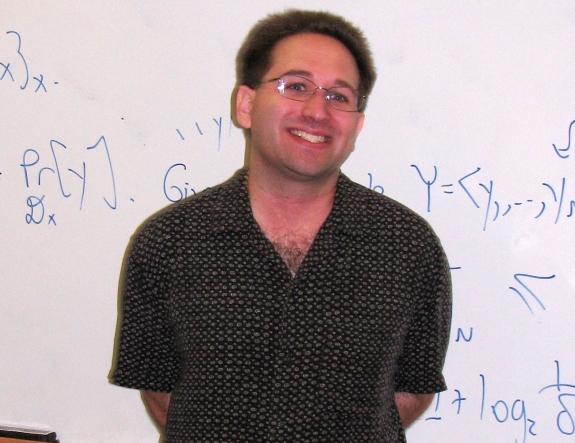
- Computer scientist Scott Aaronson says he is “virtually certain” that leading AI labs are holding back results that would break some of today’s cryptography.1
- Aaronson wrote, “Because people have been hounding me about it: yes, I’m virtually certain, from multiple reliable sources, that the AI labs are now sitting on one or more bombshells in that area.”1
- The post followed a comment Aaronson left on his blog on Tuesday.1
Computer scientist Scott Aaronson says he is “virtually certain” that leading AI labs are holding back results that would break some of today’s cryptography.1
Aaronson made the claim in a post on his blog, Shtetl-Optimized, on Wednesday.1
Aaronson warns of results that could break encryption
Aaronson wrote, “Because people have been hounding me about it: yes, I’m virtually certain, from multiple reliable sources, that the AI labs are now sitting on one or more bombshells in that area.”1
He said he feels “much, much less confident” about what exactly they are until he sees details or hears from someone at a lab.1
Aaronson said he does not know what those results actually are.1
Aaronson pushed back on the RSA rumour
The post followed a comment Aaronson left on his blog on Tuesday.1
In that comment, Aaronson said he had heard “many, many rumors” that one or both labs had a fast way to factor large numbers.1
That would break RSA, the encryption behind much of the web’s security.1
The comment spread widely on X, and he later added a note to it.1
Google paper holds big results, Aaronson says
Google published a paper on Wednesday with a new factoring algorithm.1
Aaronson said the Google paper held big theoretical results, but nothing of practical use for breaking encryption.1
Rumours come during a run of maths results from OpenAI and Anthropic
The rumours come during a run of maths results from OpenAI and Anthropic.1
On Tuesday, both labs published proofs of VP ≠ VNP.1
The VP ≠ VNP problem has long been seen as a step towards P ≠ NP, the most famous open question in computer science.1
OpenAI also posted a paper claiming that the exponent of matrix multiplication is exactly 9/4.1
The 111-page paper says multiplying two n×n matrices takes at least n9/4/2 multiplication or division steps.1
The question dates back to Volker Strassen’s work in the late 1960s.1
Last week, Anthropic mathematician Levent Alpöge said he and Claude had proved the Riemann hypothesis.1
The Lean proof assistant has since certified the proof.1
In October, OpenAI said its model had disproved a famous hypothesis.1
Aaronson asks readers not to let cryptography overshadow the maths
Aaronson asked readers not to let cryptography overshadow the maths.1
If their main worry was a Bitcoin wallet, he wrote, they should look for rumours elsewhere.1
He also urged people to accept that the AI proofs are real, now that labs back them with Lean certificates.1
Sources
Every number in the story points here. Each links to the original reporting.
Localthenextweb.com
See a sentence its source doesn’t back up?
Tell us the source number and what’s wrong. We check every report. If we change the story, the fix goes on the corrections page with the old wording.