AI-assisted proof of Riemann hypothesis announced


Key facts
- Eugenia Cheng has dismissed the Riemann proof as not really maths at all.1
- At the core of the problem is the question of how prime numbers are distributed along the number line: the integers from 1 to infinity.1 Prime numbers are not exactly divisible by smaller whole numbers, with the trivial exception of 1.1
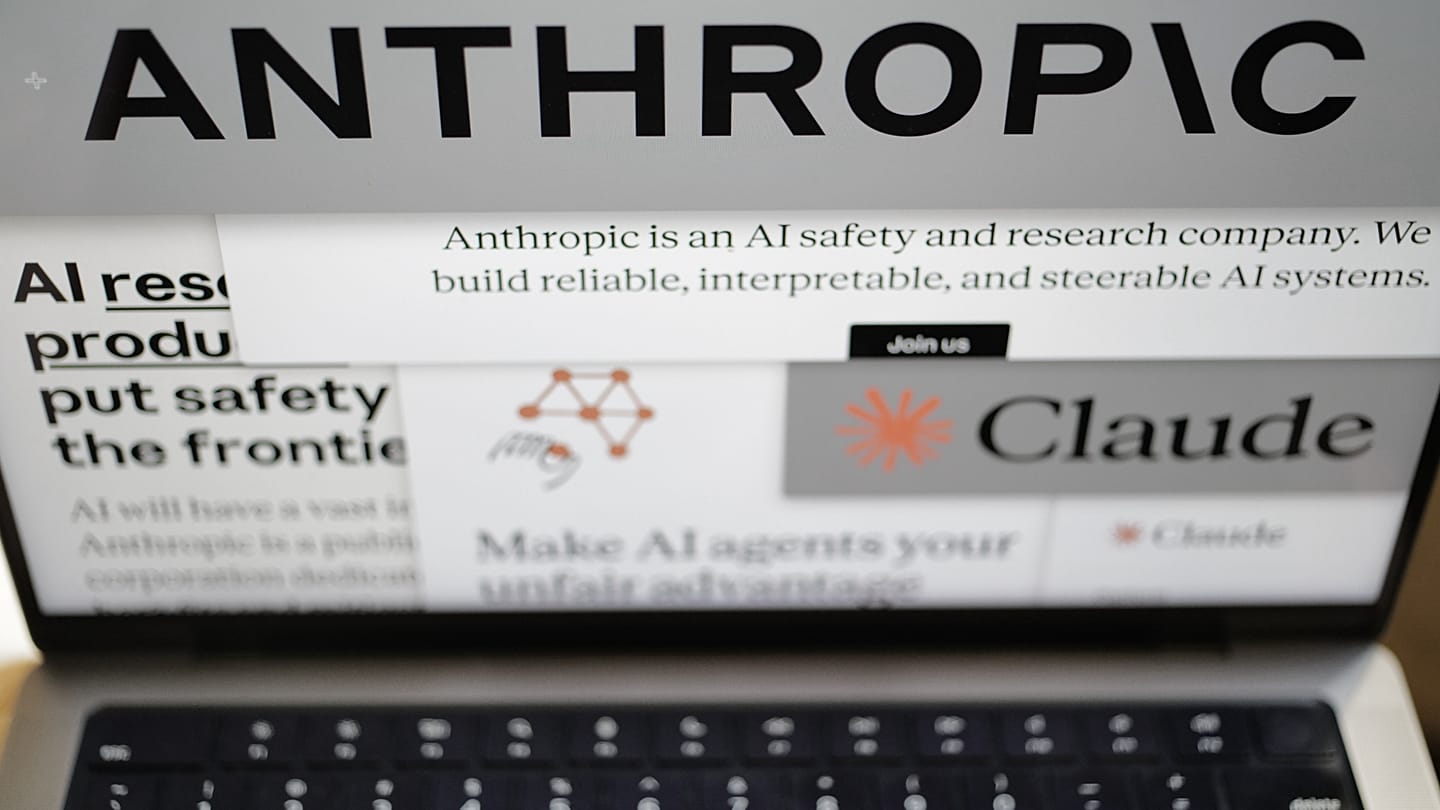
- Levent Alpöge’s proof comes in the form of 250,000 pages of calculations developed with Anthropic’s Claude AI model.1 Researchers use an automated algorithm called Lean to check proofs for any inconsistencies with the fundamentals of maths.1
Levent Alpöge, working at Anthropic, announced an AI-assisted proof of the Bernhard Riemann hypothesis.1
James Maynard is a leading expert on the subject and is based at Oxford University..1
“This is an absolute historic milestone for mathematics,” he said.
The Riemann hypothesis was one of the most important unsolved problems in mathematics..1 In October, OpenAI reported a proof of a slightly weaker version called the quasi-Riemann hypothesis..1 The full-strength proof was clearly in the offing.1
What the Riemann hypothesis is
At the core of the problem is the question of how prime numbers are distributed along the number line: the integers from 1 to infinity..1 Prime numbers are not exactly divisible by smaller whole numbers, with the trivial exception of 1.1
The number 91 looks like a good candidate, say, but is actually the product of 13 and 7..1 Riemann put forward a hypothesis about the numbers that, when fed into the zeta function, make the function equal to zero.1
An AI-assisted proof
Alpöge’s proof comes in the form of 250,000 pages of calculations developed with Anthropic’s Claude AI model..1 Researchers use an automated algorithm called Lean to check proofs for any inconsistencies with the fundamentals of maths.1
The Lean code verification is over 17 million lines long..2 It took 88 hours for these agents to find their solution.2 A further 17 hours was needed to have the solution verified through formalisation and verification software called Lean.2
A human-derived proof
While others will be trying to mine the gargantuan AI proof, there may be hope at hand..1 The announcement prompted Alessandro Masullo, a Rome-based mathematician, to release a wholly human-derived proof of the Riemann hypothesis that he had been working on for 12 years, and which runs to a mere 940 pages.1
A year of AI breakthroughs
From April this year, a steady stream of impressive AI-discovered results emerged..2 The first breakthrough was by OpenAI on the Erdős unit distance conjecture and the Jacobian conjecture, both of which had been unsolved for decades..2 The unit distance problem was posed by mathematician Paul Erdős.2
In September and October, OpenAI announced a solution to the Navier-Stokes problem..2 The Navier-Stokes problem is one of the seven “millennium problems” highlighted by the Clay Mathematics Institute in the year 2000..2 OpenAI set 10,000 AI agents to work collaboratively on the Navier-Stokes equation.2
OpenAI released a trove of over 700 papers claiming solutions, proofs or counter-examples to 372 open problems.2
What the future holds
For many, the year 2026 will be remembered as the one where mathematics had an identity crisis and forever changed.2
Sources
Every number in the story points here. Each links to the original reporting.
CenterStuff
LocalThe New World
See a sentence its source doesn’t back up?
Tell us the source number and what’s wrong. We check every report. If we change the story, the fix goes on the corrections page with the old wording.