Key facts
More than 150 child safety groups and experts across six continents have urged Amazon and eBay to stop selling AI toys this Christmas until they are proved to be safe.1
The coalition called for the online retailers to stop the sale of AI toys and offer refunds to customers who have already bought one.1
The coalition includes Jonathan Haidt’s The Anxious Generation Movement and UK and US child safety groups.1
A letter to the online retailers
In a letter sent to Amazon’s president, Andy Jassy, and eBay’s president, Jamie Iannone, the coalition called for the online retailers to stop the sale of AI toys and offer refunds to customers who have already bought one.1
The letter stated that nearly 30 AI-enabled toys were available on Amazon’s UK website in late October, while about 50 were recently found on sale on Amazon in the US.1
The letter also asked for the Office for Product Safety and Standards (OPSS) to issue an alert for parents and retailers about the risks of buying AI toys before Christmas.1
Signatories include MPs Jess Asato, Sharon Hodgson, Andrea Leadsom and Caroline Dinenage.1
Testing by child safety groups
When tested by the UK group Alliance 4 Children, the toy suggested a child could give consent to being touched for pleasure.1
The listing was pulled by Amazon, but after 48 hours the toy returned to the platform under a new retailer, according to Alliance 4 Children.1
The second listing has now been removed by Amazon.1
Calls for evidence closed on 6 October
The government launched a review into its toy safety regulation in July, including the emerging risks posed by AI-enabled toys.1
Calls for evidence closed on 6 October.1
Amazon and eBay respond
A spokesperson for Amazon said the company requires all products sold by third-party sellers in its store to comply with applicable laws and regulations.1
A spokesperson for eBay said the company is committed to protecting buyers and sellers on its marketplace.1
Regulatory pressure in the US
California is set to prohibit toys incorporating AI companion chatbots for children under 16 from January 2027, while proposed federal legislation is seeking broader restrictions on the technology in children’s toys.2
New York and California are the only two states in the U.S. with bans on toys with AI chatbots.3
New York’s ban does not take effect for another three months and will expire in five years.3
Toymakers that do not comply could be fined $15,000 per day.3
California’s ban goes into effect after the holiday season and will expire after four years.3
Child safety advocates argue
Child safety advocates argue that software updates and changes to underlying AI models could alter a toy’s behaviour after it has been purchased, potentially exposing children to inappropriate content.2
The coalition has highlighted reported incidents involving AI-powered toys engaging children in sexually inappropriate conversations and providing information about potentially dangerous household objects.2
Concerns have been raised about inconsistent age recommendations across online product listings.2
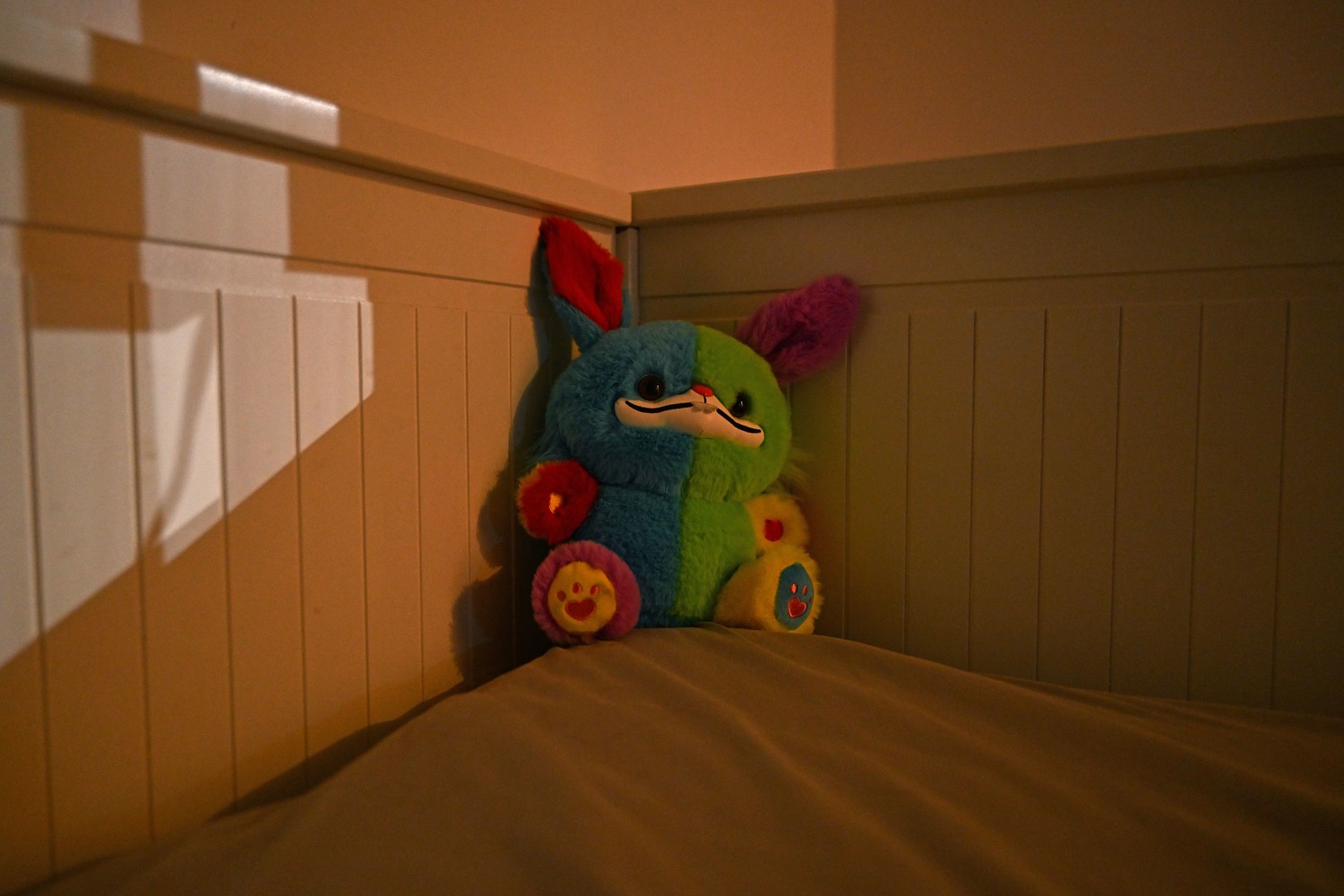
An example identified involves a plush rabbit marketed to children aged three and above that connects to general-purpose AI chatbots, including ChatGPT, which has a minimum user age of 13.2
Advocates are seeking restrictions on marketing that positions AI-powered toys as friends or companions, amid concerns about the potential emotional and developmental consequences of children forming relationships with artificial intelligence.2
A recent report by the U.S. Public Interest Research Group
Last Tuesday, the United States Public Interest Research Group published a report after testing seven AI toys.1
The report found that most of the products reviewed were still too faulty to be on the market and had big privacy issues or responded inappropriately to questions from children.1
Hapiko One toy was found to unexpectedly take photos of the testers.1
A letter signed by 52 MPs and peers
On Friday, a letter signed by 52 MPs and peers was handed in at No 10, calling for the business secretary, Jonathan Reynolds, to restrict the sale of AI toys until they are proved safe.1
Amazon and eBay have been asked to respond to the coalition’s demands by Christmas
Amazon and eBay have been asked to respond to the coalition’s demands by Christmas, placing further scrutiny on the responsibilities of online marketplaces as AI becomes increasingly integrated into consumer products.2