Key facts
Bahrain accused Iran of striking a civilian industrial facility on Saturday, November 21, 2026, causing a fire and damage but no casualties, while two tankers were hit in the Strait of Hormuz.1
Residents told AFP they saw smoke rising over Sitra Island, on Bahrain’s east coast, home to several industrial sites including a refinery run by state oil company Bapco.1
Iran’s Revolutionary Guards Attack Bases in Bahrain
Iran’s Revolutionary Guards said missile and drone strikes were conducted on the Al-Riffa and Awali bases in Bahrain.2
Two radars belonging to the US Army’s Patriot air defense systems were struck.2
Tankers Hit in Strait of Hormuz
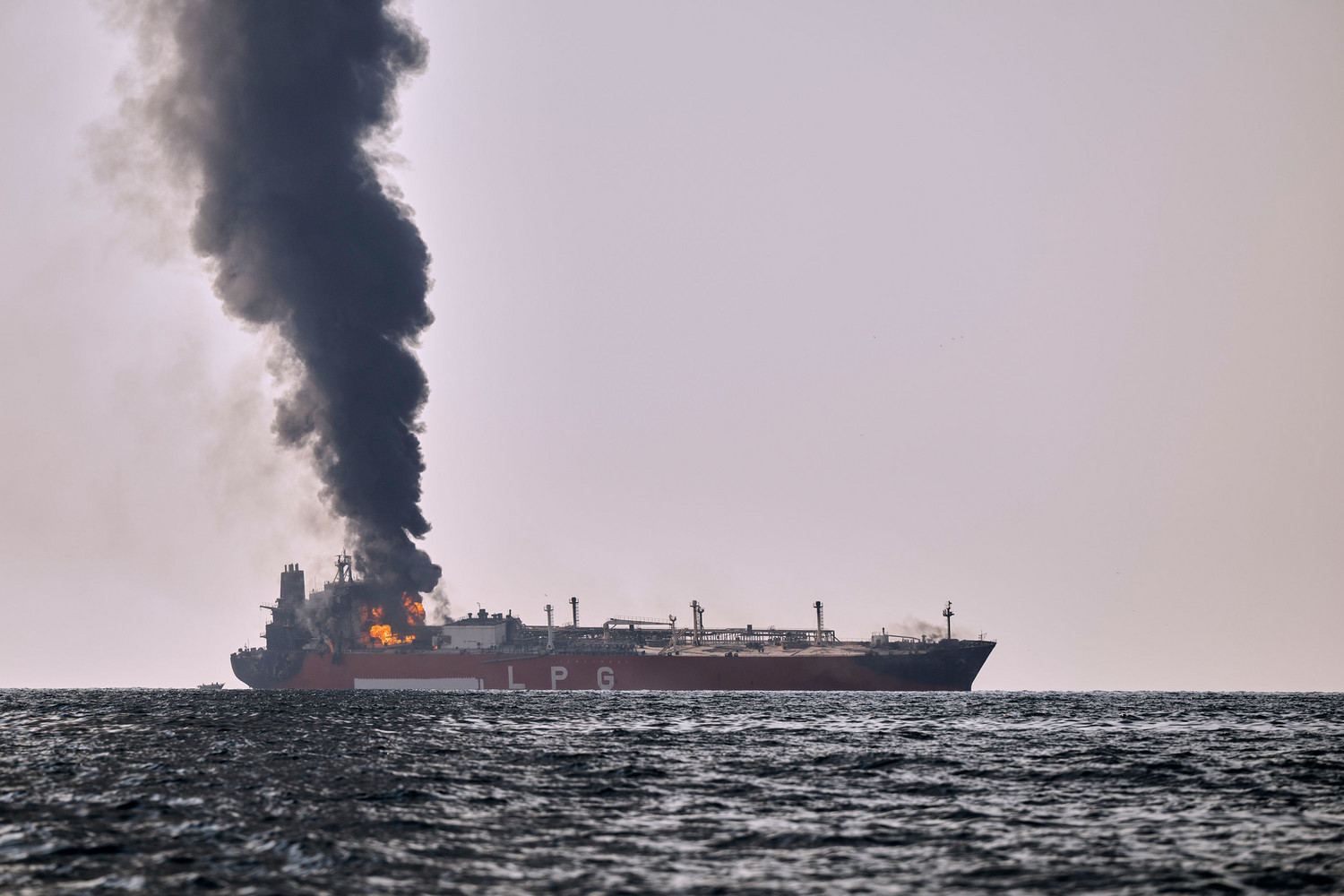
British maritime agency UKMTO said on Saturday, November 21, 2026, one tanker was struck by an unknown projectile while transiting Hormuz.1
UKMTO said another tanker was hit in its engine room.1
“There are no reported casualties at this time,” UKMTO said.1
Iran’s army later reported a ship was on fire after entering a restricted zone and hitting a mine in the strait.1
The tanker had switched off its identification and navigation systems in defiance of issued warnings and maritime transit regulations.1
Tehran has repeatedly reported ships catching fire in the strait in recent weeks, often claiming they struck mines.1
The U.S. military recently said it had cleared all mines from the main routes through the waterway.1
Talks And Demands
Iranian deputy Foreign Minister Kazem Gharibabadi said on Saturday, November 21, 2026, that a Qatari delegation visited Tehran the previous evening and held two hours of talks.1
“We have made this known to the other parties, including the mediators,” Gharibabadi said.
Foreign Minister Abbas Araghchi said the ongoing talks in the region must be given a chance and the blockade must be lifted rationally.1
“The ongoing talks in the region must be given a chance, and the blockade must be lifted rationally,” Araghchi said.
Iran’s demands include ending the war on all fronts, unfreezing Iranian assets, lifting oil sanctions and ending the U.S. counter-blockade of Iranian ports.1
Economic Asphyxiation Campaign
Washington announced an economic asphyxiation campaign on Iran in August aimed at curbing its trade and financial flows.2
Gharibabadi said Saturday, according to Iran’s Tasnim news agency, that the economic blockade is an act of war and he will take all necessary measures to lift it.2
Araghci reiterated that Tehran would not allow its stockpiles of enriched uranium in an interview published on Saturday by the state-run Iran Daily newspaper.2
Oil And The Struggle
The Gulf kingdom has suffered several attacks this week, ending a weeks-long lull in the conflict that began with US-Israeli strikes on Iran in late February.2
The U.S. military, meanwhile, has been escorting ships through the strategic strait, which carried one-fifth of the world’s oil before the war, and maintains its own counterblockade of Iranian ports.1
U.S. Central Command said last month it had helped Gulf countries export 1.5 billion barrels of oil via Hormuz since the summer.1
American fighter jets struck an Iranian missile site on Qeshm last Tuesday, according to a US military official.1