Key facts
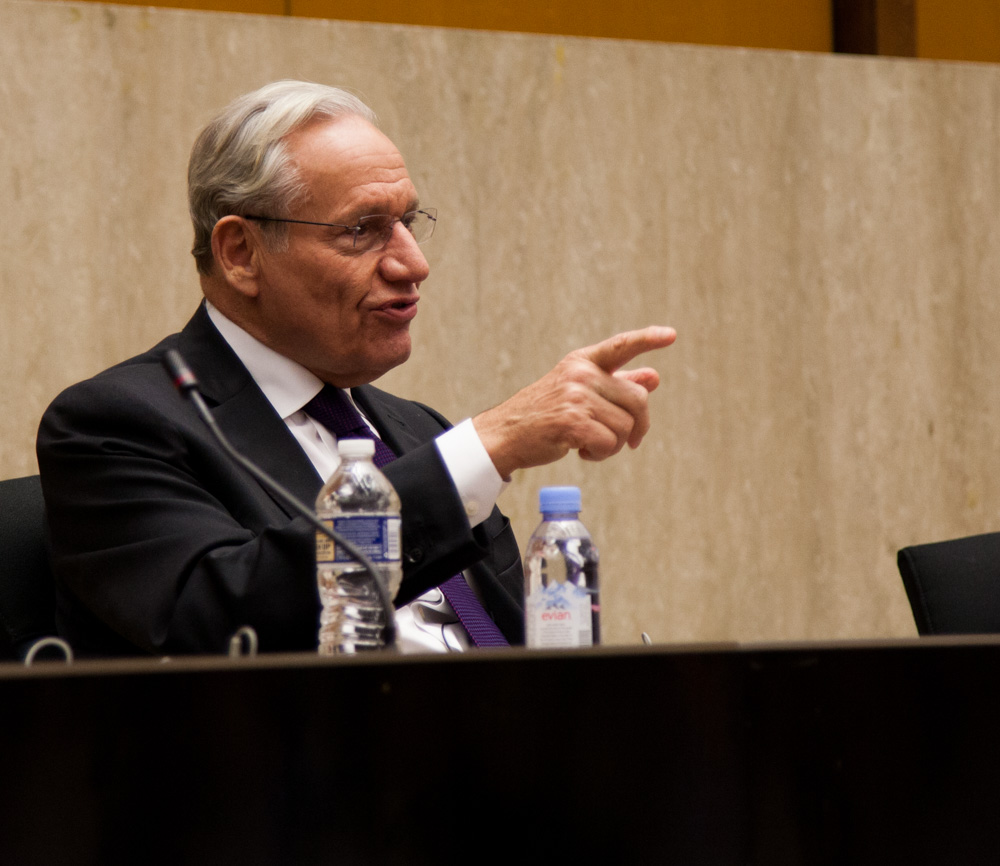
After more than half a century as one of the world’s most famous journalists, Bob Woodward still isn’t quite used to being on the receiving end of an interview.1
Woodward, an author and longtime Washington Post reporter, spoke recently from the living room of the Georgetown townhouse he shares with his wife and fellow reporter, Elsa Walsh.1
The townhouse is a 19th-century residence.1
A defining outsider at the Post
Woodward made his name in the 1970s as one of the defining outsiders, a recent hire at the Post who helped break the Watergate scandal and bring down President Richard Nixon.1
He was denied access to Nixon.1
In the decades following, Woodward became a veritable brand for inside stories on Washington power, with a long run of bestselling books on the White House, the Supreme Court, the intelligence community and the military leadership.1
He has since met with sitting presidents from both major political parties, from Democrat Jimmy Carter to Republican Donald Trump, and has become as much a Washington fixture as the leaders of a given administration.1
A memoir of sources and skepticism
In his new book, “Secrets: A Reporter’s Memoir,” out Tuesday, Woodward tells his own story, sharing his worldview and how it connects with his job.1
Woodward defines himself as a longtime skeptic whose first real work of investigation was into his parents' marriage, which appeared to him so troubled that, at age 11, he searched their bedroom and found a letter from his mother to his father referring to “our divorce.”1
He confronted his father, who confirmed the breakup.1
Woodward opens up about himself in “Secrets” and, to some controversy, about some of his sources — from former national security adviser Brent Scowcroft to former White House aide Richard Darman, with whom Woodward formed a close friendship.1
Woodward writes that many of the sources had died or acknowledged their ties to him in their own books, papers and oral histories.1
Skepticism, sources and door-knocking
During his interview with The Associated Press, Woodward discussed his reluctance to identify with political ideologies, his disappointment in Washington Post owner Jeff Bezos and the unflagging rush of door-knocking, a practice he vows to maintain even if he must knock with a cane.1
“If you ask something, I may naturally ask you a question,” Woodward said. “Sometimes they say interesting things, but the real interesting information comes from people who are close to the president, who work for the president.”
“You must look everywhere things could be hidden because they are hidden,” Woodward wrote.