Eastern India Study Finds High Stunting and Anaemia Among Indigenous Girls

Key facts
- Researchers evaluated the prevalence of malnutrition, anaemia, selected biochemical indicators, and nutrition knowledge.1
- According to the investigation, 71.1 percent of the evaluated students had anaemia, while stunting affected 44.6 percent of participants.1
- Anthropometric measurements of the 594 participating girls were evaluated against World Health Organization growth standards.1
A school-based cross-sectional study in Eastern India reports high levels of undernutrition alongside widespread anaemia among Indigenous adolescent girls.1
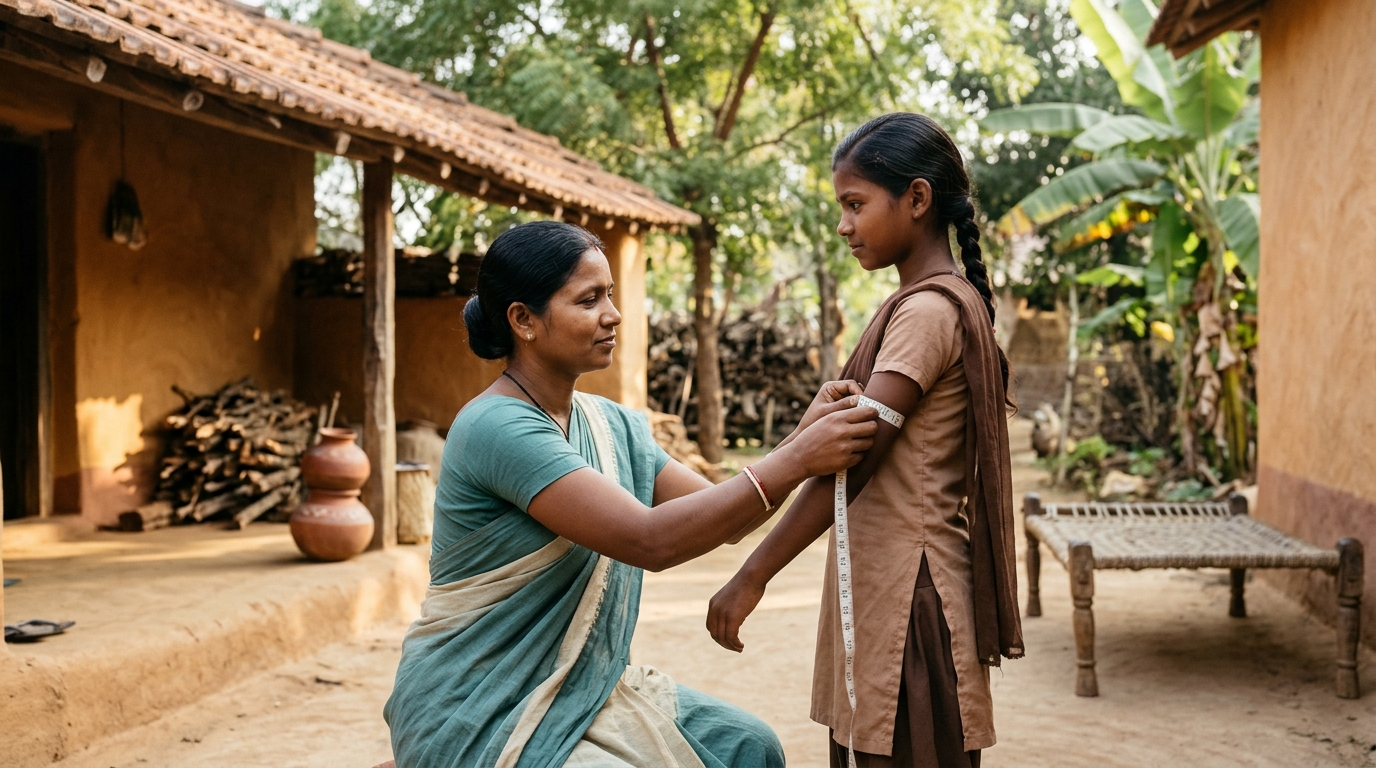
The investigation was conducted among Indigenous adolescent girls aged 10 to 19 attending government schools in the Ranchi District of Jharkhand, India.1
High Rates of Anaemia and Stunting
According to the investigation, 71.1 percent of the evaluated students had anaemia..1 Stunting affected 44.6 percent of participants..1 Rates of overweight and obesity remained rare at 2.9 percent.1
The authors concluded that Indigenous adolescent girls in Jharkhand experience a substantial burden of stunting and thinness alongside high anaemia prevalence and minimal overnutrition.1
Biochemical Indicators and Nutrition Knowledge
In addition to haemoglobin, the team measured serum calcium, magnesium, albumin, and total protein levels..1 Most participants maintained normal concentrations across all four of these biochemical indicators.1
Nutrition knowledge was measured across the cohort using a structured questionnaire..1 Among the 594 participants, the evaluation found a mean nutrition knowledge score of 5.03 with a standard deviation of 2.54.1
Regression Models and Recommendations
In adjusted linear regression models, age was positively associated with body mass index, yielding a beta of 0.71, a 95 percent confidence interval of 0.59 to 0.84, and p less than 0.001..1 Geographic location also mattered: girls in non-rural areas had higher body mass index values than rural residents, with a beta of 0.90, a 95 percent confidence interval of 0.13 to 1.68, and p equal to 0.024.1
The regression models linked maternal schooling to haematological status..1 Middle-level maternal education was positively associated with adolescent haemoglobin concentration, recording a beta of 0.20, a 95 percent confidence interval of 0.04 to 0.36, and p equal to 0.019.1
Standard errors across the analyses were clustered at the school level.1
The authors stated that comprehensive adolescent-focused nutrition strategies are needed to tackle undernutrition, reduce anaemia, and resolve nutrition-related knowledge gaps among Indigenous adolescent girls.1
Sources
Every number in the story points here. Each links to the original reporting.
CenterBioengineer.org
See a sentence its source doesn’t back up?
Tell us the source number and what’s wrong. We check every report. If we change the story, the fix goes on the corrections page with the old wording.