
Key facts
- IAEA chief Rafael Grossi said North Korea has built an extension on its original uranium-enrichment plant at the Yongbyon nuclear complex.1
- The International Atomic Energy Agency (IAEA) has been unable to access North Korea since Pyongyang expelled its inspectors in 2009.1
- Kangson lies just southwest of Pyongyang.1
North Korea has been expanding its original uranium enrichment facility at its main Yongbyon nuclear complex, the head of the U.N. nuclear watchdog said.1 2
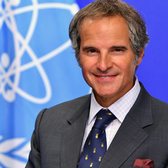
The assessment by International Atomic Energy Agency Director General Rafael Grossi came as U.S. President Donald Trump expressed his eagerness to meet North Korean leader Kim Jong Un while he was in Asia for a regional forum in China.1 2
IAEA update on Yongbyon plant
Grossi addressed the ongoing operation of enrichment facilities at Yongbyon and Kangson during a quarterly meeting of the IAEA’s Board of Governors.1
He said a further extension to the original Yongbyon enrichment facility has been under construction since mid-September 2026, with the new extension externally complete by late October 2026.1
“Since mid-September 2026, a further extension to the original Yongbyon enrichment facility has been under construction with the new extension externally complete by late October 2026,” Grossi said.
The IAEA has been unable to access North Korea since Pyongyang expelled its inspectors in 2009, and now relies primarily on satellite imagery to monitor the country’s nuclear activity.1
Concern over nuclear program
Grossi said the ongoing expansion of North Korea’s uranium enrichment program remains “a cause for serious concern.”1
“The ongoing expansion of the DPRK’s uranium enrichment program remains a cause for serious concern,” Grossi said.
Enriched uranium is used as fuel for nuclear power plants and the nuclear reactors that run naval ships and submarines, and can also be used in nuclear weapons.1
Other nuclear facilities
Grossi said the IAEA has observed indications that the 5-megawatt nuclear reactor at Yongbyon that North Korea uses to produce plutonium from spent fuel probably continues to operate and is in its seventh irradiation cycle.3
After the seventh irradiation cycle, the spent fuel would be removed for reprocessing.3
Another, light-water reactor at Yongbyon has been operating since April of this year.3
North Korea’s nuclear stance
North Korea, formally known as the Democratic People’s Republic of Korea (DPRK), has carried out several nuclear tests and appears to continue to produce the two materials with which one can make the core of a nuclear weapon — highly enriched uranium and plutonium.3
In March, soon after the US and Israel launched strikes on Iran, Kim accused Washington of “global terrorism and aggression.”1
In September 2024, North Korea revealed its first covert uranium-enrichment plant, and Kim delivered a speech including a call for “exponentially” expanding the country’s nuclear arsenal.1
In September, the IAEA passed resolutions at its annual conference regarding concerns about the North Korean nuclear program.1
Kim Yo Jong, the powerful sister of Kim Jong Un, said in response that the country’s nuclear-armed status was “absolute,” calling those expecting denuclearisation “idiots.”1