
Key facts
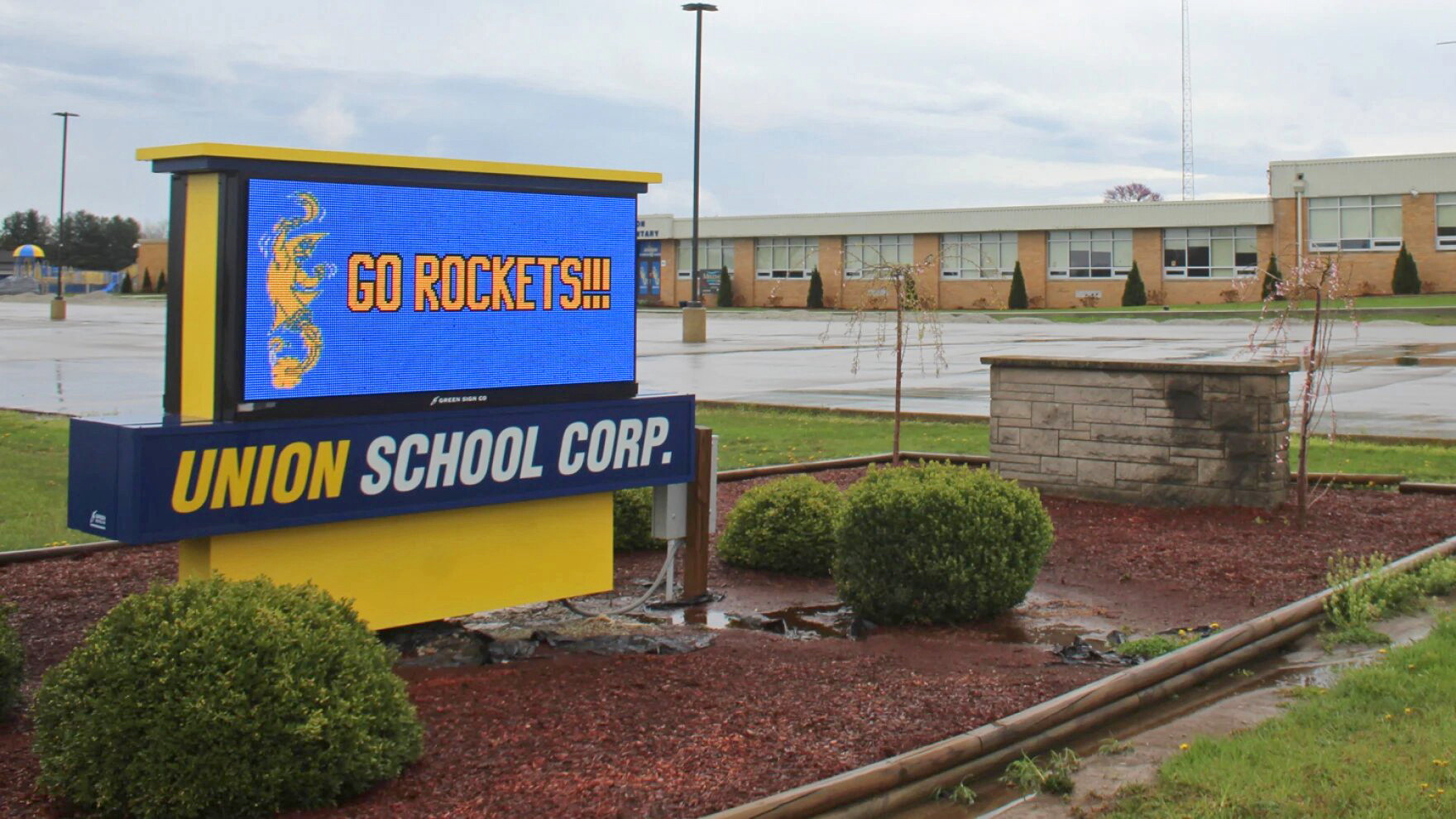
- Indiana Attorney General Todd Rokita is appealing a judge’s ruling last month that struck down a state law mandating the closure of the small Union School Corp.1 The appeal to the Indiana Supreme Court is on behalf of Gov. Mike Braun.1 The outcome of the appeal could determine the ability of Indiana’s state lawmakers to unilaterally shut down a school district that they deem inadequate.1
- A special Randolph Superior Court judge ruled Oct. 23 that the law violated the state constitution by creating legislation targeting Union.1 The state argued in a Nov. 18 court filing that the lawsuit presents “significant constitutional questions that have implications for the Indiana General Assembly and public education in the state.”1 A spokesperson for the attorney general’s office did not respond to a request for comment.1
- Rep. J.D. Prescott (R-Union City), the lawmaker who wrote the amendment to dissolve Union, has cited low standardized test scores and declining enrollment as among his concerns.1 State records show that 238 out of the 375 students living within Union district boundaries transferred to another public school district in the fall of 2025-26 — with the greatest number of students attending Monroe Central School Corporation, Nettle Creek School Corporation, Randolph Southern School Corporation and Blue River Valley Schools.1 The vast majority of Union’s students transfer from other districts across the state to enroll in its virtual schools.1
Indiana Attorney General Todd Rokita is appealing a judge’s ruling last month that struck down a state law mandating the closure of the small Union School Corp..1 The appeal to the Indiana Supreme Court is on behalf of Gov. Mike Braun..1 The outcome of the appeal could determine the ability of Indiana’s state lawmakers to unilaterally shut down a school district that they deem inadequate.1
The case stems from Senate Enrolled Act 1, passed in 2025, which ordered the dissolution of the Union school district after the 2026-27 school year..1 Under the law, Union’s students and funding were to be split between two neighboring school districts — Monroe Central Schools and Blue River Valley Schools..1 The measure to dissolve the district was adopted in the Indiana House without debate.1
A judge blocked the law
A special Randolph Superior Court judge ruled Oct. 23 that the law violated the state constitution by creating legislation targeting Union..1 The state argued in a Nov. 18 court filing that the lawsuit presents “significant constitutional questions that have implications for the Indiana General Assembly and public education in the state.”1 A spokesperson for the attorney general’s office did not respond to a request for comment.1
Union Superintendent Galen Mast argued that the appeal is the state’s attempt to set precedent to allow the General Assembly to shut down not only school districts, but other public entities throughout the state..1 Mast told WFYI, “If they can get this passed through the judicial side, then they have all three branches saying that it’s okay for a legislative body to decide who lives and dies when it comes to the public entity. And it’s no longer in the hands of the people, it’s in the hands of the legislature. The state will resume A-F ratings for schools later this year, although the consequences for underperforming schools are not dictated in state law. Mast said the district did not receive an F rating. I think their goal is to shut down the schools” “And they want to be able to do it immediately.”1
Why the district was targeted
Rep. J.D. Prescott (R-Union City), the lawmaker who wrote the amendment to dissolve Union, has cited low standardized test scores and declining enrollment as among his concerns..1 State records show that 238 out of the 375 students living within Union district boundaries transferred to another public school district in the fall of 2025-26 — with the greatest number of students attending Monroe Central School Corporation, Nettle Creek School Corporation, Randolph Southern School Corporation and Blue River Valley Schools..1 The vast majority of Union’s students transfer from other districts across the state to enroll in its virtual schools.1
The appeal to the Indiana Supreme Court on behalf of Gov. Mike Braun continues a contentious case that has drawn the attention and concern of educators and district leaders in rural areas, where they’ve faced the threat of school consolidation.1