Iran’s Missile Cities Inspired Arab Allies' Underground Warfighting

Key facts
- Iran’s missile programme was born out of desperation during the 1980–1988 war with Iraq, when Saddam Hussein’s forces were attacking Iranian cities with missiles while Tehran lacked the means to respond in kind.1
- Amir Ali Hajizadeh, head of the Guard’s airforce, became closely associated with Iran’s underground infrastructure after a visit to North Korea, where he reportedly encountered underground missile-launching silos.1
- Iran helped Hamas develop its military capabilities, and the history of underground warfare in Gaza, Lebanon and Yemen shows that each group had compelling reasons of its own to go underground.1
Iran’s missile programme was born out of desperation during the 1980–1988 war with Iraq..1 According to Ali Bilali, Iranian commanders travelled to Syria and Libya and eventually secured two launchers and approximately 30 missiles, “North Korea subsequently became another important supplier.”1 North Korea subsequently became another important supplier.1
The Iranian model itself was partly inspired by foreign experiences..1 For the Islamic Republic’s military commanders, the lesson was straightforward: without a credible retaliatory capability, Iran would remain vulnerable to its enemies.1
From a Toyota station wagon to a national network
According to Bilali, Iran’s first missile operations in 1984 involved just seven or eight men who travelled from Tehran to Kermanshah close to the Iraqi border in a Toyota station wagon..1 The equipment needed for the operation could fit into the vehicle..1 The assumption was that a future confrontation with the United States or Israel was likely, and that Iran needed to preserve its fighting capacity after an initial attack.1
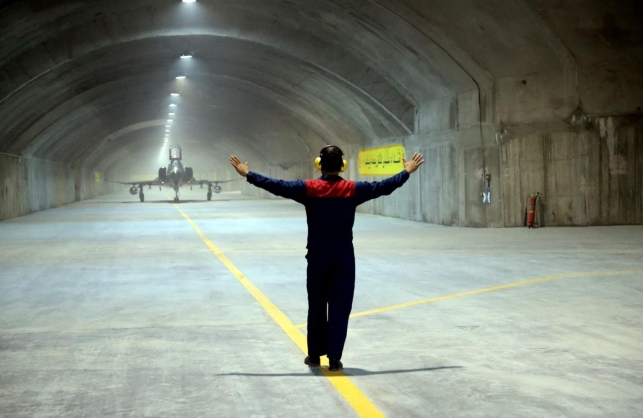
The larger transformation came from the late 1990s onward..1 According to Bilali, Iran began dispersing missile units from their concentration around Tehran to locations across the country.1 The result was an expanding network of protected facilities, some reportedly hundreds of meters underground.1
A visit to North Korea sparks a plan
Amir Ali Hajizadeh, head of the Guard’s airforce, became closely associated with Iran’s underground infrastructure..1 During a visit to North Korea, Hajizadeh reportedly encountered underground missile-launching silos and returned determined to develop something similar in Iran.1 Without detailed engineering plans, he assembled a team to design an Iranian version.1
One detail in Nasser Kaveh’s account is particularly revealing..1 According to Kaveh, Hajizadeh pioneered the construction of what became known as Iran’s missile cities..1 The project began with a few young engineers building rudimentary tunnels and storage facilities.1
A public reveal and a new role for the cities
In October 2015, the IRGC publicly revealed one of its missile cities, turning what had been a secret military project into an instrument of political messaging..1 The purpose was not simply to hide missiles..1 The purpose was to convince potential adversaries that Iran could absorb devastating attacks and still retaliate.1
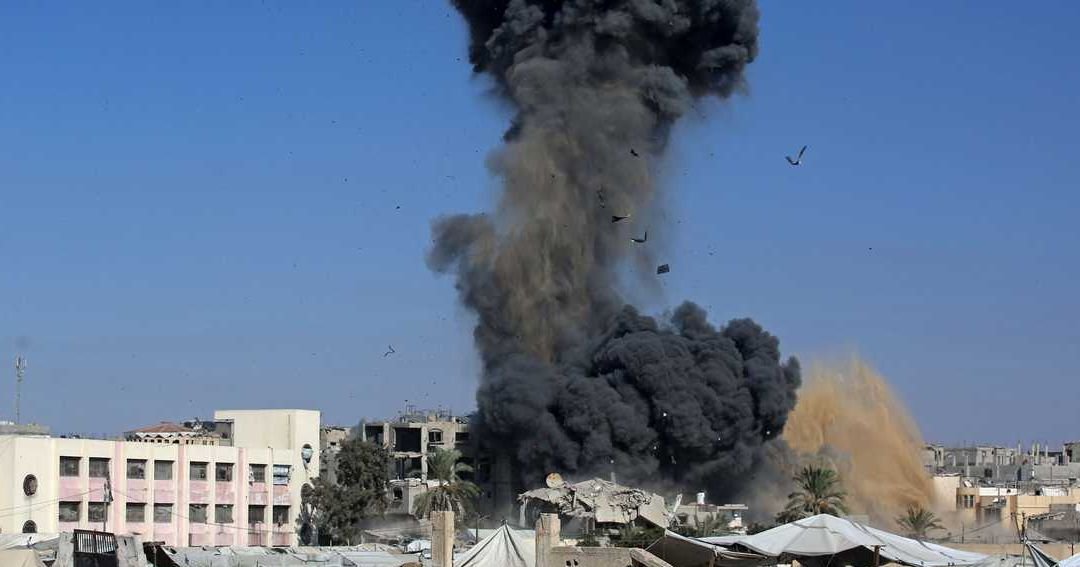
When it comes to Iran and its Arab non-state allies, the conventional wisdom is that Tehran is the all-giving mothership, supplying the money, weapons, training and know-how and ideological direction that guide their every move..1 There is considerable truth to Iran’s central role, but the notion that Hezbollah in Lebanon, Hamas in Gaza and the Houthis in Yemen are merely extensions of Iranian power overlooks an important part of their history..1 Take the extensive underground military infrastructure these groups have built..1 The resemblance to Iran’s own underground missile cities is striking..1 Iran helped Hamas develop its military capabilities..1 Yet the history of underground warfare in Gaza, Lebanon and Yemen shows that each had compelling reasons of its own to go underground.1
Sources
Every number in the story points here. Each links to the original reporting.
CenterAl Majalla
See a sentence its source doesn’t back up?
Tell us the source number and what’s wrong. We check every report. If we change the story, the fix goes on the corrections page with the old wording.