James Torrance Russell, the American Physicist Whose Pioneering Digital-to-optical

Key facts
- Russell earned more than 70 patents over a career spanning more than 70 years, many of which were later acquired by Optical Recording Corporation and licensed to Sony and Philips1 2
- James T. Russell was an American physicist..1 2
- The Daily Chronicle reported that Russell never became a household name.3 Russell died peacefully in his sleep this week in Bellevue, Washington, according to his daughter, Kristen Russell.2
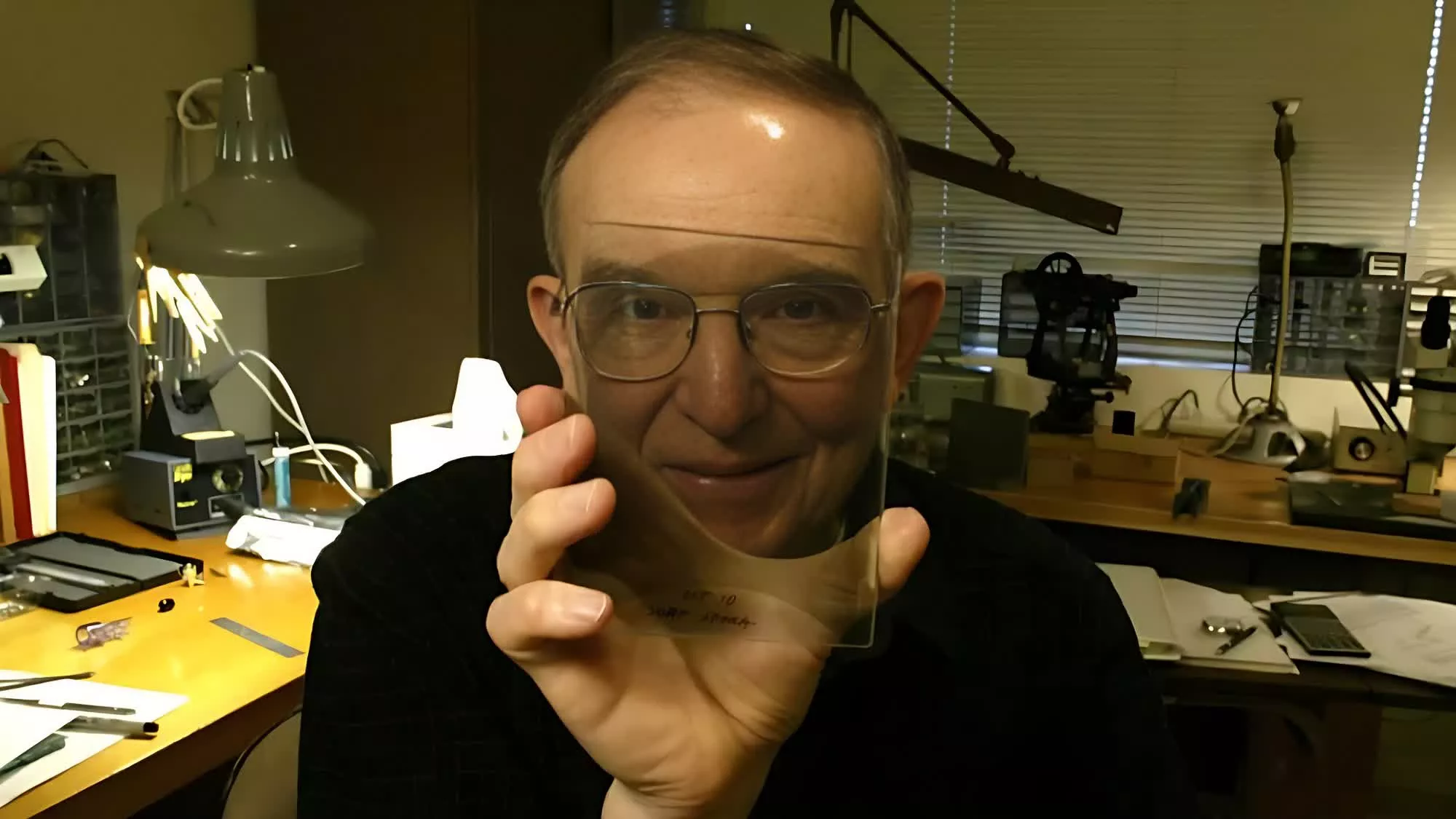
James Torrance Russell, the American physicist whose pioneering digital-to-optical recording and playback system laid the foundation for CD, DVD and Blu-ray technology, has died at the age of 95.2 3
The Daily Chronicle reported that Russell never became a household name..3 Russell died peacefully in his sleep this week in Bellevue, Washington, according to his daughter, Kristen Russell.2
A Career of Patents and Prototypes
In a career spanning almost his entire life, Russell earned more than 70 patents, but his biggest breakthrough was the invention of the first digital-to-optical recording and playback system in the 1960s and early 1970s, a system that brought crystal clear audio and film to the masses.1
Russell started exploring how to create cleaner recordings of music in Richland..1 Popping and hissing often accompanied the music of vinyl records, from the analog sound of a needle scraping against microgrooves, and Russell thought he could do something about it.1 3
James T. Russell recalled in a Seattle Times interview in 2004, “I think there was some feeling amongst the moneybags that it probably wouldn’t work, (or) if it did work there’s no advantage, no value in optical records. What would you use it for, and would people want it and, anyway, if it was any good, IBM would have already invented it.”1
Russell invented an early method to store audio digitally and play it back to produce a flawless sound..1 Russell created a way to store digital information densely.1
Other primitive, analog laser disk technology had been developed in the 1950s by engineer David Paul Gregg..1 Russell’s earliest patents in the field were issued in the mid-1960s, with a working prototype finished by the 1970s, using a laser to read binary data on a compact disc, or CD.1 3
The patent for Russell’s invention passed from company to company, bringing him from Richland to Salt Lake City, then to Toronto..1 The technology was later licensed by Sony and Phillips.1
From Bremerton to Battelle
Russell was born February 23, 1931, in Bremerton, Washington, to a father who was a Scottish immigrant and businessman and a mother who was a nurse known for her artistic talents.1 2
As a boy, he shadowed an electrician at his father’s dairy plant and later became an apprentice to the electrician, earning 7 cents an hour to help with tasks like repairs and hauling cable spools.1
Russell’s early experience landed him a job building a radio station in Port Orchard, when he was still a student at Bremerton High School.1
After high school, Russell attended Reed University, where he studied physics and graduated in 1953.1 2
In 1965, Russell took up a new job with the Pacific Northwest National Laboratory of Battelle Memorial Institute in Richland, where he invented a novel way to record media on optical storage devices and play it back using lasers, with no physical contact.2
A Legacy in the Background
Russell didn’t earn royalties, never made a fortune, and was rarely credited for his work.1
According to a statement from his daughter, Kristen Russell, “In later years he would shrug when asked about the CD.”1
Sources
Every number in the story points here. Each links to the original reporting.
LeftSlashdot
CenterTechSpot – AI
LocalNNY360
See a sentence its source doesn’t back up?
Tell us the source number and what’s wrong. We check every report. If we change the story, the fix goes on the corrections page with the old wording.