Key facts
Japan and Europe have placed two probes into orbit around Mercury in their BepiColombo mission, the European Space Agency said.1
The Mio probe observes magnetic fields, while the MPO examines the surface conditions.1
The mission was originally scheduled to arrive in December 2025 but was delayed by about a year due to propulsion system problems.1
ESA Confirms Orbit, Thruster Glitch
ESA confirmed on Saturday, Nov. 21, 2026, that BepiColombo had begun its orbit.2
In a social media post on Sunday, Nov. 22, 2026, ESA said the spacecraft had a successful entry into orbit, but during the maneuver, “the thruster burn was shorter than planned following a software issue.”2
ESA said, adding that “updates will be provided on Monday,” “The spacecraft is safe and teams at ESOC (the European Space Operations Centre) are working to understand what happened.”2
Two Probes, Two Missions
The two probes were attached to each other when they were launched in October 2018.1
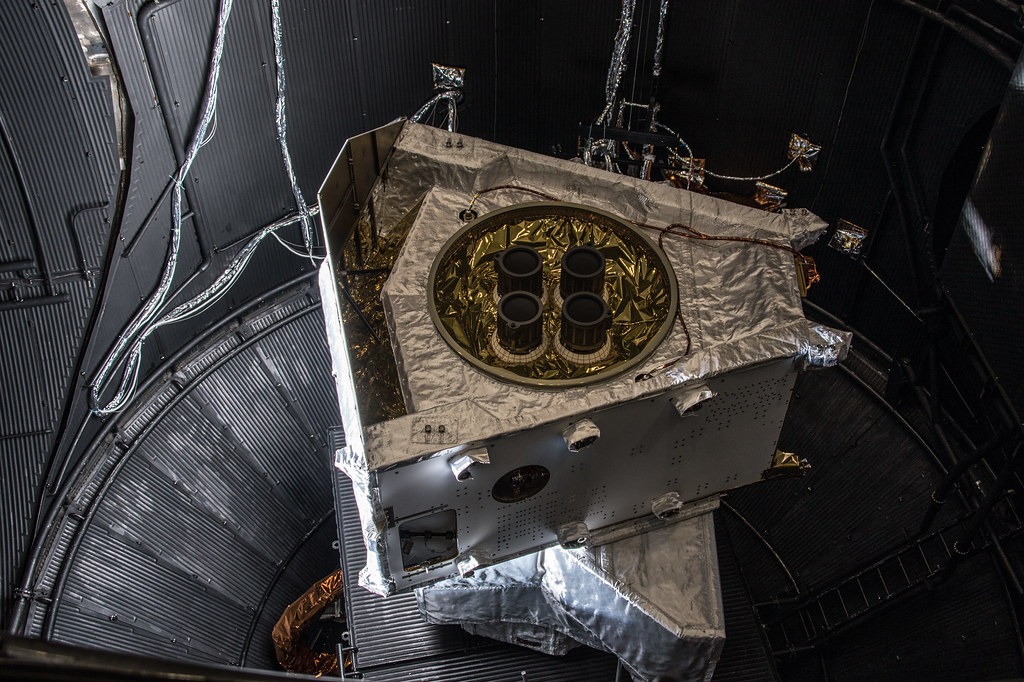
The spacecraft is a composite of ESA’s Mercury Planetary Orbiter and JAXA’s Mercury Magnetospheric Orbiter, which have different scientific objectives and are due to separate on Dec. 9 and 10.2 1
The mission is a joint mission of the European Space Agency and the Japan Aerospace Exploration Agency.2
The U.S. probe Messenger had achieved such a feat in March 2011.1
What Mercury Is Like
Mercury, only slightly larger than Earth’s moon, is the least explored of the four planets in the inner solar system, with BepiColombo only the third spacecraft to visit the planet and just the second to orbit it.2
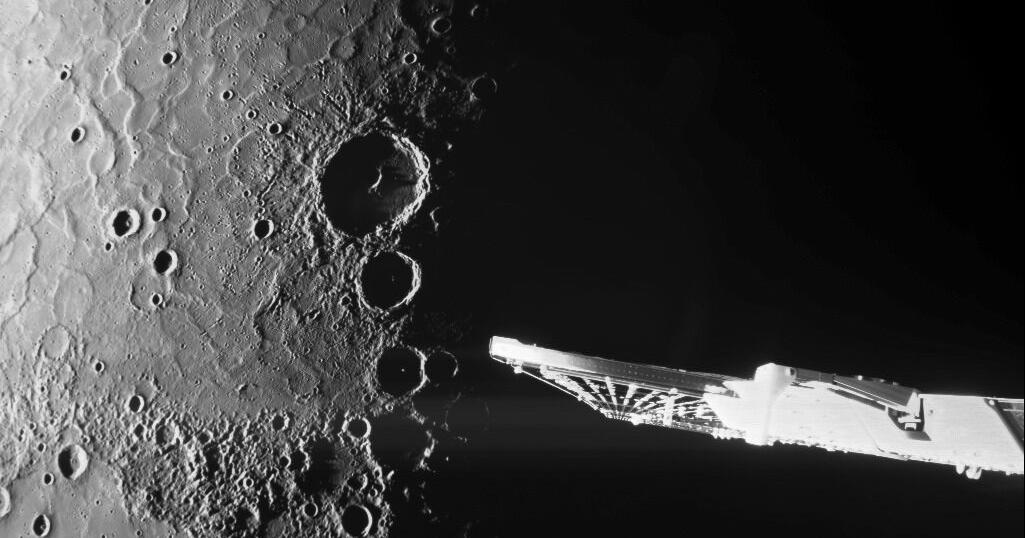
Mercury’s surface looks similar to that of the Moon, with numerous impact craters.2
There are expanses of smooth terrain as well as cliffs, some up to a mile (1.6 km) tall.2
From its surface, the Sun appears more than three times as large and seven times as luminous as it does when seen from Earth.2
The mission will seek to answer questions about Mercury such as why it has a magnetic field, why ice exists in the polar craters of a sun-scorched planet, and what is the nature of enigmatic depressions called “hollows” on its surface.2