Key facts
- Katie and Gerald “Buster” Newberry, the last farmers in their family, have raised or grown everything from sheep and cattle to corn and beans over nearly 70 years1
- Missouri lost approximately 10,000 farms between 2015 and 2024, with total farm income projected to fall 17% in 20261
- Crop production has been less profitable every year since 2023, according to Alejandro Plastina1
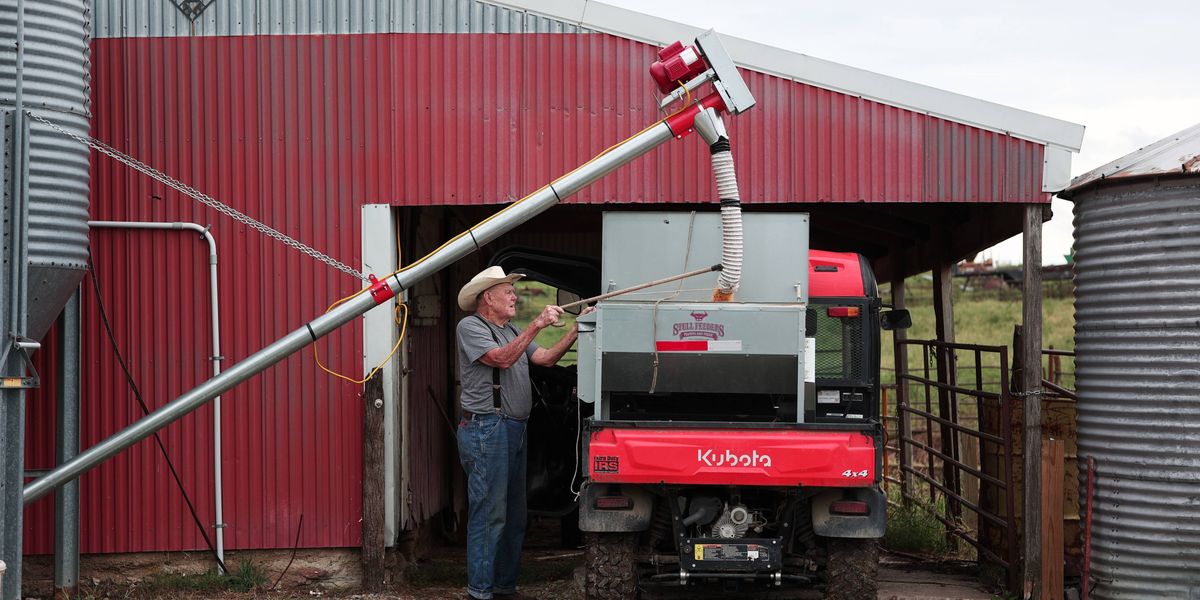
Katie and Gerald “Buster” Katie Newberry are the last farmers in their family, and their nearly 70 years on the land in Parnell, Missouri, are coming to an end.1
The Newberrys have raised or grown everything from sheep and cattle to corn and beans, but none of their children or grandchildren have chosen to continue their legacy.1
In 1965, two years into their marriage, Buster and Katie bought their first 200 acres for about $250 an acre, later buying more land, eventually getting up to 1,000 acres.1
A family business built on small-scale farming
The Newberrys had seven or nine milk cows and four sows..1 They bought a milker for $200 and the milk carrier would make pickups each week.1
The Newberrys transitioned to raising beef and grain crops after persistent drought across the Midwest made dairy production more costly..1 They only ever relied on one hired laborer.1
Even as their herd reached 400 head and their pastures rolled into the neighboring ZIP code, the farm remained primarily a family-run operation.1
Missouri’s shrinking farm base
Small and mid-sized farms, such as Katie’s and Buster’s, have historically represented the bulk of American agricultural production..1 Missouri, which has the third-highest farm count in the country, lost approximately 10,000 farms between 2015 and 2024, with total farm income projected to fall 17% in 2026.1
According to the most recent Census of Agriculture conducted by the USDA in 2022, the average age of Missouri producers is nearly 58 years old, with the number of mid-career farmers aged 35-64 down 9.2% since 2017.1
According to the U.S. Department of Agriculture, the United States is losing 2 million acres of land in farms each year as urban development and other infrastructure demands encroach on the countryside.1
Alejandro Plastina, director of the University of Missouri’s Rural and Farm Finance Policy Analysis Center (RAFF), said crop production has been less profitable every year since 2023.1
A generation that won’t carry on
The Newberrys, for example, lease approximately 850 acres of crop land and 150 acres of pasture to local corn and soybean farmers, but for those who have to reserve a big chunk of their earnings to pay land rent, “it’s really hard,” said Plastina.1
“The day Buster doesn’t go out and do what he can on the farm, we’ll know something happened to him,” Katlyn Miller, 27, of her grandfather, who, at 87 years old, just won’t quit, said.1
“A tremendous amount of wealth and productive farmland will change hands as this generation ages. The question for us is how we create opportunities for the next generation of farmers to compete for that land,” Garrett Hawkins said.1 “When you lose a farmer, you potentially lose a customer for the local equipment dealer, feed store, bank and veterinarian, as well as a taxpayer, community leader and volunteer. Farm succession is really a rural-community issue.”