Key facts
A pair of spacecraft slipped into orbit around Mercury on Saturday after an eight-year cruise through the inner solar system.1
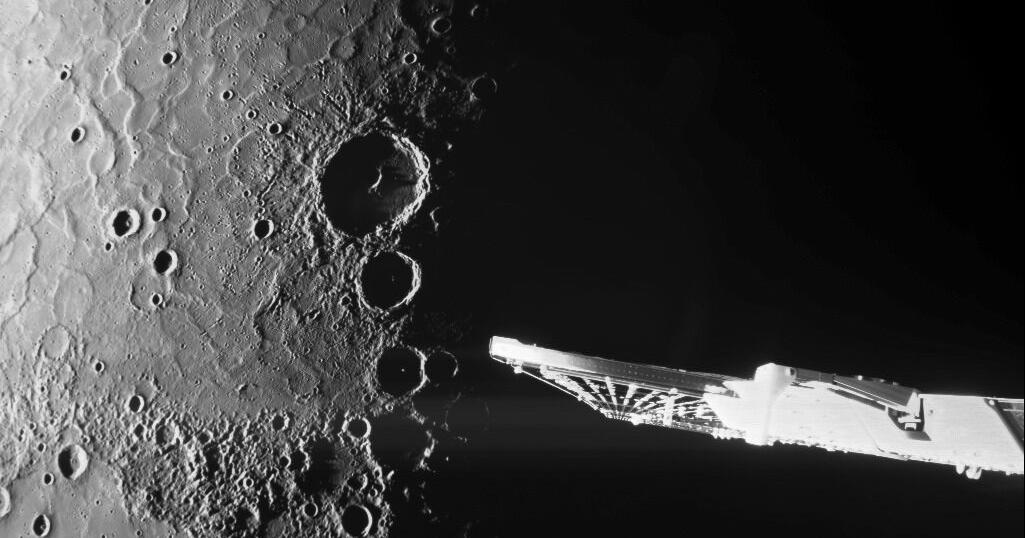
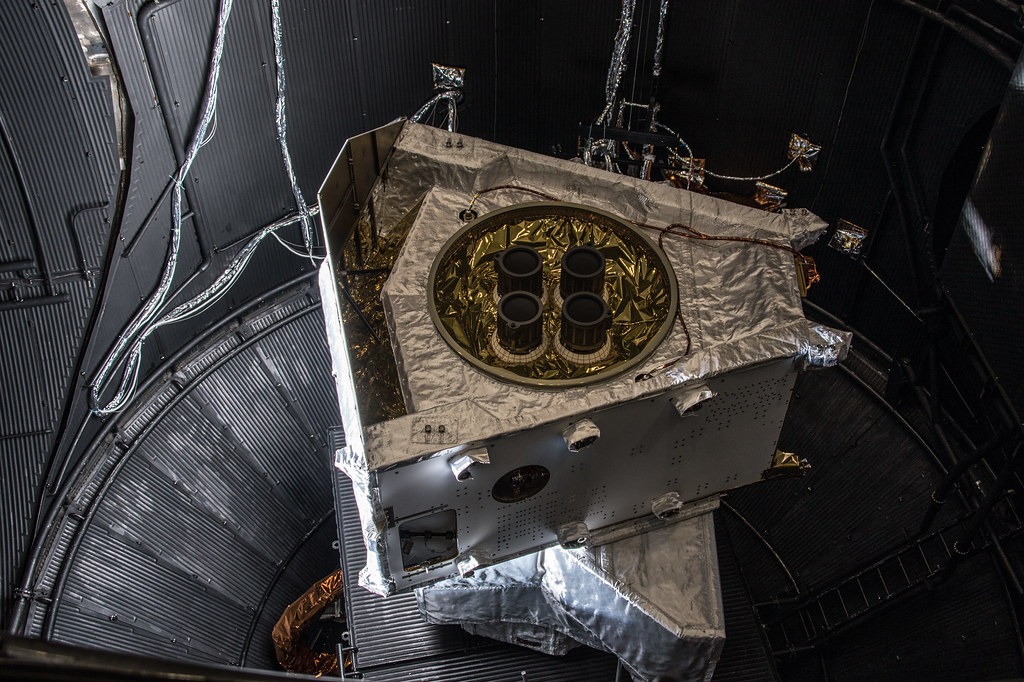
The linked robotic explorers — one European, the other Japanese, will separate from one another next month in order to map and study the scorching little planet from different altitudes.1
The European Space Agency announced BepiColombo’s arrival via social media.1
How BepiColombo reached Mercury
A series of thruster firings slowed the spacecraft enough to be captured by the planet’s weak gravity.1
Flight controllers in Germany, 94 million miles away, confirmed that BepiColombo had achieved orbit after several anxious hours.1
BepiColombo is only the third spacecraft to visit Mercury.1
NASA’s Mariner 10 flew past Mercury three times in the mid-1970s.1
The team included the late Italian mathematician Giuseppe “Bepi” Colombo, for whom this latest mission is named.1
NASA’s Messenger spacecraft entered orbit around Mercury in 2011 and, after running out of fuel, crashed into the planet in 2015.1
A slower, roundabout route
Launched in 2018, BepiColombo took a slower, more roundabout route to get to Mercury, flying once past Earth, twice past Venus and six times past Mercury for gravity-guiding assists.1
All those loop-de-loops put more than 6 billion miles on the odometer.1
The conjoined spacecraft shed their mother ship in September for the final leg of the journey.1
Lead project scientist Geraint Jones said he and others can’t wait for all the new data to start streaming down in the spring.1
The mission will provide the ability to compare unprecedented measurements taken by two spacecraft at the planet at the same time.1
Once orbiting separately, the European Space Agency’s satellite and the Japan Aerospace Exploration Agency’s smaller craft will study Mercury’s dense interior and exterior magnetic field, as well as everything in between: impact craters, volcanic plains, mountain ridges and peaks jutting as high as 3 miles.1