Key facts
- The State Board of Education’s decision last week to name Senate President Pro Tem Cindy O’Laughlin as interim commissioner renewed.1
- The Missouri State Teachers Association wrote in a statement Friday that the Missouri Constitution includes an independent State Board.1
- State Sen. Cindy O’Laughlin (R-Shelbina) will take over as interim education commissioner2
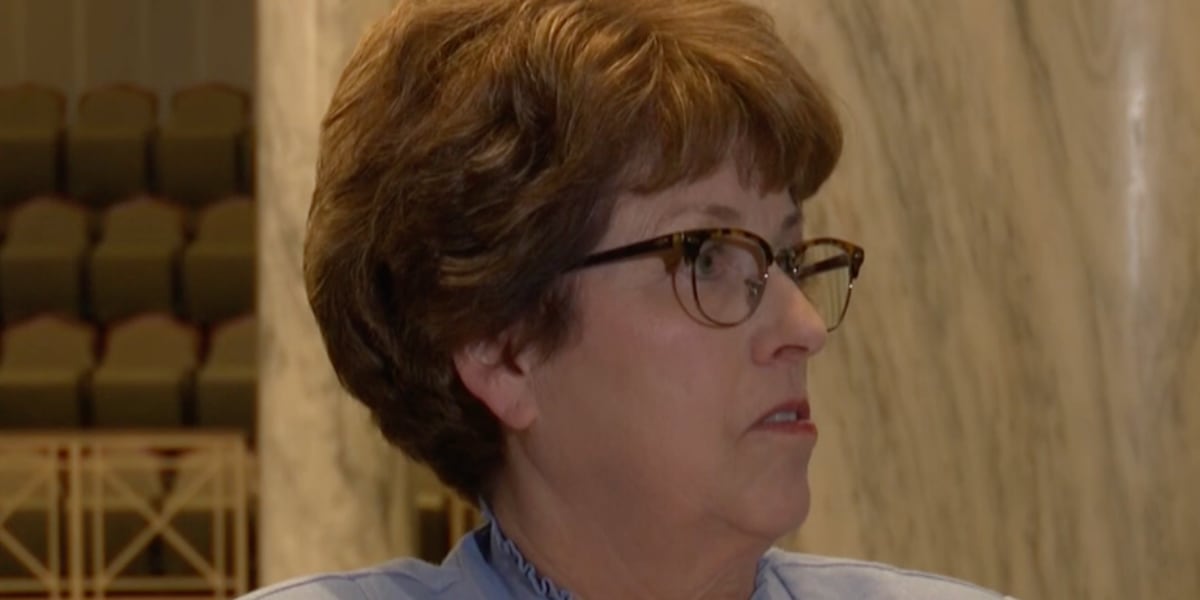
The Missouri State Board of Education voted to appoint Republican state Sen. Cindy O’Laughlin as interim commissioner of elementary and secondary education.3
Missouri’s 1945 constitution put the selection of the state’s education commissioner in the hands of an appointed board, a change intended to insulate education leadership from partisan politics.1
A tradition of career educators
O’Laughlin is not the first politician to become commissioner.1
In 2024, state Sen. Karla Eslinger took the role after a long career in education.1
Eslinger had worked as a teacher, principal, superintendent and education policy advisor prior to joining the legislature.1
According to her Senate biography, O’Laughlin has worked “as a school bus driver, an administrator at a local Christian school and as a member of her local school board.”1
O’Laughlin, a Shelbina Republican, breaks from a tradition of career educators leading the department.1
A constitutional convention debate
Concerns about political influence were central to the debate over Missouri’s education system more than eight decades ago.1
On May 1, 1944, delegates debated whether the state should continue to have an elected superintendent of schools or create a state board that would appoint a commissioner of education.1
Delegates chose the latter, but not before considerable debate over the best way to insulate the position from political interference.1
Many delegates in 1944 argued that the commissioner should have extensive experience in education, and that an appointed position would allow the state to search more broadly for qualified candidates.1
Supporters of the proposal argued that staggered terms and political balance would limit any one governor’s influence.1
Critics question the move
The Missouri State Teachers Association wrote in a statement Friday that the Missouri Constitution includes an independent State Board of Education to keep politics out of the commissioner hiring process.1
The association’s advocacy extends back to the 1940s, when Missouri held a constitutional convention that, among other things, reshaped how the state’s education department is governed.1
The association endorsed a new constitution approved by voters in 1945.1
The new constitution created an eight-person State Board of Education and the education commissioner position.1
Previously, the department’s chief was an elected superintendent of schools chosen on a partisan ballot.1
“The Missouri Constitution includes an independent State Board of Education to keep politics out of the commissioner hiring process,” the association wrote.1 “Today’s decision puts it right back in.”1
William L. Bradshaw said.1
Duane Martin, an attorney whose law firm EdCounsel represents public school districts, told The Independent, “Education is so important that we don’t want it handled in a partisan fashion.”1
Supporters back the choice
State Board of Education President Brooks Miller has defended O’Laughlin’s appointment, pointing to her experience on a local school board, as a business owner and as a legislative leader.1
George W. Kirk said.1
O’Laughlin will assume leadership of the Missouri Department of Elementary and Secondary Education near the end of a year capped by leadership turbulence.2