Key facts
Major League Baseball players ignored management’s proposal for an international amateur draft, instead asking Friday for larger signing bonus pools under the current system and more rewards for small-market teams in another sign the sport is heading to a lockout next month.1
Management has tried unsuccessfully for more than a decade to get an international draft and in June proposed it start with 12 rounds in 2027.1
MLB’s five-year collective bargaining agreement expires at 11:59 p.m. EST on Dec. 1 and management is expected to immediately lock out players in the sport’s 10th work stoppage since 1972.1
Owners are pushing for a salary cap, which players say they never will agree to, sparking a confrontation that threatens the 2027 season.1
A history of failed drafts
An amateur draft was established for residents of the U.S. and Canada in 1965 and extended to residents of U.S. territories such as Puerto Rico in 1990.1
A signing bonus pool system started in 2012 restrained team spending for amateurs residing outside those areas, primarily teenagers from the Dominican Republic, Venezuela, Colombia, Mexico and Panama.1
Players outside the U.S. are eligible to sign as young as 16, and it’s common for players, their families and trainers to strike handshake deals with teams at 13 or 14 in a system rife with corruption.1
What management proposed
In its latest proposal, management included $200 million in signing bonus pools for 2027, roughly equal to 2026 international amateur spending, and said it would retain an unlimited amount of passed over players signing for up to $10,000 each.1
Management proposed hard slots for each draft pick and asked the minimum signing age for international amateurs to be raised to 18 from 17 on the Sept. 1 of their signing year.1
What the union asked for
The union proposed teams entering into any agreements ahead of a signing period lose the right to sign the involved player, forfeit pool space in the amount of the agreed-upon signing bonus and their entire pool space in the subsequent signing period, with the lost pool space redistributed to other clubs and a violation resulting in a minimum $200,000 fine.1
The sides would hire a joint compliance officer.1
Players proposed increases in the three basic team pool levels in 2027: from $8,034,900 to $8.5 million, from $7,357,100 to $7.75 million and from $6,679,200 to $7 million, growing in future years at the same rate as industry revenue.1
Teams would be allowed to exceed their bonus pools but would be taxed on their overage and if 15% or more over could lose future pool amounts.1
Additional pool space of up to $2 million would be added to club rewards in the Prospect Promotion Incentive begun under the current CBA.1
The union asked that the limit of bonuses not counting against the pools be raised to $75,000 through 2029 and then $100,000, and that the limit of 60% additional pool allotment a team can acquire be dropped along with the requirement traded allotments be in $250,000 increments.1
Players signing below $75,000 would be eligible for $25,000 promotion bonuses if assigned to a complex team or a player development league club, money to be funded centrally by MLB.1
The union proposed that teams receiving revenue sharing money be able to increase their pool by $1 million in a single signing period over a five-year agreement and by $500,000 in each period following a postseason appearance.1
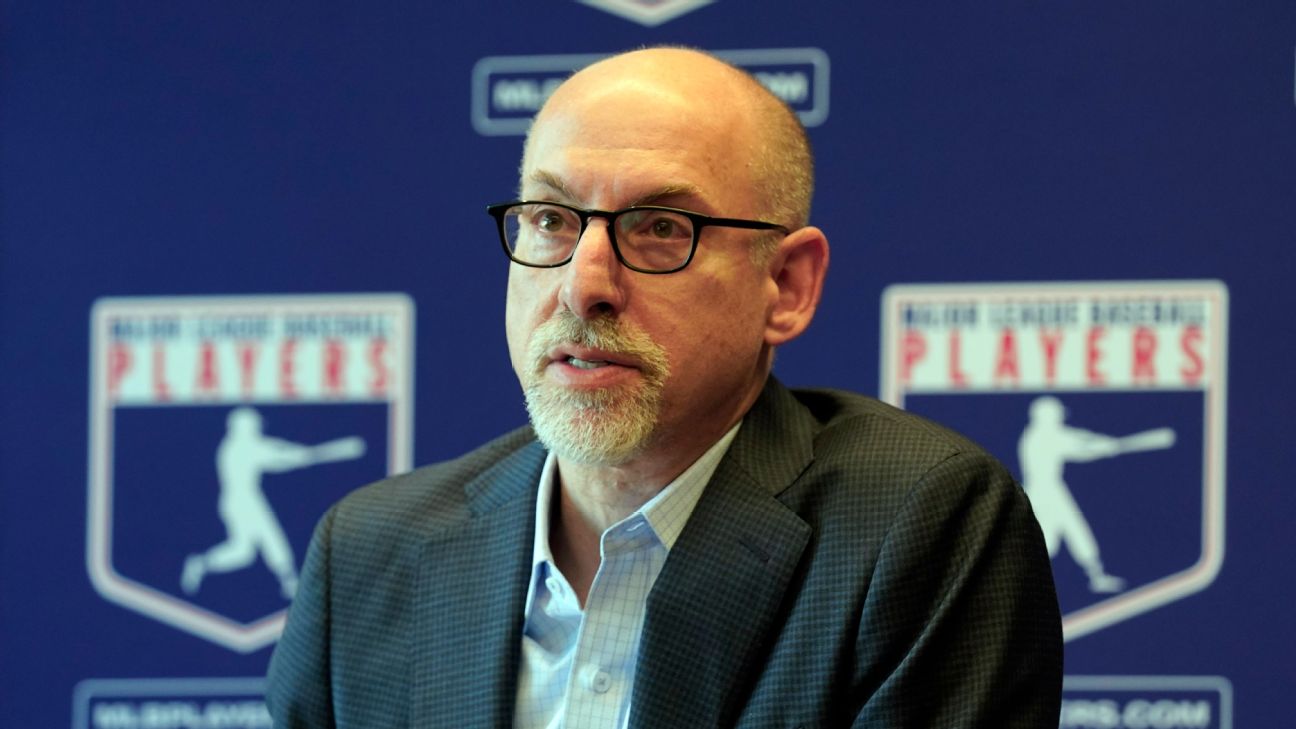
“We are committed to negotiating a system that preserves opportunities for future generations of players, protects young prospects from exploitation, and provides flexibility without further burdening international players with new artificial restrictions like a draft,” Bruce Meyer said.1