Key facts
- The royal cabinet said the plan aims to meet 40% of the armed forces' and security services' equipment needs through.1
- The plan aims to generate more than 65% of industry revenues from exports.1
- The king instructed authorities to establish a specialised academy offering advanced training programmes in partnership with industrial companies.1
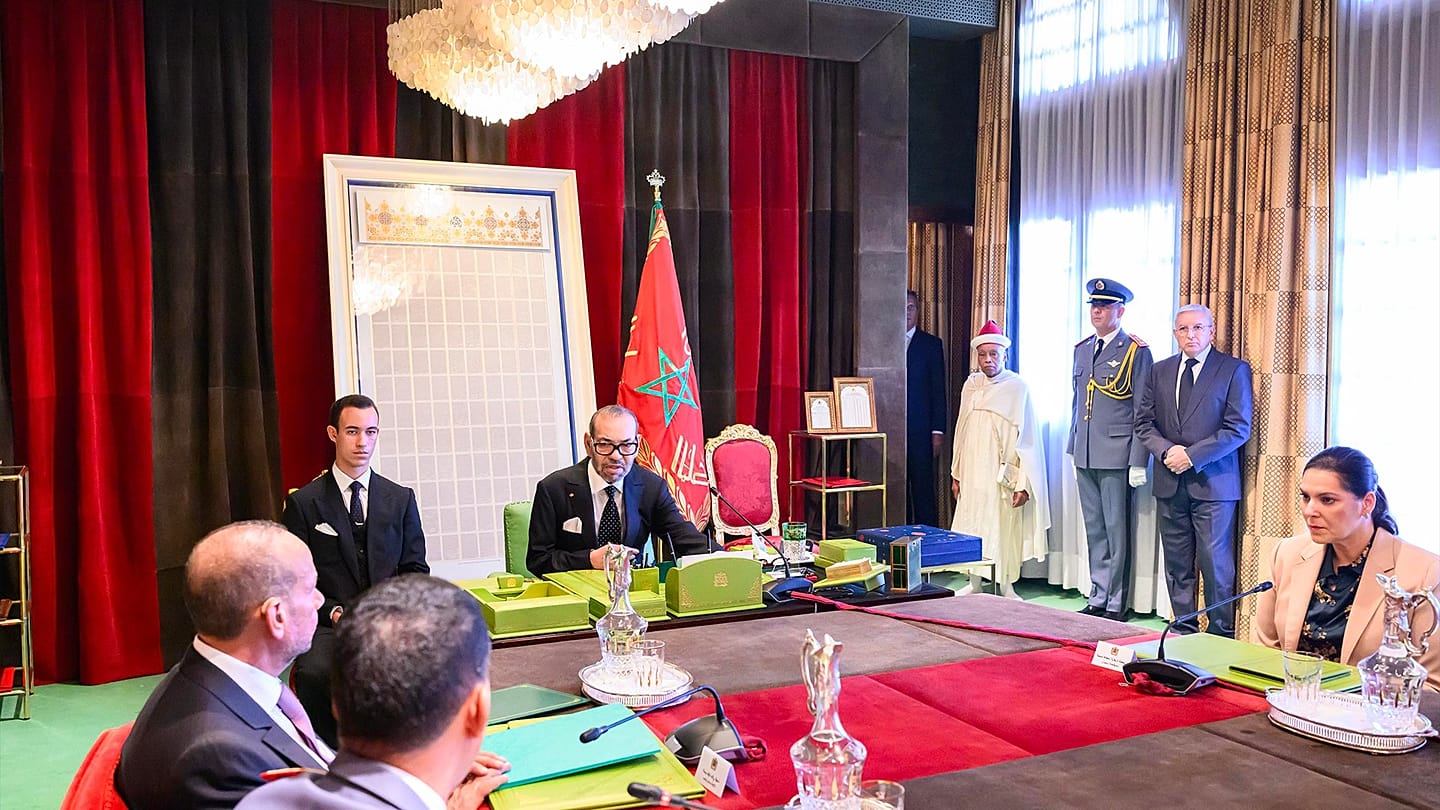
Morocco’s royal cabinet announced the plan on Wednesday.1
The plan sets 2035 as its target date.1
The royal cabinet said the plan aims to meet 40% of the armed forces' and security services' equipment needs through domestic production by 2035 and to generate more than 65% of industry revenues from exports, supported by a new strategic agency, a holding company, and two new industrial zones.1
The roadmap will create around 50,000 direct and indirect jobs.1
A roadmap built on partnerships
Morocco is seeking to leverage its existing expertise in automotive, aviation and electronics manufacturing to develop a domestic defence sector.1
Priority areas include drones and autonomous systems, land and naval systems, defence electronics, cybersecurity and artificial intelligence.1
The strategy covers dual-use technologies with both civilian and military applications.1
According to data from the Stockholm International Peace Research Institute, Morocco ranks among Africa’s leading importers of major weapon systems.1
Morocco has begun forming partnerships with foreign defence companies.1
The Indian group Tata Advanced Systems is cooperating with Morocco to manufacture WhAP 8×8 armoured vehicles in Berrechid, aiming to progressively increase the share of locally produced components.1
Moroccan company MMI manufactures military turrets and remotely controlled weapon systems, forming an initial base for broader domestic production.1
The Emirati defence group EDGE signed two agreements with Morocco’s National Defence Administration at the Marrakech Air Show in October.1
The first EDGE agreement is a memorandum of understanding to explore manufacturing small arms and aircraft engines in Morocco through local partnerships.1
The second EDGE agreement covers supplying Desert Sting 16 and Thunder P-31 guided munitions to the Royal Moroccan Air Force for integration into its fleet of unmanned combat aircraft.1
A specialised academy and talent programme
The king instructed authorities to establish a specialised academy offering advanced training programmes in partnership with industrial companies, drawing on Moroccan civilian and military expertise, including professionals based abroad.1
A programme to channel young talent into the sector and adapt vocational training to defence industry needs was ordered.1