Philly-area cancer vaccine trials show new promise after decades of setbacks in the field

Key facts
Researchers at Jefferson and Penn are developing vaccines designed to train the immune system to recognize and attack cancer cells.1
The field has seen progress this year after decades of setbacks.1
When people think of a vaccine, they usually picture shots for the flu or COVID-19.1
That’s the idea behind cancer vaccines, a rapidly evolving field seeing progress in several clinical trials this year after decades of setbacks.1
Colby Johnson’s Trial
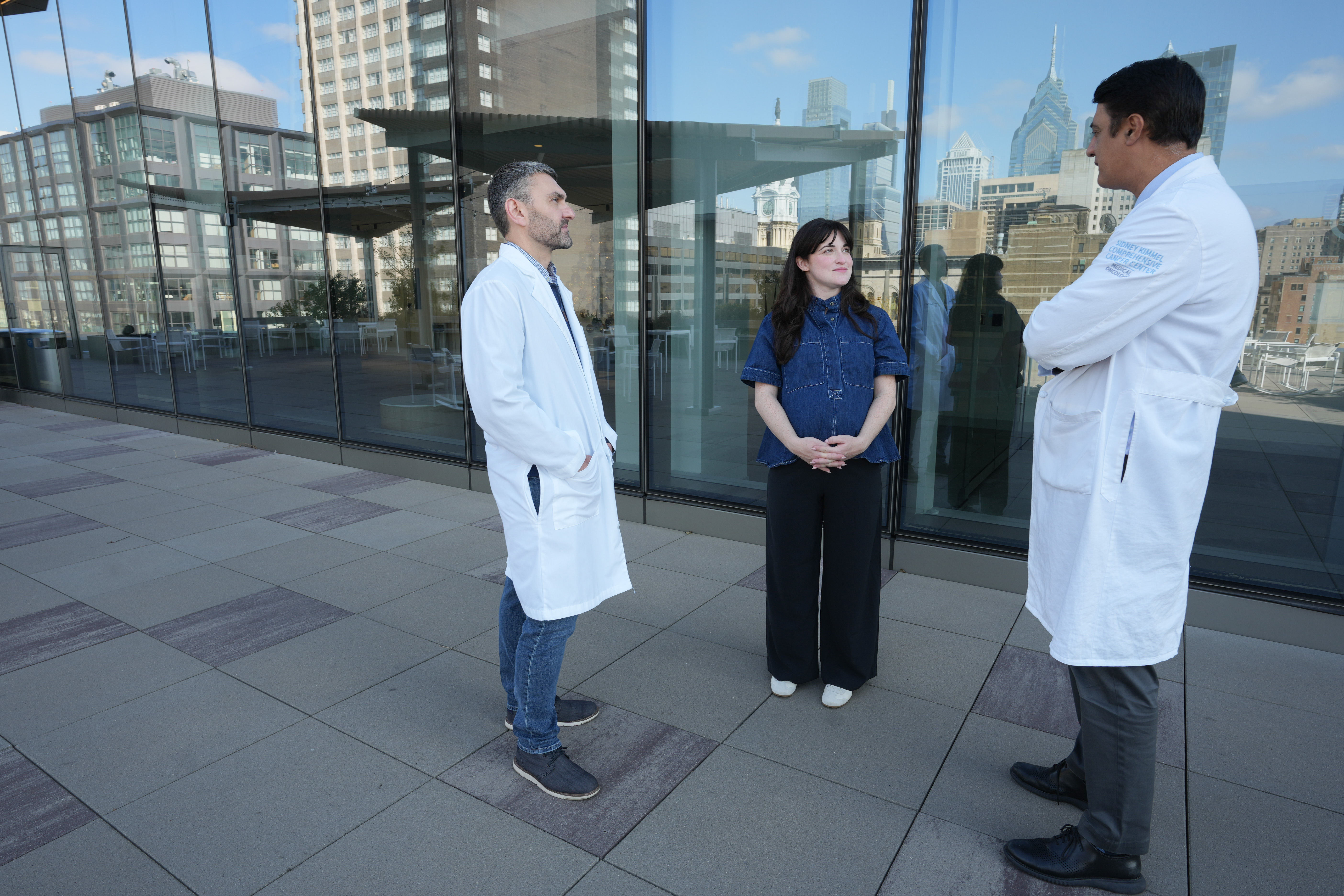
After finishing treatment for Stage 3 colon cancer in 2022, Colby Johnson was ready to try anything that might keep her cancer from returning.1
Johnson was 26 years old when she enrolled in a small, early-stage Jefferson Health trial of a novel vaccine.1
Designed to train the immune system to recognize and attack cancer cells, the treatment gave her hope that, if the cancer were to return, her body would know to eliminate it.1
Johnson is a 30-year-old Manayunk resident.1
She remains cancer-free and is expected to give birth next month to her first child.1
Early Results And Challenges
Across 46 patients in the Jefferson trial whose gastrointestinal cancers were previously surgically removed, the vaccine was found to be safe, according to an abstract presented at the American Society of Clinical Oncology (ASCO) annual meeting in late May.1
The results are preliminary and have not yet gone through the rigorous peer review process usually required for publication in an academic journal.1
The tested vaccine also induced robust immune responses in patients who received the highest dose, suggesting it could provoke, and hopefully train, the immune system.1
The vaccine was not randomized and controlled, the gold standard for establishing causation.1
Broader Field And Expert Views
The first late-stage trial success for an mRNA cancer vaccine came in August for a melanoma vaccine developed by Merck and Moderna.1
This month, New York-headquartered company SELLAS Life Sciences announced positive results in an advanced cancer vaccine trial involving 126 leukemia patients.1
Experts believe the technology may work best when cancer is caught early or after other treatments have already removed tumors.1
Some early cancer vaccine trials failed when they were tested as standalone treatments in patients with advanced cancer.1
Other candidates used targets also present on healthy tissue, weakening the body’s ability to generate an immune response.1
Ben Stanger is director of the Penn Pancreatic Cancer Research Center.1
Stanger, who was not involved in the trial, said, “It needs a larger, better-powered study with a control group.”1 “I think there’s a potential for vaccines in virtually every type of cancer — the key being the ability to get those vaccines into patients when their immune system is still robust.”
Jefferson’s trial is just one example of a cancer vaccine being developed and tested locally.1
The University of Pennsylvania’s Susan Domchek is leading trials testing whether vaccines can prevent cancer in people with BRCA genetic mutations.1
Many of these efforts remain in the early stages, meaning it will still take years to prove safety and efficacy.1
Most novel treatments do not make it to the point where they gain approval and become widely available to patients.1
The Jefferson team said it was too early to determine the cost of the vaccine.1
Sources
Every number in the story points here. Each links to the original reporting.
LeftPhiladelphia Inquirer
See a sentence its source doesn’t back up?
Tell us the source number and what’s wrong. We check every report. If we change the story, the fix goes on the corrections page with the old wording.