State outlines steps after varroa mites found in Kauaʻi feral bee colony

Key facts
- The Hawaiʻi Department of Agriculture and Biosecurity and its partners share the next steps to deal with the discovery.1
- Experts arrive Nov. 30 to inspect the port area, including the trailer that housed the hive, and search for other feral hives.1
- The state will buy supplies for varroa mite screening and monitoring and help beekeepers with initial monitoring.1
- The mites were first detected in Hawai’i in 2007.2
The Hawaiʻi Department of Agriculture and Biosecurity and its partners share next steps after a varroa mite was discovered in a feral bee colony on Kauaʻi.1
The state Agriculture and Biosecurity Department and University of Hawaiʻi at Mānoa College of Tropical Agriculture and Human Resilience have experts arriving Nov. 30 on the Garden Isle.1
Experts inspect port area and trailer
Plans are for the experts to inspect the area where the hive was found at the port, including where the trailer that housed the hive was left for days..1 Personnel from Hawaiʻi Department of Transportation will assist in obtaining information about the trailer while it was sitting at the harbor on Kauaʻi.1
Experts will search for any other feral hives in the area..1 Personnel will visit the ranch which imported the trailer to inspect the area to find if there are any other feral hives.3
Teams will install swarm traps, which staff from Hawaiʻi Department of Agriculture and Biosecurity and College of Tropical Agriculture and Human Resilience will maintain.1 A space will be mapped out for intense surveillance and sampling activities.1
Meetings with Kauaʻi beekeepers planned
Meetings with Kauaʻi beekeepers are being planned to respond to their needs and provide educational information..1 Bee samples will be collected for inspection.1
Hawaiʻi Department of Agriculture and Biosecurity will purchase supplies for varroa mite screening and monitoring and with collaborating agencies provide beekeepers assistance in initial monitoring efforts.1
What varroa mites are and where they are
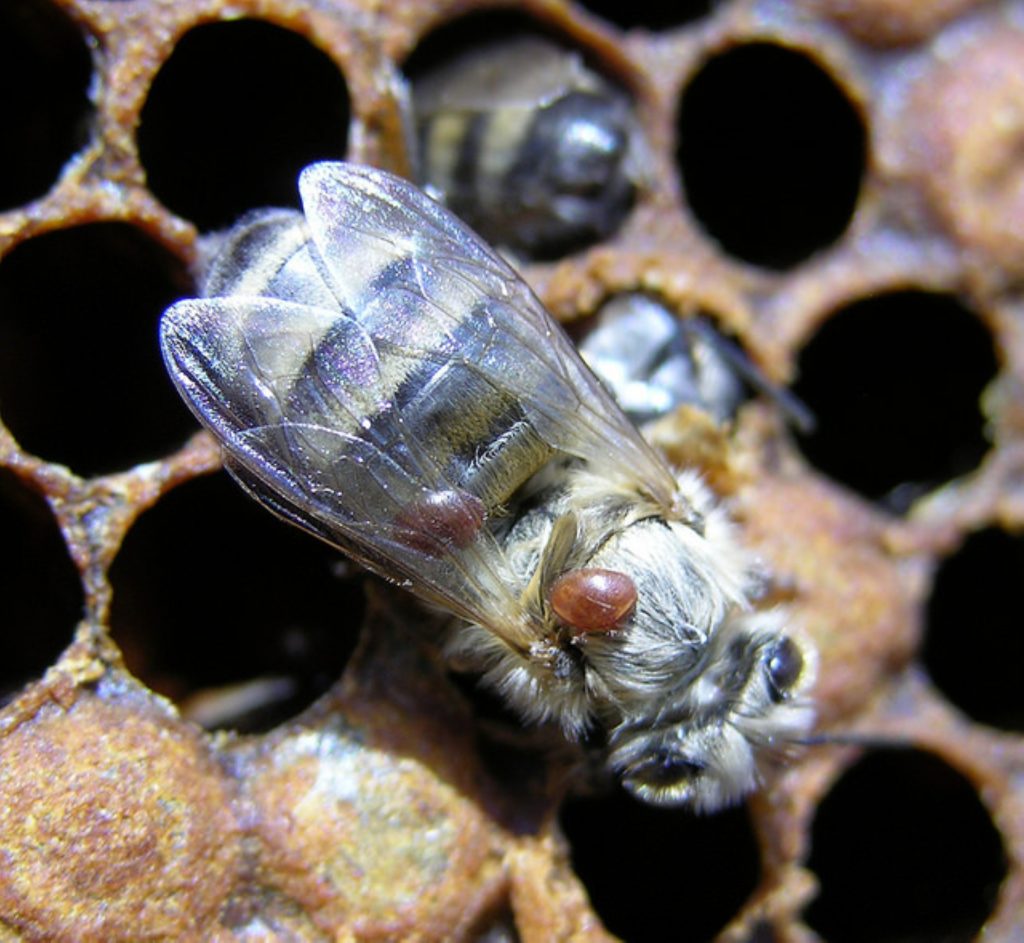
Reddish-brown, crab-shaped, flattened varroa mites can be seen on the back of a bee inside a hive..1 It’s important to note it could take weeks or months to determine if varroa mites have established on Kauaʻi.1
Anyone who suspects a varroa mite infestation should call the Pest Hotline at 808-643-PEST (7378).1
The Hawai’i Department of Agriculture and Biosecurity has confirmed the presence of invasive varroa mites in a feral bee colony on Kaua’i..2 The colony was discovered Nov. 9 on a livestock container and immediately destroyed by a local beekeeper.2
Samples examined by the department and University of Hawai’i at Mānoa experts confirmed a low level of infestation..2 Officials emphasized that the discovery does not mean the pest has become established on Kaua’i..2 The department will work with the university to conduct additional monitoring.2
Varroa mites are tiny, reddish-brown parasites that attack adult honeybees, larvae and pupae..2 Severe infestations can weaken bee colonies, reduce honeybee populations and affect pollination.2
The mites were first detected in Hawai’i in 2007 and have been established on Oahu and Hawai’i Island.2
Sources
Every number in the story points here. Each links to the original reporting.
LocalKauai Now, Maui News
OfficialDepartment of Agriculture [HI]
See a sentence its source doesn’t back up?
Tell us the source number and what’s wrong. We check every report. If we change the story, the fix goes on the corrections page with the old wording.