

Key facts
- Nearly two dozen attorneys general from across the country, including California.1
- For decades, family members with different immigration statuses have been able to live together in federally-funded public housing.1 In effect, a mixed-status family pays more in rent than a family where every member has legal status, including U.S. citizens or permanent legal residents.1
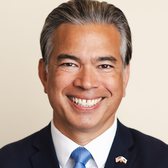
- Attorney General Rob Bonta said during a virtual news conference that the rule is set to take effect in March.2 Bonta noted that the legal challenge marks California’s 103rd lawsuit against the Donald Trump administration.2
Nearly two dozen attorneys general from across the country, including California, are suing the federal government to halt a rule requiring every resident in public housing to provide documentation proving their legal immigration status and face eviction if they do not.1
The lawsuit was filed in federal court in Massachusetts Monday..1 The lawsuit includes New York, Arizona and the governor of Pennsylvania..1 The U.S. Department of Housing and Urban Development, or HUD, is the target of the lawsuit.1
What the rule would do
For decades, family members with different immigration statuses have been able to live together in federally-funded public housing..1 In effect, a mixed-status family pays more in rent than a family where every member has legal status, including U.S. citizens or permanent legal residents.1
HUD is seeking to change that with a new rule that goes into effect mid-December..1 Under the new rule, every person living in federally-subsidized housing would have to provide documents proving their immigration status..1 Per the new rule, they would have until March to do so.1
Under Trump, the federal housing agency has stated that even if people without qualifying immigration status weren’t having their rents subsidized, they still did not have the right to live in housing paid for by the federal government.1
HUD Secretary Scott Turner said in an emailed statement that HUD’s final rule fully implements the 1980 Housing and Community Development Act and ends the exploitation of taxpayer dollars.1 HUD estimates that there are roughly 20,000 mixed-status families in the U.S., amounting to 78,100 individuals, who could be affected by this rule..1 That includes roughly 7,190 households in California, according to a statistic from 2019.1
Attorneys general push back
Attorney General Rob Bonta said during a virtual news conference that the rule is set to take effect in March..2 Bonta noted that the legal challenge marks California’s 103rd lawsuit against the Donald Trump administration.2
Letitia James pointed to HUD’s own projections showing the rule would strip housing assistance from roughly 20,000 families nationwide..2 James said the projections include over 78,000 people, including over 2,500 households in New York City.2
Hans von Spakovsky, a senior fellow at Advancing American Freedom, argued that the department is operating squarely within federal law.2
What’s next
The states' lawsuit in the U.S. District Court for Massachusetts argues that the Trump administration overstepped its authority in overriding a congressional statute and asked the federal court to freeze the new rule from going into effect.3