Key facts
- Researchers are still determining when and where turkeys were first domesticated, but current evidence points to central Mexico between 2,500 and 3,000 years ago1
- Turkeys come from the same family as chickens, partridges and quails.1
- Bones from one now-extinct species, the California turkey, have been found in the La Brea Tar Pits.1
Turkeys, which come from the same family as chickens, partridges and quails, have roamed North America for tens of millions of years.1
Researchers are still determining when and where turkeys were first domesticated, but current evidence points to central Mexico between 2,500 and 3,000 years ago, said Erin Thornton, an associate professor of anthropology at George Washington State University.1
Archaeological evidence shows that turkeys started eating human-provided maize around that time and were also increasingly used in rituals like burials, Thornton said.1
Even the name “turkey” suggests the birds' meandering journey.1
From Mexico to Europe
Spanish conquistadors encountered Mexico’s domesticated turkeys in the 1500s and brought some to Europe.1
A century later, European colonists brought domesticated European turkeys to America and bred them with wild turkeys they found along the East Coast.1
Resulting crossbreeds like the Standard Bronze exist today.1
In the 1500s, English merchants attached the name “turkey” to many exotic goods, whether or not they came from the Ottoman Empire, said Elan Abrell, an assistant professor at Wesleyan University who teaches about human-animal interactions.1
From the Pilgrims' Table to the National Holiday
When the Pilgrims and the Wampanoags held their legendary Thanksgiving feast in 1621, it’s likely venison was the main course.1
Turkey may have been a side dish, along with duck, goose and shellfish.1
Turkey’s prominence had grown by 1789, when new President George Washington proclaimed a one-time national day of thanksgiving and prayer.1
Turkey was promoted as an American food at a time when the young country was trying to distinguish itself from England.1
Benjamin Franklin compared the turkey to the bald eagle in a letter to his daughter.1
Sarah Josepha Hale, the editor of Godey’s Lady’s Book, a popular magazine, advocated for a national day of Thanksgiving to unify the country both before and after the Civil War.1
Hale petitioned Congress and five presidents to create the holiday; in 1863, President Abraham Lincoln finally established it.1
The novel featured a roasted, stuffed turkey at the head of the table alongside gravy and pumpkin pie.1
The series “American Objects” marks the 250th anniversary of the United States.1
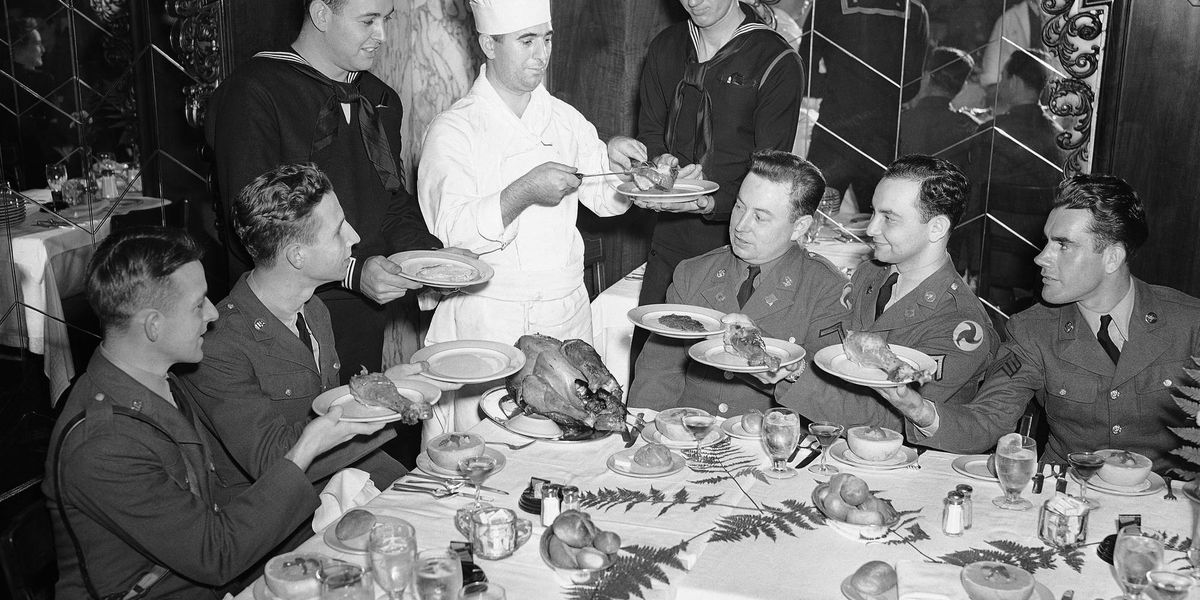
Turkey has made a long journey to the center of the Thanksgiving table.1