Read the original on CelebYachts →


This report is from CelebYachts, which tracks the superyachts of public figures.1
Built as the Russian aluminium industry consolidated under Oleg Deripaska, Clio carries the corporate architecture of the post-Soviet privatisation era into the age of Western sanctions. Her current position reveals the logistical constraints facing sanctioned oligarchs.1
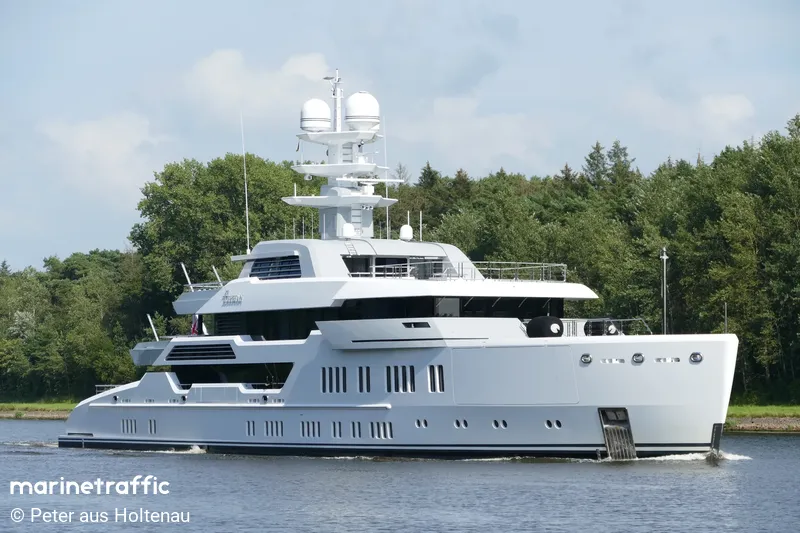
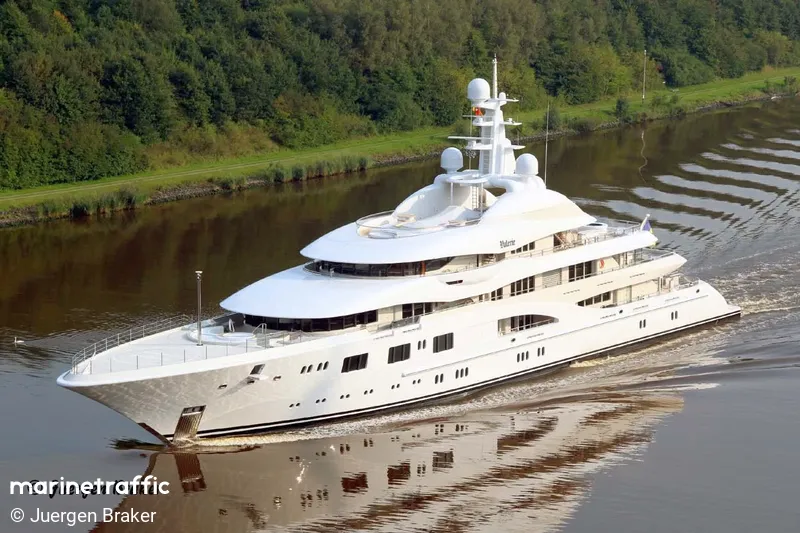
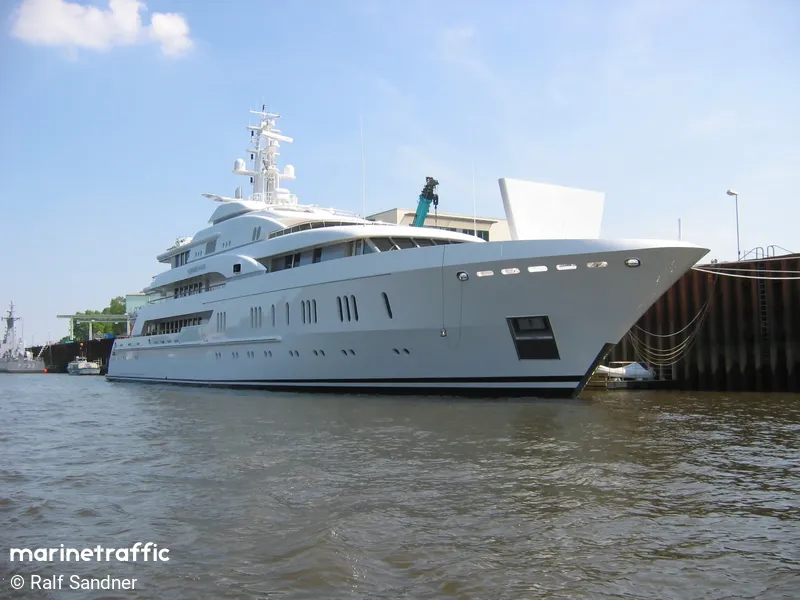
Clio measures 72.6 metres in length with a beam of 13.91 metres and carries a gross tonnage of 2194. She was launched by Lürssen in 2004 and flies the flag of the Cook Islands from the home port of George Town. Her estimated value stands at sixty-five million dollars. The vessel has not moved since the last AIS broadcast placed her in the Marmara Sea at coordinates forty point eight seven degrees north, twenty nine point two four degrees east.1
The privatization timeline
The construction of Clio aligns precisely with the consolidation of the Russian aluminium industry. Oleg Deripaska, the reported owner of the hull, began his career as a metals trader after the breakup of the Soviet Union. He used accumulated funds from trading to acquire stakes in the Sayanogorsk aluminium smelter from a consortium of businessmen who privatized it in the aftermath of the collapse of the Soviet Union. The Sayanogorsk aluminium smelter served as the foundation of what later became the world’s largest aluminium company Rusal.1
Deripaska became director general of the plant at the age of twenty-six in 1994. In 1997, he founded Sibirsky Aluminium Group, which merged with Roman Abramovich’s Millhouse Capital to create RUSAL in 2000. By 2003, businesses led by Deripaska had increased their stake in those companies under common management to seventy-five percent by acquiring half of the interest managed by Millhouse Capital. The consolidation of RUSAL’s ownership by companies related to Deripaska was completed in 2004 with the acquisition of the remaining twenty-five percent equity interest in RUSAL managed by Millhouse Capital.1
Clio entered the water in the same year that Deripaska achieved total control over the entity that would become UC Rusal. The yacht represents the liquid capital generated by this specific transaction. Deripaska traded primarily through the Baltic state of Estonia, as the Russian system of export licenses was in disarray. He undertook export arbitrage, buying metal at low Russian prices and selling it abroad at significantly higher international market prices. Nearly all his arbitrage and trading profits were directed toward acquiring his initial package of shares in the Sayanogorsk aluminium smelter in Southern Siberia.1
The physical dimensions of the hull reflect the engineering standards of Lürssen during this period. The shipyard, headquartered in Bremen-Vegesack with facilities in Lemwerder, Berne and Bremen-Fähr-Lobbendorf, designs and constructs yachts, naval ships and special vessels. Trading as Lürssen Yachts, it remains one of the leading builders of custom superyachts. The yard’s history stretches back to 1875, when Friedrich Lürssen set up a boatbuilding workshop in Aumund. Hull number one was a five metre long rowboat. From the 1880s Lürssen opened up the sport boat market. In 1886 the first motorboat in the world was built by Lürssen.1
The corporate architecture
Ownership of Clio is reported through structures associated with Deripaska’s industrial holdings. He is the founder of Basic Element, one of Russia’s largest industrial groups, and Volnoe Delo, Russia’s largest charitable foundation. He was the president of En+ Group, a Russian energy company, and headed United Company Rusal until he quit both roles in 2018. The hull’s registration in the Cook Islands and home port in George Town establishes a jurisdictional distance from the Russian Federation, a common arrangement for assets acquired during the post-Soviet transition.1
Deripaska’s wealth origin constrains the operational profile of the vessel. He obtained Cypriot citizenship in 2017 through the country’s golden visa program, which allows major investors in the economy to apply for a national passport. This dual exposure to Russian industrial assets and European financial jurisdictions complicates the legal status of the hull. As early as 2022, Deripaska was one of a handful of Russian businessmen to openly denounce the Russian invasion of Ukraine. After making his statements, he faced pressure from the Kremlin, leading to the seizure of a major asset he owned, valued at one billion dollars.1
The sanctions regime further isolates the asset. Deripaska was placed under U.S. sanctions in 2022 for reasons relating to the 2014 annexation of Crimea by Russia. He was one of seven oligarchs sanctioned by the British government over the 2022 Russian invasion of Ukraine, including asset freezes and travel bans. The Cook Islands registry does not automatically enforce these sanctions, but the practical ability to service the vessel in EU or US ports is restricted. The estimated value of sixty-five million dollars reflects the discount applied to sanctioned assets in secondary markets.1
The naval heritage
Lürssen’s capability to build Clio derives from the same engineering discipline that produces military vessels. Naval Vessels Lürssen (NVL) was the military division of Lürssen, building small to medium size naval vessels, mainly for exporting. NVL operates four shipyards in northern Germany. In September 2025 it was announced that NVL had been bought by German arms manufacturer Rheinmetall as part of its conglomeration of German defence production.1
The shipyard’s naval portfolio includes E-boats based on Lürssen’s design for Otto Hermann Kahn’s private yacht Oheka II, World War II R boat minesweepers, Jaguar-class fast attack craft, Seeadler-class fast attack craft, Zobel-class fast attack craft, Intrépida-class fast attack craft, Tiger-class fast attack craft, Frankenthal-class minehunter, Kılıç-class fast attack craft for Turkey, Darussalam-class offshore patrol vessel for Brunei, Victory-class corvette, Braunschweig-class corvettes for the German Navy, Baden-Württemberg-class frigates, and Class 424 SIGINT ships.1
This military lineage influences the structural robustness of Lürssen yachts from the early 2000s. The yard also holds contracts for civilian patrol vessels, including twelve Arafura-class offshore patrol vessels for Australia, with construction split between ASC Pty Ltd in Adelaide and Civmec in Western Australia. Lürssen was awarded a two-point-six billion dollar contract in 2017 to build twelve patrol boats for the Australian Navy. Work began in Adelaide in mid-2018. The first Offshore Patrol Vessel was commissioned in 2025.1
The position in the Marmara Sea
Clio’s current location in the Marmara Sea places her in Turkish waters, a jurisdiction that maintains complex diplomatic and economic ties with both Russia and the West. The AIS broadcast identifies her MMSI as five one eight nine nine nine four nine three and her IMO number as nine three one two five three five. The last recorded position at forty point eight seven degrees north, twenty nine point two four degrees east suggests she is anchored near the Turkish straits, a traditional waiting area for vessels avoiding regulatory scrutiny or awaiting crew changes.1
Turkey has not implemented the full suite of Western sanctions against Russian individuals, allowing assets like Clio to remain technically operable within its territorial waters. However, the vessel cannot call at most European marinas without risking detention orders. The Marmara Sea offers a neutral anchorage where the hull can remain out of sight while her owners navigate the legal fallout of the sanctions imposed in 2022. Deripaska returned to the subject of the invasion in early August 2024, characterizing it as madness and calling for it to be stopped immediately. He came under strong fire from the pro-Putin camp in Russia for his statements, notably from the ultranationalist Alexander Dugin.1
The survival of Clio demonstrates the limits of asset freezing. While Deripaska lost substantial parts of his fortune during the 2008 financial crisis and faced further erosion through sanctions, the physical yacht remains intact. The hull’s registration, builder, and current position map the trajectory of post-Soviet capital: extracted from Russian industrial assets, converted into mobile luxury, and now sheltered in a geopolitical grey zone.1
Read this on celebyachts.com, where the figures are checked against the live register.1