Key facts
Global health authorities stripped the U.S. of its measles elimination status this month, marking the first time the country has lost the designation in 26 years.3 4
The Pan American Health Organization, a group within the World Health Organization, announced the change after determining that the virus has now circulated nonstop in the U.S. for more than a year.2
The Pan American Health Organization determined the same strain of the virus had spread uninterrupted in the United States for at least 12 months..1 The decision reverses decades of progress against a disease once considered eliminated in the U.S.1
Pennsylvania outbreak spreads
An outbreak that began in April in Lancaster County among the plain religious communities has spread to 46 of Pennsylvania’s 67 counties, including one case in Washington County.1
According to the Pennsylvania Department of Health, the state has confirmed more than 1,600 cases in 2026 alone as of Nov. 20, accounting for roughly a quarter of all cases nationwide, alongside more than 300 hospitalizations and eight measles-associated deaths in the state.1
More than half the cases recorded in Pennsylvania have been in adults between the ages of 18 and 49, and nearly all measles cases have occurred among unvaccinated people.1
Vaccination rates fall
Public health experts say several factors have contributed to declining vaccination rates in recent years.1
COVID-era disruptions interrupted routine childhood vaccinations: MMR vaccination coverage among U.S. kindergartners fell from 95.2% in the 2019-20 school year to 92.7% in 2023-24, according to the CDC.1
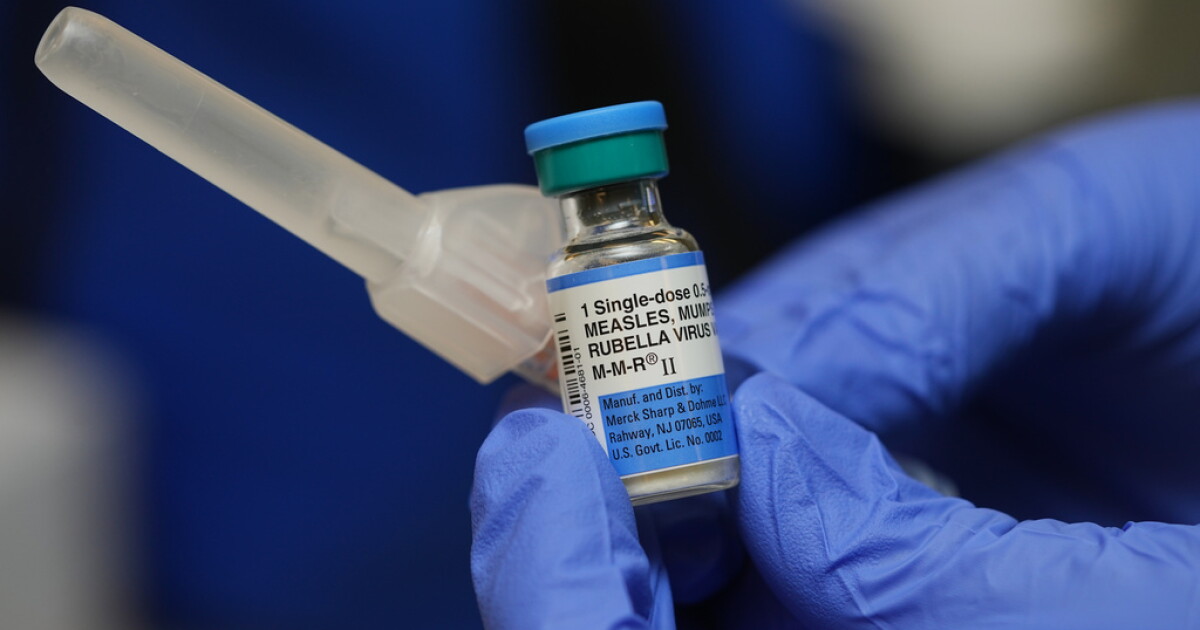
The Pennsylvania Department of Health has increased its efforts to promote a measles vaccination campaign, and according to the DOH, nurses have administered more than 11,500 measles, mumps, and rubella (MMR) doses in 2026 — including more than 7,200 shots across 269 pop-up clinics since late April — marking a notable surge from the fewer than 1,000 monthly doses the staff typically gave between January and July.1
Statewide, healthcare providers saw a similar spike in demand, with monthly MMR vaccinations climbing from a typical baseline of 25,000 doses to more than 49,000 in August, 56,000 in September, and nearly 62,000 in October.1
Regaining elimination status
Regaining measles elimination status will require the United States to go a full year without continuous transmission of the virus, according to PAHO.1
Health officials said the process could take years.1
The United States is expected to submit a corrective plan of action to PAHO in the coming weeks.1
The CDC has said it is committed to regaining measles elimination status.1
Robert F. Kennedy Jr. has falsely linked shots to autism and questioned their safety by calling for changes to U.S. vaccine schedules, including splitting the MMR (measles, mumps, rubella) vaccine into separate shots.2
Kennedy this month blamed the measles resurgence on “Covid-era disruptions” to routine childhood vaccination, and vowed to restore America’s measles elimination status.2
Sen. Bill Cassidy (R-La) said Kennedy has done “everything he could to undermine immunizations.”.2 Cassidy said “We’re seeing children dying of measles for the first time in decades.”2
Perri Klass in The New York Times said, “This is a moral and medical tragedy, as well as a political failure.”2