Key facts
NASA’s Voyager 1 spacecraft became humanity’s first object to reach one light-day away as it continues to travel through interstellar space.1
Voyager 1 reached one light-day away last week as it radioed from more than 16 billion miles away.1
Despite the communication issue, the spacecraft still sends a radio signal, implying its communication equipment still works.1
Engineers Investigate Missing Data
Engineers are investigating the problem, but troubleshooting could take a long time.1
A similar problem three years ago was traced to an onboard computer.1
Engineers are currently investigating whether Voyager’s missing data error is tied to a brief communications gap experienced in October, when the spacecraft was out of contact for about 48 hours.1
It started transmitting data on its own again and was operating normally until Nov. 14.1
A Long Journey Through Space
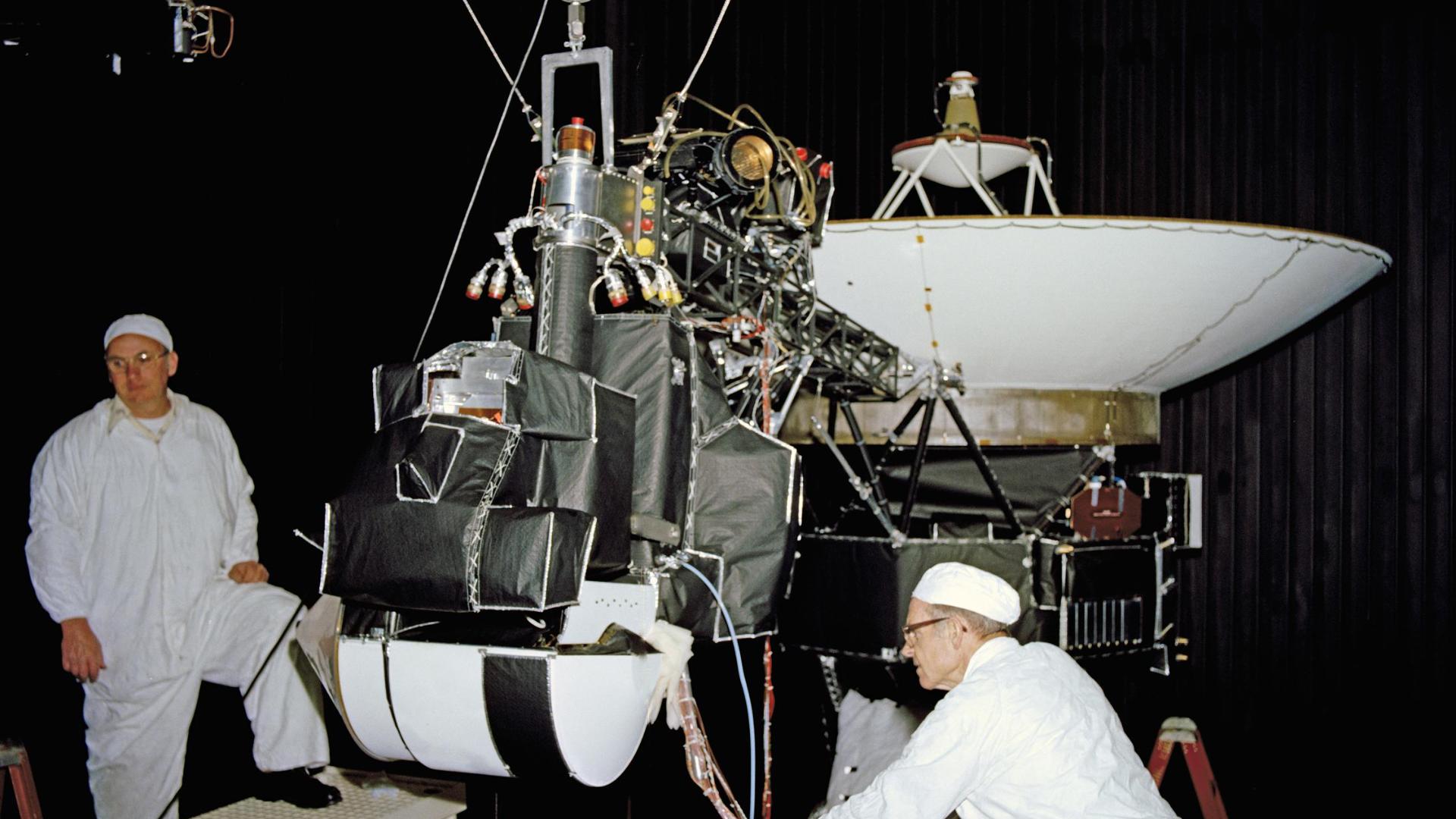
Voyager 1 and its twin, Voyager 2, are NASA’s longest-operating space missions, churning out data for nearly a half-century despite powering down most of their instruments to keep exploring.1
But its route to Jupiter and Saturn, plus Uranus and Neptune, was slower and longer, and it did not reach interstellar space until 2018.1
Both spacecraft are doing well for their 49 years of age, plowing through space at 38,000 mph and powered by plutonium.1
Picture-taking ended long ago, but they typically send back bits of precious data almost every day from their never-before-explored environment.1
A Milestone in the Long Journey
NASA’s Voyager 1 spacecraft will reach a distance of one light-day from Earth on Wednesday, Nov. 18, marking a historic milestone in its nearly 50-year journey through space.2
It now takes 24 hours for a command to reach Voyager 1 and another 24 hours to get a response.1