Why Loaloat Al Behar has not moved since 2023

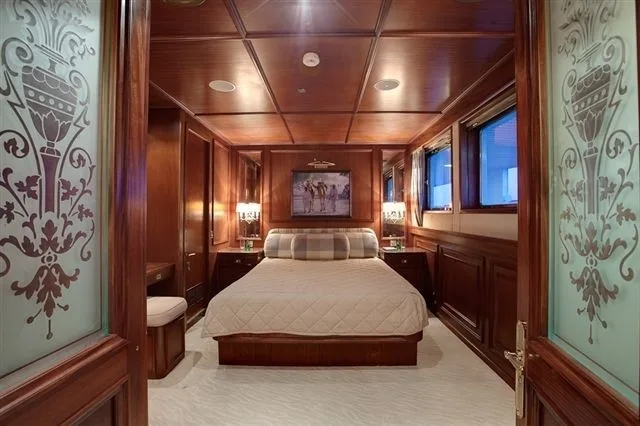
This report is from CelebYachts, which tracks the superyachts of public figures.1
Loaloat Al Behar is owned by the Sultanate of Oman. She has stayed in one spot since December 2023. This stillness reveals how state-owned yachts operate outside normal sales cycles.1
Loaloat Al Behar has not moved for over a year. The last AIS signal came in early December 2023. She sits at coordinates 16.94° N, 54.37° E in the Arabian Gulf.1
She stays put because of her ownership model. The Sultanate of Oman owns her directly. State assets do not follow commercial depreciation rules.1
Most large yachts change hands every few years. They are sold to recoup costs. Loaloat Al Behar exists on a fixed state budget. She serves diplomatic needs. She does not need to be profitable.1
Who built this vessel, and why only Picchiotti could?
The yard that built Loaloat Al Behar was Picchiotti. It stood in Viareggio. The shipyard closed its doors in the late 1980s. No other builder used this specific hull design.1
She launched in 1982. She measures 103.82 metres in length. Her beam is 16.24 metres. These dimensions fit the constraints of the original Viareggio slipway. Only Picchiotti could produce this form.1
The hull shape is distinct. It uses a full-displacement design. This style prioritises stability over speed. It was common for naval and government vessels of that era. Commercial superyachts later moved towards planing hulls.1
The IMO number 7908433 identifies her globally. The MMSI code 461000425 links her to Omani maritime traffic. These codes remain constant through ownership changes. They anchor her identity in international records.1
Her gross tonnage is 4633. This measures her internal volume. It places her in the upper tier of mid-sized vessels. The volume supports her role as a floating office. Space matters more than speed for state guests.1
The builder’s closure adds to her uniqueness. You cannot commission a twin. The design remains singular. This scarcity affects how states view such assets. They are irreplaceable within their specific class.1
How does state ownership change her daily life?
Commercial yachts rely on brokerage networks. Owners sell them when tastes change. Loaloat Al Behar has no such market. She belongs to the Sultanate of Oman. The state keeps her for utility.1
Funding comes from the national treasury. There is no private investor seeking returns. Maintenance costs are absorbed by the state budget. This removes financial pressure from operations.1
Diplomatic schedules dictate her movement. She travels when required by protocol. She stays home when idle. This pattern creates long periods of stillness. The AIS data reflects these pauses perfectly.1
Her flag is Oman. This registration confirms her status. It signals she is a government vessel. Other nations recognise her immunity. She operates under different rules than private pleasure craft.1
Home port is Port Sultan Qaboos. This base supports her missions. Crews are state employees. They maintain strict operational security. Public visibility is minimal compared to celebrity yachts.1
The static track is the main clue. She has not sailed since December 2023. This duration is unusual for active vessels. For a state yacht, it suggests low priority or high security.1
Sanctions do not apply here. Oman maintains neutral foreign policy. No international body restricts her movement. The stillness is administrative. It is a choice of the owning state.1
What does the AIS record show about her location?
The last known position is 16.94° N, 54.37° E. This point lies in the Arabian Gulf. It is near the coast of Oman. The area is calm and sheltered.1
Coordinates are precise to two decimals. This level of detail helps tracking. It shows she is anchored or moored. She is not drifting. Her engine may be off or idling.1
The timestamp 1701760175 marks the last contact. This converts to early December 2023. Over a year has passed since then. AIS transponders can be switched off intentionally.1
Vessels often go dark for privacy. State vessels do so for security. Loaloat Al Behar may have silenced her beacon. Or she simply has no mission requiring travel.1
The Arabian Gulf is a busy waterway. Traffic is heavy nearby. Her presence is noted by local authorities. She fits into the regional maritime landscape without drawing attention.1
No voyage charts exist for her. The pack lists zero voyages. This absence confirms her lack of recent activity. She is not part of the cruising circuit.1
Why does she stay registered to Oman?
Reflagging costs money and time. Private owners often switch flags for tax reasons. The Sultanate has no such incentive. Keeping the Omani flag is simpler. It avoids bureaucratic hurdles.1
Sovereign immunity requires clear registration. A foreign flag might complicate legal standing. Oman provides a stable legal framework. The state protects its own assets directly.1
The category is Middle East royalty. This group shares similar traits. They value permanence over novelty. Their yachts serve as extensions of the palace. They do not rotate frequently.1
Other state yachts in the region behave similarly. They sit for years between deployments. Loaloat Al Behar follows this pattern. Her history is consistent with her peers.1
The owner research notes Sultan Haitham bin Tariq. He rules currently. His administration manages state property. Decisions about the yacht come from his circle. Personal taste plays a minor role.1
How does her age affect her current status?
She is forty-one years old. That is old for a steel hull. Yet she remains seaworthy. Regular maintenance keeps her safe. State budgets allow for thorough upkeep.1
Newer yachts offer more luxury. But they lack historical significance. Loaloat Al Behar carries prestige. She represents decades of Omani diplomacy. Her age adds to her dignity.1
Parts for a 1982 Picchiotti are hard to find. Specialised craftsmen must fabricate replacements. This increases repair costs. However, cost is not the primary barrier for the state.1
Technological obsolescence is another factor. Navigation systems may be outdated. Modern electronics can be retrofitted. The hull structure itself remains sound. It outlives many modern designs.1
The estimated value is null. Markets do not price state assets easily. There is no comparable sale. Her worth is functional, not financial. She is priceless to the owner.1
Her story is one of permanence. She was built for service. She continues that service today. The silence of her AIS is a pause in duty.1
Read this on celebyachts.com, where the figures are checked against the live register.1
Sources
Every number in the story points here. Each links to the original reporting.
Not ratedCelebYachts
See a sentence its source doesn’t back up?
Tell us the source number and what’s wrong. We check every report. If we change the story, the fix goes on the corrections page with the old wording.