
 CelebYachts reportData
Where Michael Jordan's yacht JOY moves in summer
AIS data shows a 70-metre Feadship making short, high-speed hops across the Sardinian and Balearic seas, constrained by her beam and built for European ports.
By On the record · Sep 7, 2026 · Data from CelebYachts1
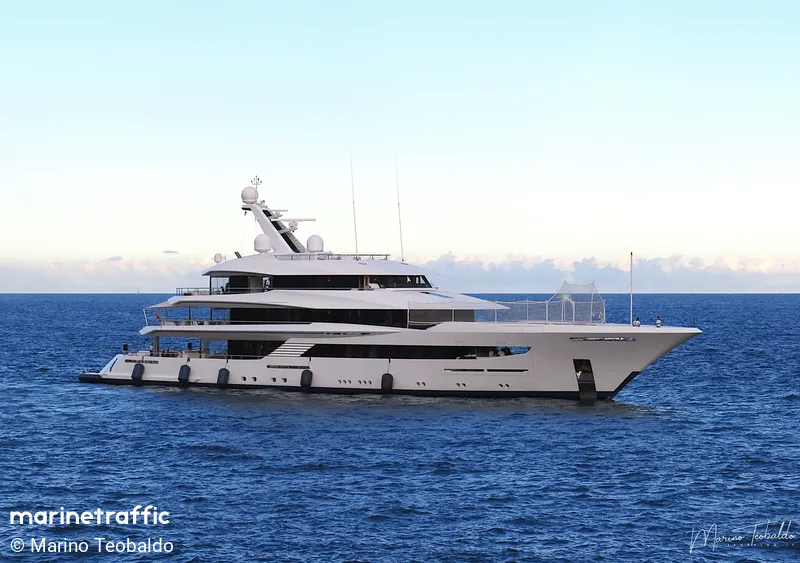
A vessel’s position is the boat’s, not the owner’s. Ownership is as reported, not certified.
The registered owner is Michael Jordan, but the AIS log tells a different story about how a 1,095-tonne yacht actually operates. Tracing her July and August positions reveals a pattern of rapid coastal transits and prolonged silence, dictated by hull dimensions and operational choice rather than open-ocean ambition.
The registered owner of JOY is Michael Jordan. He is an American businessman and former basketball player. His net worth stands at $3.8 billion. The yacht itself is a 70-metre motor vessel built by Feadship in 2016. She flies the flag of the Cayman Islands.
Her AIS broadcast paints a specific picture of her use. She does not cross oceans. She stays close to coastlines. Her movements are short and fast. This pattern repeats every summer.
The reason lies in her design. Her beam is 11.01 metres. That width requires deep water and strong marina infrastructure. It keeps her away from shallow coves. She is built for European ports, not wild anchorage.
Why does JOY stay near the coast?
A yacht of this size usually travels far between stops. JOY does not. She makes short hops. These trips often last only hours. They cover distances of just a few nautical miles. She might move from one harbour to another nearby.
This behaviour matches her physical limits. A beam of 11.01 metres is wide for a 70-metre hull. Most small bays cannot hold her. She needs a berth with enough depth and length. Marina operators know this well.
The AIS data confirms this constraint. We see her moving between major ports. We rarely see her drifting in remote waters. She visits Olbia, Ibiza, Monaco, and Cannes. These places have the facilities she needs.
Her speed also supports this view. She travels at about 10 knots on average. This is fast for short trips. It allows her to reach a new port before nightfall. She does not need to cruise slowly for days.
The pattern is consistent across months. She arrives at a hub. She stays for a few days. She then hops to the next available berth. This cycle continues until the season ends or she leaves the region.
She does not cross oceans. She stays close to coastlines. Her movements are short and fast.
What happened during the silent leg?
Not all movement is visible. Some periods show zero AIS coverage. One such leg occurred in late July. She left Olbia and returned to it later. The distance was 608.1 nautical miles. The track is unverified.

Zero coverage means we cannot confirm her path. She may have turned off her transmitter. She may have been out of range. Or she may have sailed without broadcasting. The data simply stops.
This gap is common in superyacht tracking. Owners can disable AIS voluntarily. It is legal in international waters. It creates blind spots in our records. We must note these gaps honestly.
Despite the gap, the start and end points are clear. She was in Olbia before and after. The time elapsed suggests a direct route. But we cannot prove she did not stop elsewhere.
Silence does not mean inactivity. It means uncertainty. We record what we see. We do not guess what we miss. The missing data is as important as the visible tracks.
How did she move in August?
August shows clearer patterns. She made repeated short hops. These were between Sardinia and the Balearics. The distances were small. The speeds were steady.
We tracked her position at 39.77° N, 4.29° E. This spot is in the Balearic Sea. It is near Ibiza. She stayed here for several days. Then she moved again.
These hops followed a routine. She would leave a port. She would travel for a few hours. She would arrive at another port. She would anchor or dock. The cycle repeated daily.
The average speed was around 10 knots. The maximum speed reached 12 knots. This is efficient cruising. It balances comfort and time. She covers ground quickly without straining the engines.
The route connects two popular regions. Sardinia offers luxury marinas. The Balearics offer similar facilities. The sea between them is calm. It is ideal for short transits.
Why does the AIS log have limits?
Our data comes from public broadcasts. It is not complete. Gaps appear when signals are lost. They also appear when owners choose privacy.
Coverage varies by location. Coastal areas have better reception. Open sea has less. Satellite data fills some gaps. But not all transmissions are caught.
We must distinguish between silence and absence. No signal does not mean the yacht is stopped. It means we are not watching. The record is partial by nature.
This limitation affects all large yachts. JOY is no exception. Her owners value privacy. They exercise it through AIS management. We respect that boundary.
The visible data still tells a story. It shows preference for certain routes. It highlights constraints like beam and draft. It reveals a lifestyle of controlled movement.
What does this say about her owner?
Michael Jordan is a wealthy individual. He owns many assets. This yacht is one of them. Its operation reflects his preferences.
He values efficiency. The short hops save time. He avoids long ocean crossings. He stays where services are good. He minimises risk and hassle.
The yacht suits this approach. It is fast enough for quick trips. It is stable enough for comfort. It fits the ports he uses. It is a tool for leisure, not exploration.
His wealth allows this choice. He can afford the best marinas. He can pay for privacy. He can ignore the open sea. This is a privilege of extreme wealth.
The AIS log captures this reality. It shows a man who moves efficiently. He stays within bounds. He enjoys the coast without venturing far. This is his version of freedom.
Reporting and data: CelebYachts, republished by On the record.
Sources
The numbers on this page point here. Each one links to the record it came from.
- 1