
 CelebYachts reportYards & Design
Why the Gucci family bought Creole's 1927 hull
The Gucci family owns a sailing yacht with a steel keel from 1927. Her tonnage shows she was built for space, not speed.
By On the record · Oct 20, 2026 · Data from CelebYachts1
A vessel’s position is the boat’s, not the owner’s. Ownership is as reported, not certified.
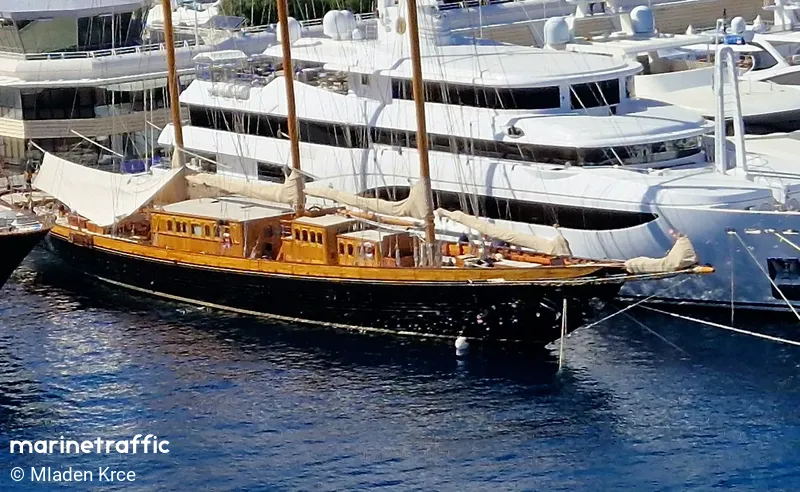
Creole is a 58-metre schooner owned by the Gucci family. She carries a 1927 hull date in Malta. Her gross tonnage reveals a conversion that prioritised interior volume over hydrodynamic efficiency.
What makes Creole's hull so unusual?
Creole sits in the Balearic Sea right now. Her AIS signal holds at 38.9° N, 1.46° E. The data comes from her Maltese registration. This vessel looks like a modern luxury yacht.
She measures 57.91 metres long. That is nearly 190 feet. Most yachts of this size are motor vessels. Creole flies sails. She uses a schooner rig. This choice sets her apart from the fleet.
The Gucci family owns her. They bought a historical hull. The keel dates to 1927. This is a commercial ship converted into a Private yacht. The engineering trade-offs are visible in her numbers.
Why is the gross tonnage so high for her length?
What does the 1927 hull tell us about Creole?
Her hull year is 1927. This predates modern composite construction by fifty years. Builders used steel for ships then. They did not use carbon fibre or aluminium. The weight of the steel defines her structure.
A steel hull from 1927 is heavy. It requires more power to move. It also provides immense strength. The Gucci family accepted these constraints. They chose history over lightweight performance.
The IMO number is 8229901. This tracks her through global databases. The MMSI is 249630000. These identifiers link her to the old registry. They confirm her age as a working vessel.
She was rebuilt for leisure use. The conversion kept the original frame. This preserves the maritime heritage. It also limits how fast she can go. Speed was never the goal here.
The beam is 9.0 metres wide. This width supports the sail plan. It also creates internal space. The shape is broad and stable. Stability matters for comfort on long voyages.
Modern yachts often have narrow beams. This reduces drag in the water. Creole ignores this rule. She values roominess instead. The design reflects a different priority.
Gross tonnage measures inside volume. It is not weight. It counts every enclosed space. Creole has 381 gross tonnes. This number seems large for a 58-metre boat.
Most yachts under 60 metres have lower tonnage. A typical figure might be 200 tonnes. Creole nearly doubles that. The extra space comes from the conversion process.
The builders added decks and cabins. They filled the steel shell. This maximises living area. It sacrifices speed and fuel efficiency. The math is simple and clear.
Volume drives the cost. More space means more materials. It also means more maintenance. Steel rusts if not cared for. The owners pay for upkeep.
The ratio of tonnage to length is key. High tonnage means a fat hull. Fat hulls create more resistance. Resistance slows the vessel down. This is basic physics.
Schooners handle wind differently. They do not need engines as much. But they still face drag. The heavy hull fights the water. The sails must overcome it.
This design suits slow cruising. It does not suit racing. The Gucci family knows this. They want a floating home. They do not want a racehorse.
The value is unknown. Estimates vary widely. No public record confirms a price. The Gucci family keeps finances Private. We only see the asset.
How did the Gucci family come to own Creole?
The Gucci family is Italian. They founded a Fashion dynasty. Their wealth comes from retail. They invest in diverse assets. Yachts are part of that portfolio.
They acquired Creole as a project. Buying an old hull is risky. It requires expert surveying. It needs skilled craftsmen. The result is unique.
No other yard builds like this. Feadship and Lürssen make new boats. They do not restore 1927 frames. Specialised teams handle such work. These teams are rare.
The family chose Malta for registration. Valletta is the home port. Malta offers a friendly flag state. It allows older vessels easily. Other flags might reject her age.
Italian owners often register abroad. Tax reasons drive this choice. Privacy also plays a role. Malta balances both well. The paperwork stays clean.
The Guccis are known Philanthropists. They support arts and culture. This yacht fits their profile. It is a piece of art itself. It moves across the sea.
Their citizenship is Italian. They live in Europe mostly. This keeps them close to home. Creole stays in the region. Saint-Tropez is a frequent stop.
The family does not seek fame. They avoid press attention. Yet their name appears here. The yacht bears the Gucci legacy. It speaks of taste and tradition.
Where has Creole been since the last broadcast?
AIS data shows her recent path. She moved from Saint-Tropez to Palma de Mallorca. This trip took one day. The distance was 314 nautical miles. She covered it slowly.
Her average speed was 9.7 knots. This is modest for a motor yacht. It is normal for a sailing vessel. Wind conditions dictate pace. Engines assist when needed.
Before that, she stayed in Saint-Tropez. She made short trips nearby. One run covered only 6.7 nautical miles. Another went to Monaco. These are local hops.
She visited Nice and Cannes too. The route follows the coast. This is the classic summer circuit. Owners prefer calm waters. Safety and comfort matter most.
Now she sits in the Balearic Sea. The last signal came from there. She has not moved far. The map shows her position clearly. She waits for the next leg.
What makes Creole different from other yachts?
She is a sailing yacht. Most large yachts are powered. Sails require skill to manage. Crew must know rigging well. This adds operational complexity.
The steel hull is another factor. Fibre glass is lighter. Steel is stronger but heavier. Repairs are harder to spot. Corrosion hides beneath paint.
The 1927 date is unique. Few yachts are this old. Many were scrapped decades ago. Creole survived. She was saved for leisure. This preservation is valuable.
Her gross tonnage proves the conversion. Builders added significant volume. They did not just refit. They expanded the interior. This changes the character entirely.
The Gucci name adds prestige. Fashion brands understand design. They appreciate aesthetics. This yacht reflects that eye. It looks good and works well.
There is no rush to sell. The family holds the asset. They enjoy using it. It serves as a retreat. The sea offers peace away from land.
We track her via AIS. The data is public. Anyone can see her location. This transparency is standard. It helps identify large vessels.
Creole stands out in the list. She breaks the mold of modern design. She brings history to the present. She sails on her own terms.
Reporting and data: CelebYachts, republished by On the record.
Sources
The numbers on this page point here. Each one links to the record it came from.
- 1