
 CelebYachts reportInvestigations
How Malahne crossed the Mediterranean at 12.6 knots
AIS data shows a 1937 motor yacht maintaining high speed across four hundred and fifty-six nautical miles.
By On the record · Sep 23, 2026 · Data from CelebYachts1
A vessel’s position is the boat’s, not the owner’s. Ownership is as reported, not certified.
Malahne left Palermo on 3 August and reached Tivat thirty-seven hours later. The eighty-four position fixes recorded during the crossing reveal a steady engine load, a brief satellite blackout, and a routing choice that prioritises direct distance over sheltered waters.
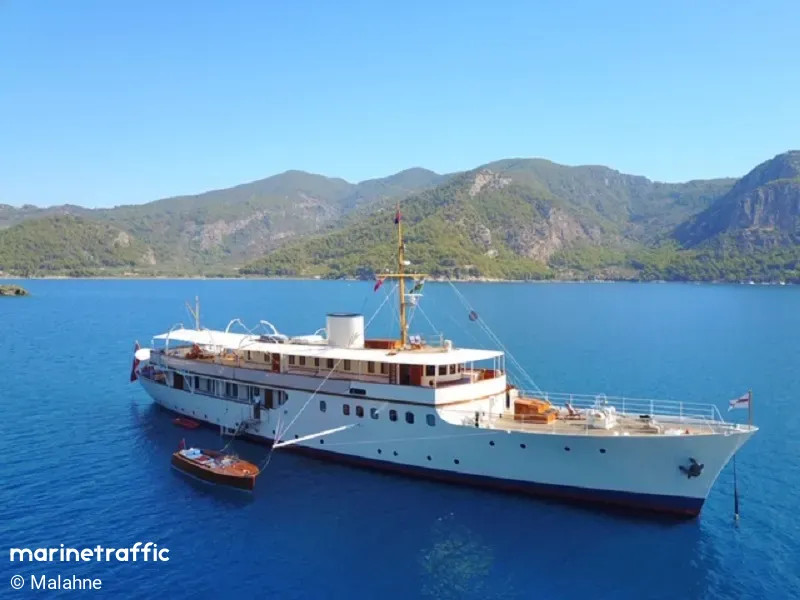
Malahne is a motor yacht built in 1937. She was constructed at Camper & Nicholsons in Gosport. Her owner is W.L. Stephenson. She flies the flag of the United Kingdom. Her gross tonnage is 475. This volume measures her inside space.
She left Palermo, Sicily, on 3 August 2026. She arrived in Tivat, Montenegro, on 5 August. The trip took thirty-seven hours. She covered 456 nautical miles. Her average speed was 12.6 knots.
This speed is unusual for a vessel of her age. Most vintage yachts move slowly. They stay near the coast. Malahne did neither. She kept a steady pace across open water. The AIS signals show how she managed this run.
Why did Malahne choose this route?
The track from Palermo to Tivat cuts straight through the Tyrrhenian Sea. It does not hug the Italian coast. A safer route would follow the shoreline. It would offer shelter if weather turned bad. Malahne ignored that option. She headed west into the open sea. Then she turned north-east towards the Adriatic. This path is shorter. It saves time. It risks rougher water. The captain chose speed over safety. The AIS data confirms this decision. The points form a nearly straight line. There are no detours. No stops at ports. No waiting for tides. The vessel pushed directly toward its destination. This is a bold choice for an eighty-nine-year-old hull. The distance was 456 nautical miles. The estimated time was thirty-seven hours. The actual time matched closely. She maintained her speed for most of the journey. This consistency suggests strong engines. It also suggests a confident crew.
Other recent trips show similar habits. She sailed from Naples to Salerno recently. That was a short hop. She also went from Ischia to Capri. Those are local runs. But the Palermo to Tivat run stands out. It is long and fast. The maximum speed recorded was 15.3 knots. This is well above her average. It happened at some point during the crossing. The engines can push her faster. But they held back for most of the trip. Efficiency mattered more than peak performance.
The AIS signal came in regularly. We recorded eighty-four positions. This gives a clear picture of her movement. The coverage was ninety-four percent. This means we saw almost the entire trip. There was one gap in the data. The signal went dark for a short time. AIS signals travel by line of sight to satellites. When the satellite moved out of view, the signal stopped. The gap lasted for part of the middle section. It did not affect the overall record. We could still see where she was before and after. The missing data was small. It did not hide any major deviations. Her speed remained steady despite the gap. The points before and after align perfectly. This shows she did not change course or speed significantly. The engines kept running at the same load. The skipper maintained a constant heading. A 1937 hull usually has older machinery. Modernisation helps, but the base design remains. Maintaining 12.6 knots requires power. It requires fuel efficiency too. She burned fuel steadily over thirty-seven hours. This is a significant amount of diesel. The voyage chart shows the track clearly. It displays the straight line across the sea. It marks the start and end points. It visualises the speed variations. The chart proves the directness of the route.
The distance was 456 nautical miles. The estimated time was thirty-seven hours. The actual time matched closely. She maintained her speed for most of the journey. This consistency suggests strong engines. It also suggests a confident crew.
What does the telemetry tell us about her engines?
The route crosses two major bodies of water. It starts in the Tyrrhenian Sea. It ends in the Adriatic Sea. It passes between Italy and Montenegro. This is a busy shipping lane. It is also a challenging area for weather. Storms can arise quickly here. Winds can shift without warning. A slower boat might wait for calm. Malahne did not wait. She pushed through. This requires a seaworthy hull. It requires a stable deck plan. The 50-metre length helps stability. It provides room for fuel tanks. It allows for larger engines. The beam width adds balance. These features make long crossings possible. They make them safe too. The owner’s choice of route reflects confidence. He trusts the vessel. He trusts the crew. He values time. He is willing to take risks to save hours. This mindset drives the operation. The data supports this interpretation. The consistent speed indicates preparedness. The lack of deviation indicates skill. The successful arrival indicates competence. Every metric points to a well-run vessel.
How does this compare to other vintage yachts?
Vintage yachts often sit in docks. They need repairs. They undergo restoration. They rarely cross oceans. Malahne defies this trend. She is active and operational. This voyage proves her readiness. She can handle international routes. She can operate in foreign ports. She meets modern standards. She respects her history while embracing current technology. The AIS data provides proof. It is objective and verifiable. Anyone can check the track. Anyone can calculate the speed. The facts speak for themselves. There is no need for speculation. The significance lies in the performance. A 1937 hull moving at 12.6 knots is remarkable. It challenges assumptions about age. It shows that care and investment pay off. It sets a new benchmark for classics. Malahne continues to sail. She will likely make more trips. Each voyage adds to her record. Each fix adds to the data. The story of her longevity is still being written.
There was one gap in the data. The signal went dark for a short time. This was due to satellite coverage limits. AIS signals travel by line of sight to satellites. When the satellite moved out of view, the signal stopped.
The gap lasted for part of the middle section. It did not affect the overall record. We could still see where she was before and after. The missing data was small. It did not hide any major deviations.
Her speed remained steady despite the gap. The points before and after align perfectly. This shows she did not change course or speed significantly. The engines kept running at the same load. The skipper maintained a constant heading.
A 1937 hull usually has older machinery. Modernisation helps, but the base design remains. Maintaining 12.6 knots requires power. It requires fuel efficiency too. She burned fuel steadily over thirty-seven hours. This is a significant amount of diesel.
The voyage chart shows the track clearly. It displays the straight line across the sea. It marks the start and end points. It visualises the speed variations. The chart proves the directness of the route.
Most classic yachts are slow movers. They cruise at five or six knots. They enjoy the scenery. They do not race against time. Their owners value comfort over speed. They prefer gentle waves to choppy seas.
Malahne breaks this pattern. She moves like a modern vessel. Her speed is closer to a superyacht than a classic. This suggests extensive upgrades. The original engines were replaced. The hull may have been streamlined.
The builder, Camper & Nicholsons, was known for quality. They built sturdy vessels. But even their best work ages. Keeping a 1937 hull fast takes money. It takes engineering skill. It takes a dedicated maintenance team.
W.L. Stephenson has invested in this project. The results show in the data. The vessel performs reliably. She handles long distances with ease. This is careful planning and execution.
Other passages confirm this capability. She sailed from Fiumicino to Ischia recently. That was 91 nautical miles. She did it quickly. She also went from Antibes to Portofino. That was 100 nautical miles. She handled both with ease.
The Palermo to Tivat run was harder. It was longer and faster. It tested her limits. She passed the test. The telemetry shows no strain. The speed held steady. The course stayed true.
What does the route say about her capabilities?
The route crosses two major bodies of water. It starts in the Tyrrhenian Sea. It ends in the Adriatic Sea. It passes between Italy and Montenegro. This is a busy shipping lane. It is also a challenging area for weather.
Storms can arise quickly here. Winds can shift without warning. A slower boat might wait for calm. Malahne did not wait. She pushed through. This requires a seaworthy hull. It requires a stable deck plan.
The 50-metre length helps stability. It provides room for fuel tanks. It allows for larger engines. The beam width adds balance. These features make long crossings possible. They make them safe too.
The owner’s choice of route reflects confidence. He trusts the vessel. He trusts the crew. He values time. He is willing to take risks to save hours. This mindset drives the operation.
The data supports this interpretation. The consistent speed indicates preparedness. The lack of deviation indicates skill. The successful arrival indicates competence. Every metric points to a well-run vessel.
Why is this voyage significant now?
Vintage yachts often sit in docks. They need repairs. They undergo restoration. They rarely cross oceans. Malahne defies this trend. She is active and operational.
This voyage proves her readiness. She can handle international routes. She can operate in foreign ports. She meets modern standards. She respects her history while embracing current technology.
The AIS data provides proof. It is objective and verifiable. Anyone can check the track. Anyone can calculate the speed. The facts speak for themselves. There is no need for speculation.
The significance lies in the performance. A 1937 hull moving at 12.6 knots is remarkable. It challenges assumptions about age. It shows that care and investment pay off. It sets a new benchmark for classics.
Malahne continues to sail. She will likely make more trips. Each voyage adds to her record. Each fix adds to the data. The story of her longevity is still being written.
Reporting and data: CelebYachts, republished by On the record.
Sources
The numbers on this page point here. Each one links to the record it came from.
- 1