
 CelebYachts reportInvestigations
The administrative logic of the Saint Vincent and the Grenadines register
The five vessels flying this Caribbean flag demonstrate how open registries function as tools for regulatory arbitrage rather than markers of maritime…
By On the record · Sep 21, 2026 · Data from CelebYachts1
A vessel’s position is the boat’s, not the owner’s. Ownership is as reported, not certified.
Saint Vincent and the Grenadines offers a registration framework designed to minimise operating costs and maximise crewing flexibility. Its current cohort of five hulls reflects a deliberate choice by owners who prioritise commercial efficiency over traditional seafaring heritage.
The registry operates as a commercial service rather than a cultural institution. Shipowners register merchant vessels in Saint Vincent and the Grenadines to access an open registry framework that decouples ownership nationality from operational jurisdiction. The practice allows proprietors to bypass the labour protections and taxation regimes of their home states. International law requires every merchant ship to be registered in a country, and the flag state exercises regulatory control over the vessel. Owners select jurisdictions like Saint Vincent and the Grenadines specifically because they do not impose a nationality or residency requirement for registration. This administrative structure lowers overall transportation costs by reducing registration fees and permitting the employment of crews from lower-wage markets.
The commercial architecture of the flag
The modern iteration of this model traces back to the 1920s in the United States, when Prohibition-era alcohol runners registered ships in Panama to evade domestic restrictions. The economic advantages proved durable. Following the American Seamen’s Act of 1915, which regulated mariners’ working hours, payment, and baseline food requirements, US-flagged vessels faced rising operational expenses. The legislation also reduced penalties for disobedience, abolished imprisonment for desertion, enforced lifeboat standards, mandated qualified able seamen counts, and required officers and crew to share a common language. These safeguards put US vessels at an economic disadvantage against countries lacking such rules. Shipowners responded by transferring registries to open flags. The Liberian open registry, established in 1948 through a joint venture between the US government and private enterprise, cemented the template. Saint Vincent and the Grenadines functions within this same lineage. It provides a legal shell that satisfies the mandatory international requirement for national registration while insulating the owner from the financial burdens associated with closed registries.
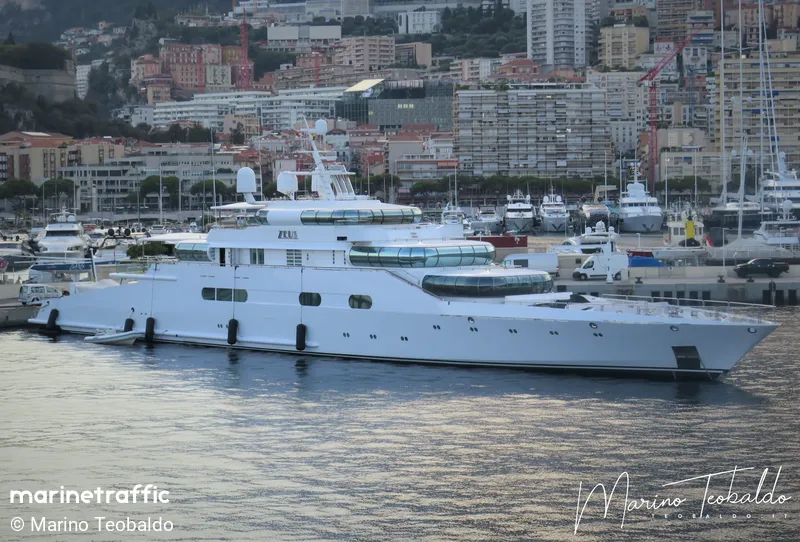
The register currently holds five hulls, accounting for roughly two percent of the tracked fleet. The vessels range from 37.0 metres to 85.1 metres in length. This distribution reveals a specific market positioning. The flag attracts operational yachts that require flexible manning and predictable tax liabilities rather than record-breaking superyachts that typically utilise specialised financing flags. The largest vessel, Meridian A, displaces enough steel to demand rigorous survey compliance, yet she flies a flag chosen for its administrative convenience. Below her sits ZEUS at 74.1 metres, followed by WHITE RABBIT at 61.45 metres. The remaining two hulls, Lady Anastasia at 47.73 metres and St. Vitamin at 37.0 metres, occupy the mid-range segment where operating margins are most sensitive to crewing costs and tonnage taxes. The absence of vessels exceeding one hundred metres suggests that owners of ultra-large craft prefer alternative jurisdictions that offer more tailored corporate structures or greater anonymity.
Crewing economics and historical precedent
Crewing arrangements form the primary mechanism behind the flag’s appeal. Open registries frequently permit owners to hire mariners from international labour pools without mandating a percentage of nationals. Traditional closed registries usually require vessels to be partially crewed by citizens of the flag state. By contrast, Saint Vincent and the Grenadines imposes no such restriction. This flexibility allows owners to recruit from developing nations where seafaring provides a major source of foreign currency, a dynamic recognised by the International Maritime Organization. The ability to circumvent national wage floors and working hour regulations reduces the fixed costs of maintaining a luxury yacht. When combined with exemptions on income taxes and reduced dock dues, the cumulative savings become significant. A single vessel can save millions annually by shifting its registry to a jurisdiction with minimal overhead.
The specific fee schedules and internal survey protocols for Saint Vincent and the Grenadines have not been published. The available records do not detail the exact tonnage tax brackets or the frequency of mandatory dry-docking inspections required by the local authority. What is documented is the structural incentive: owners trade the prestige of a traditional maritime flag for measurable financial relief. The registry itself acts as a private or governmental agency that processes transfers quickly, often online, with minimal scrutiny of the underlying corporate architecture. This administrative ease shifts the burden of routine certification away from high-cost classification societies towards cheaper channels until the vessel arrives at a strict port.
Legal frameworks and ownership transparency
The legal foundation of this arrangement rests on the principle that a ship operates under the laws of its flag state. International conventions, including the United Nations Convention on the Law of the Sea, mandate that the flag state effectively exercise jurisdiction over administrative, technical, and social matters concerning its vessels. The 1986 United Nations Convention for Registration of Ships attempted to enforce a genuine link between owner and flag, requiring either an economic stake or mariner provision. That treaty never entered into force due to insufficient ratifications. Consequently, the separation between beneficial ownership and flag state remains legally permissible. Owners can hide behind corporate layers while the registry handles the statutory paperwork.
Transparency of ownership varies by jurisdiction, but open registries generally facilitate opaque holding structures. While Saint Vincent and the Grenadines maintains its own public records, the broader ecosystem of flag-of-convenience registration enables legal anonymity. This feature appeals to proprietors who wish to distance their personal identities from their assets. The registry does not verify the ultimate beneficial owner against international sanctions lists beyond standard anti-money laundering protocols, leaving the burden of due diligence to port state inspectors and financial regulators. The result is a registration environment where the vessel’s physical characteristics and operational requirements dictate the flag choice far more than the owner’s public profile.
External enforcement and port state control
port state control remains the external check on this system. The Paris Memorandum of Understanding on port state control subjects visiting vessels to inspection by the states they enter. Inspectors examine Safety of Life at Sea standards, pollution prevention equipment, and living conditions. In 2015 alone, members of the Paris MOU conducted 17,858 inspections, detaining 595 vessels and banning one. Member states of the Tokyo Memorandum of Understanding conducted 17,269 ship inspections that same year, recording 83,606 deficiencies which resulted in 1,153 detentions. A ship flying an open registry faces the same physical scrutiny as any other merchant vessel once it enters a regulated harbour. The flag state’s lax internal oversight does not grant immunity from port authority detentions.
The mechanical reality of sailing under this flag involves continuous compliance with international safety conventions regardless of the administrative ease of registration. Inspections cover items concerning the Safety of Life at Sea and the prevention of pollution by ships. The difference lies in who pays for the surveys and how the crew contracts are structured. Owners who select Saint Vincent and the Grenadines accept the trade-off of reduced prestige for predictable operating costs. The register’s five hulls remain active components of the global fleet, moving through international waters under a banner chosen for its utility rather than its history. The flag persists because the economic calculus favours it, and the administrative machinery continues to process transfers without friction.
Reporting and data: CelebYachts, republished by On the record.
Sources
The numbers on this page point here. Each one links to the record it came from.
- 1