
 CelebYachts reportYards & Design
The Amels comparison
Built by the same yard forty-five years apart, Altair III and SIXTH SENSE show how classification rules and propulsion technology, rather than owner…
By On the record · Sep 18, 2026 · Data from CelebYachts1
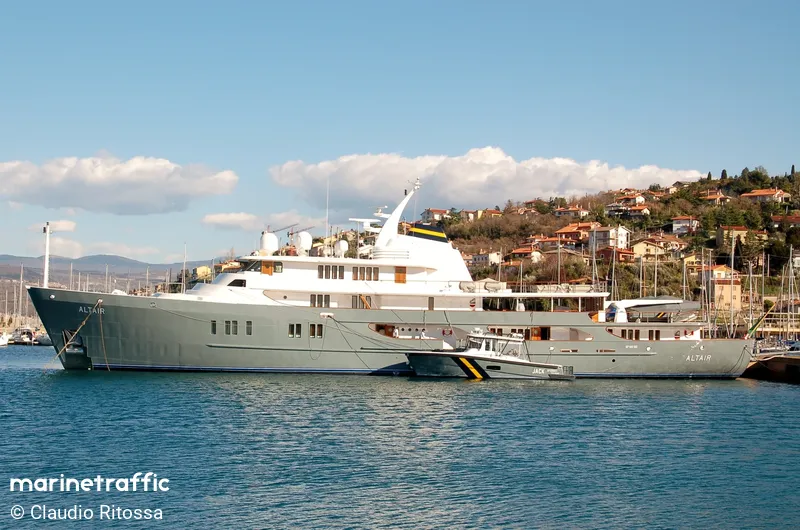
A vessel’s position is the boat’s, not the owner’s. Ownership is as reported, not certified.
Two hulls, one builder, four and a half decades of regulatory change. The divergence between Altair III and SIXTH SENSE reveals how shipyard capacity and stability standards forced Amels to trade beam for length while increasing internal volume by nearly seventy percent.
The steel of Altair III and SIXTH SENSE shares a single origin but describes two different eras of maritime regulation. Both vessels were constructed at Amels, yet the gap between their launch dates—1974 and 2019—separates them by a fundamental shift in how superyachts are classified and propelled. The yard did not simply scale up the earlier design; it rebuilt the proportions to accommodate heavier machinery and stricter stability requirements. The result is a pair of hulls where the later vessel trades absolute width for extended length, gaining internal volume through compliance rather than opulence.
The shed, not the drawing
Altair III arrived in 1974 as yard 327 at the Amels facility. She measures 59.0 metres in length with an 11.0-metre beam. SIXTH SENSE followed fifty years later, extending to 74.0 metres and widening to 11.94 metres. The fifteen-metre increase in length accounts for most of the displacement difference, but the beam expansion tells a different story about modern engineering constraints. In the mid-twentieth century, a beam of eleven metres provided sufficient stability for a vessel of that era's tonnage. By 2019, the addition of large-scale stabilisation systems, redundant power generation, and expanded crew quarters demanded a broader waterline.
The 0.94-metre increase in beam allowed the 2019 hull to carry more weight without compromising the centre of gravity. The extra length reduced the pitch response in open water, a necessary adjustment for a yacht intended to cross ocean basins rather than remain in coastal waters. The yard adapted its production methods to meet these demands, moving from a design philosophy centred on compact luxury to one prioritising global endurance. The physical footprint of the newer hull reflects a deliberate choice to extend the waterline while only marginally widening the beam, preserving hydrodynamic efficiency while adding the space required for modern certification.
Volume without drag
Gross tonnage measures the internal volume of a vessel, and the jump between the two hulls illustrates the pressure of modern classification. Altair III registers 1019 GT. SIXTH SENSE carries 1705 GT. The six hundred and eighty-six tonne difference represents a thirty-four percent increase in volume per metre of length, rising from seventeen point two seven GT/m to twenty-three point zero four GT/m. This volume does not belong to larger salons or additional guest cabins. It belongs to the engine room, the fuel tanks, and the ballast systems required by contemporary classification societies.
A 2019 Amels build must house diesel-electric or gas-turbine propulsion units that occupy far more cubic space than the mechanical engines of the 1970s. The additional displacement also supports the heavy cranes, tenders, and dive platforms that define modern expedition capability. The hull form accommodates this weight through a deeper draft and reinforced structural framing, invisible from the deck but critical to the vessel's seaworthiness. The wider beam allowed the 2019 designers to place these safety systems along the sides of the vessel without narrowing the central corridors. The extra length provided the run necessary to house the larger propeller shafts and rudder stocks required to move a heavier displacement at higher speeds.
The disparity in gross tonnage also highlights the evolution of measurement standards. When Altair III was built, the conventions for calculating internal volume were less stringent, allowing a 59-metre hull to sit comfortably under the 1100 GT threshold. By 2019, the same yard produced a 74-metre vessel that pushed well past 1700 GT, reflecting a regulatory environment where every enclosed space is accounted for and taxed. The increase in tonnage tracks directly with the fifteen-metre extension in length and the ninety-four centimetre expansion in beam, demonstrating how Amels scaled its output to match the expectations of a new decade.
Flags and home ports
The operational profiles of the two yachts reflect the different legal frameworks under which they sail. Altair III flies the Italian flag and lacks a recorded home port. Her estimated value stands at forty million dollars. She is owned by Diego Della Valle, who chairs Tod's and previously sold ACF Fiorentina following a criminal conviction for match fixing during the Calciopoli scandal. The Italian registry suits a domestic owner operating a classic hull within Mediterranean waters, avoiding the administrative overhead of international cruising permits.
SIXTH SENSE sails under the Cayman Islands flag, with George Town listed as her home port. Her owner is Micky Arison. The Cayman registry provides a standardised legal structure for a vessel designed for global cruising, simplifying customs clearance and crew employment across multiple jurisdictions. AIS data places her off the United States East Coast at 44.10° N, 69.09° W. Altair III sits further south in the Adriatic Sea at 40.13° N, 19.38° E. The distance between their current positions mirrors the difference in their operational scope, with one vessel anchored to a regional market and the other positioned for transoceanic passages.
The identifiers assigned to each hull further distinguish their regulatory standing. SIXTH SENSE carries IMO 9799824 and MMSI 319155500, confirming her compliance with international safety conventions and placing her on the global tracking grid. Altair III operates under MMSI 247092700 but lacks an IMO number, aligning with her pre-1990 construction date and smaller size. The presence of a formal IMO record for the newer vessel dictates a rigorous maintenance schedule and annual survey regime, requirements that shape the long-term ownership costs and operational readiness of the 2019 hull. The absence of such a record for the 1974 vessel leaves her subject to national inspection protocols alone.
The market valuation of the two hulls underscores the depreciation curve of early Amels builds alongside the premium attached to modern construction. Altair III holds an estimated value of forty million dollars, a figure that reflects her age, her classic proportions, and the limited resale market for vessels of that vintage. SIXTH SENSE has no published estimate, a silence that matches the opaque ownership structures common among Cayman-registered yachts. The discrepancy in pricing power between the two owners—Della Valle's consumer goods wealth versus Arison's shipping and media conglomerates—fuels entirely different approaches to vessel management. One maintains a historic asset for regional use; the other deploys a floating platform designed for continuous global transit.
Reporting and data: CelebYachts, republished by On the record.
Sources
The numbers on this page point here. Each one links to the record it came from.
- 1CelebYachtsCelebYachts: The Amels comparison