
 CelebYachts reportThe Fleet
The American fleet fractures into three AIS geometries
AIS broadcasts show us-owned mega-yachts abandoning long-range summer transits in favour of short coastal hops and stationary holds across four separate…
By On the record · Jul 3, 2026 · Data from CelebYachts1
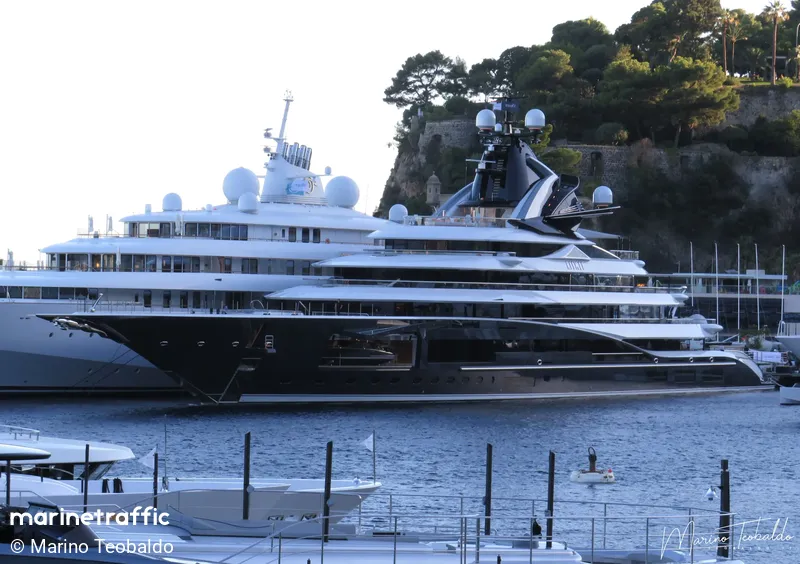
A vessel’s position is the boat’s, not the owner’s. Ownership is as reported, not certified.
Tracking thirty-one hulls through august positions reveals a cohort that has stopped moving as a unit. The data splits into a Ligurian circuit, an Adriatic-Ionian loop, a western Mediterranean perimeter, and a hemispheric scatter. The longest recorded passage is FIVE hundred and thirty-eight nautical miles, and most legs run under thirty.
The AIS archive for the us tycoons, financiers and sports owners cohort records a complete operational fracture during the current season. Thirty-one tracked hulls have abandoned the traditional northern summer circuit. Instead of executing long-range passages across open water, the fleet divides into three distinct geographical clusters and a fourth group that remains fixed outside europe. The average passage length exceeds one hundred nautical miles. Four vessels exceed two hundred nautical miles in a single leg. The broadcast pattern reveals frequent long-range transits across open basins and intercontinental routing.
The Ligurian circuit
Seven hulls occupy the Ligurian Sea, operating as a tightly bound network along the French and Italian rivieras. Kismet, measuring one hundred and twenty-two metres, completed three tracked passages in august. The vessel moved thirty-two nautical miles between Nice and Saint-Tropez on 3 August, ran eleven nautical miles in a local exercise on 1 August, and covered two hundred and eight nautical miles from Golfo Aranci in Sardinia back to Nice on 28 July. Boardwalk v, a one hundred and sixteen metre hull owned by Tilman Fertitta, sits in the same basin. Viva, ninety-four metres, repeated the Nice-Saint-Tropez corridor with a thirty-nautical-mile run on 1 August and a twenty-nine-nautical-mile hop from Saint-Tropez to Antibes on 28 July. Lady s, ninety-three metres, mirrored these movements with a nine-nautical-mile loop in Cannes on 3 August, a twenty-two-nautical-mile transit to Saint-Tropez on 2 August, and a ninety-six-nautical-mile run from Savona to Saint-Tropez on 31 July.
Kaos, one hundred and ten metres, covers more ground than the other Ligurian hulls but stays within the same coastal geometry. The vessel logged a seventy-nautical-mile run between Naxos and Anafi on 27 July, a two hundred and eighty-nine-nautical-mile transit from Kalamata to Catania on 29 July, an eighty-two-nautical-mile leg from Messina to Naples on 31 July, and a two hundred and thirty-four-nautical-mile passage from Naples to la Maddalena on 2 August. Elysian, sixty-six metres, and KINGDOM 5kr, eighty-six metres, hold station in the same waters without recording significant passages. The Ligurian group frequently executes passages exceeding two hundred nautical miles, venturing well beyond coastal waters and relying on satellite tracking rather than shore-based infrastructure.
The Adriatic and Ionian loops
Two additional hulls run parallel short-hops in adjacent seas, reinforcing the pattern of localised movement. Boardwalk, one hundred and seventeen metres, operates in the Adriatic Sea. The vessel crossed one hundred and four nautical miles from Dubrovnik to Brindisi on 29 July, ran thirty-one nautical miles from Brindisi to Lecce on 1 August, and covered another one hundred and four nautical miles from Lecce to Bari on 2 August. Dreamboat, one hundred and eleven metres, holds position in the Ionian Sea. Its tracked movements are confined to the sicilian coast, logging a forty-FIVE-nautical-mile run from Siracusa to Catania on 30 July, a thirteen-nautical-mile local exercise on 1 August, and a thirty-two-nautical-mile hop back to Siracusa on 2 August. Night HOWL, fifty metres, also sits in the Ionian Sea without recording significant passages. These passages demonstrate a consistent refusal to cross open basins, with all recorded distances staying under one hundred and FIVE nautical miles.
The AIS data captures these movements as frequent position updates with minimal speed variation. Coastal broadcasting infrastructure ensures that vessels operating within sight of land transmit their location continuously, creating a dense trail of short segments. When a yacht runs between nearby ports, the archive records multiple sub-fifty-nautical-mile legs rather than a single long transit. This operational rhythm requires less fuel than open-ocean cruising and keeps the vessels within range of standard repair facilities and provisioning networks. The absence of long-range routing suggests that the owners of these hulls prioritise proximity to shore over seasonal migration.
The western Mediterranean perimeter
Three hulls anchor the western Mediterranean sector, displaying either a single long transit followed by local returns, or extended stationary holds. Bravo EUGENIA, one hundred and nine metres, executed the longest passage recorded for the entire cohort. The vessel moved FIVE hundred and thirty-eight nautical miles from Nice to Cartagena on 1 August. Following that transit, it returned to local waters, logging a nine-nautical-mile loop near Nice on 31 July, a ninety-six-nautical-mile run from Genoa to Nice on 29 July, and an eighty-nine-nautical-mile transit from Monaco to Genoa on the same day. Limitless, ninety-six metres, remains fixed near Perpignan in France. The AIS archive shows a seven-nautical-mile movement on 3 August and an eighteen-nautical-mile run on 2 August, both starting and ending at the same coordinate. Queen MIRI, ninety-two metres, sits in the Balearic Sea, recording a thirteen-nautical-mile loop around Ibiza on 1 August. Hodor, sixty-six metres, holds station in the West Mediterranean without recording significant passages.
The western Mediterranean group confirms that even when vessels leave the Ligurian circuit, they do not adopt long-range strategies. Bravo EUGENIA's single crossing to Cartagena stands as an outlier, but the subsequent legs immediately revert to the sub-one-hundred-nautical-mile pattern seen elsewhere in the cohort. The positioning of these hulls near major European ports aligns with the broader trend of keeping large displacements close to established marinas. The AIS tracks show no evidence of deep-water surveying, scientific deployment, or intercontinental transit during the peak summer months.
The hemispheric break
Twelve hulls have left the Mediterranean entirely, dispersing across the Atlantic, the Pacific, and the southern hemisphere. Five vessels hold station on the us East Coast: EXCELLENCE, seventy-nine metres; ARCHIMEDES, seventy-one metres; Top FIVE ii, sixty-one metres; PRIVACY, forty-seven metres; and WINNING DRIVE, forty metres. Pi, one hundred metres, sits in the South Pacific, while pi, seventy-seven metres, holds position off East Australia. Oceanxplorer, eighty-FIVE metres, anchors in the Riau Archipelago. Sea Owl, sixty-two metres, remains in the gulf of Alaska. Samadhi, sixty-one metres, sits in the north sea. Attessa iv, one hundred and one metres, logs an eight hundred and seven nautical mile movement off the West Coast of Central America, though the broadcast provides no origin or destination coordinates. Dreamboat 1, ninety metres, and AQUILA, eighty-six metres, hold station in the Tyrrhenian Sea alongside LONIAN, seventy-four metres; VANISH, seventy-two metres; and Joy, seventy metres.
The geographic scatter eliminates the possibility of a unified summer itinerary. The us East Coast group operates entirely within home waters, avoiding the transatlantic run that would place them in the Mediterranean by august. The southern hemisphere vessels suggest a seasonal reversal, with owners relocating their fleets to escape the northern summer heat. The Tyrrhenian Sea hulls form a secondary cluster, but their positions remain static compared to the active Ligurian circuit. The AIS archive contains no passages linking these disparate groups, confirming that the cohort functions as independent units rather than a coordinated flotilla.
The data establishes a clear operational baseline for this category of ownership. Short coastal hops, extended stationary periods, and hemispheric dispersion replace the long-range transits that previously defined the segment. The AIS broadcasts provide a precise measure of this shift, showing that American-owned mega-yachts now manage their summer seasons through localised routing and fixed positioning. The longest recorded passage covers FIVE hundred and thirty-eight nautical miles, and the majority of tracked legs fall below thirty nautical miles. The fleet has not disappeared; it has simply stopped moving across open water.
Reporting and data: CelebYachts, republished by On the record.
Sources
The numbers on this page point here. Each one links to the record it came from.
- 1