
 CelebYachts reportInvestigations
The broadcast, not the blueprint
AIS data reveals how a Sanctioned forty-four-metre yacht navigates regulatory boundaries through short coastal hops and selective transmission.
By On the record · Oct 6, 2026 · Data from CelebYachts1
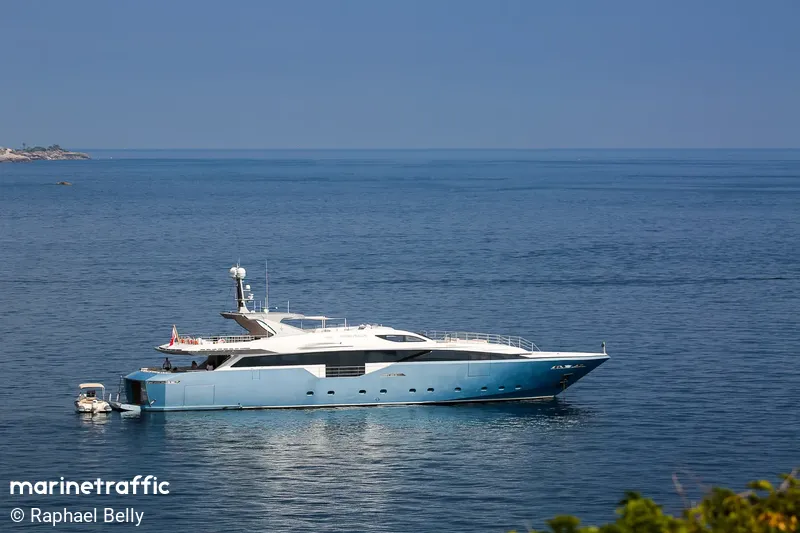
A vessel’s position is the boat’s, not the owner’s. Ownership is as reported, not certified.
Ownership of a vessel like Zig Zag Ocean is defined by jurisdictional distance and tracking discipline. The available AIS records show a boat operating within tight geographic limits, where every departure is calculated to avoid port denials and insurance voids.
A yacht of this size does not hide because of its dimensions; it hides because its registration and movement are constrained by sanctions enforcement, turning every AIS ping into a compliance exercise rather than a voyage. The public broadcast from IMO 9752216 and MMSI 538072165 traces a pattern of restricted mobility that aligns with the operational reality of assets listed under the 'Sanctioned & seized yachts (2nd tier)' category. The vessel's movements are not random leisure cruises but calculated transits between familiar harbours, designed to keep the asset within jurisdictions that have historically processed its paperwork and maintained its systems.
The broadcast, not the blueprint
The Automatic Identification System provides a continuous stream of positional data that overrides any attempt at physical concealment. Zig Zag Ocean measures forty-four point six metres in length with a beam of eight point six metres, displacing four hundred and thirty-nine gross tonnes. These figures place her firmly in the mid-range superyacht category, a size class that requires consistent engine maintenance and regular dry-docking cycles. The builder remains unrecorded in the register, and the interior specifications have never been published. That gap is stated once, and the analysis moves to what the tracking data actually demonstrates about her operational envelope.
The August 2026 track log contains four distinct passages, each confined to the western Mediterranean littoral. The first recorded leg ran from Villefranche-sur-Mer to Monaco, covering six point seven nautical miles over fifty-eight minutes at an average speed of seven point zero knots. A second passage connected Nice to Cannes, spanning twelve point seven nautical miles in roughly one hour and fifty-nine minutes, averaging nine point seven knots. The third leg extended from Cannes to Monaco, a twenty-seven point nine nautical mile run completed in one hour and forty-three minutes at sixteen point four knots average speed. The final tracked movement linked Nice to Saint-Tropez, a forty point six nautical mile transit finished in two hours and thirty-nine minutes at sixteen point seven knots average speed. All four voyages peaked near nineteen to twenty point one knots, indicating the hull was capable of higher speeds but deliberately held back during routine coastal hops.
Coverage percentages vary across these passages, with two legs showing one hundred per cent data retention and one leg registering zero per cent coverage. Zero per cent coverage on the Nice to Cannes run suggests either deliberate transmitter shutdown or equipment failure during the transit. Operators of Sanctioned vessels routinely manage AIS visibility to reduce their digital footprint when entering ports with heightened enforcement scrutiny. The absence of open-ocean passages confirms that the asset is not testing long-range endurance or attempting to relocate across sanction-heavy zones. She stays close to established home ports where legal counsel, familiar service providers, and coordinated port authorities exist.
The jurisdiction, not the journey
Flag state selection dictates the administrative distance between the beneficial owner and the registered entity. Zig Zag Ocean flies the Marshall Islands flag, with Majuro designated as her home port. The Marshall Islands registry is widely used for private yachts because of its streamlined corporate administration and favourable tax treatment, but it also creates a specific legal buffer that complicates direct ownership tracing. The register lists the owner simply as 'Non-Russian: Saleh Assi', accompanied by the classification 'Sanctioned & seized yachts (2nd tier)'. No biographical details, citizenship records, or wealth origin statements accompany that designation. The precise legal instrument triggering the sanction listing has not been disclosed, nor has the corporate chain that holds the title deed. That opacity is stated once, and the focus shifts to how the flag state framework shapes daily operations.
A four hundred and thirty-nine gross tonne motor yacht cannot cross international waters without clearing customs, securing marine insurance, and passing classification surveys. Each requirement becomes a choke point when the beneficial owner carries a sanction designation.
The Marshall Islands administration processes registrations electronically and maintains a public database, but it does not publish underlying shareholder registers for private vessels. This means the link between the registered company and Saleh Assi exists only as a reported association, verified through press records or secondary filings rather than direct registry disclosure. The '2nd tier' categorisation typically indicates assets subject to targeted financial restrictions rather than blanket seizure orders, which allows the vessel to remain operational within compliant jurisdictions while blocking access to major European marinas that enforce stricter de-risking policies. The result is a cruising pattern that favours smaller, less scrutinised harbours along the French and Italian coasts, where local authorities may lack the resources or political will to challenge a registered foreign-flagged asset.
The constraint, not the cruise
The August 2026 voyages demonstrate a vessel managing risk through geographic familiarity rather than speed or range. The maximum recorded speed of twenty point one knots on the Villefranche to Monaco run matches the typical service speed for a hull of this era and displacement, built in twenty fourteen. The average speeds across the longer legs hover between sixteen point four and sixteen point seven knots, suggesting the skipper was maintaining a steady pace without pushing the engines into high-rev territory. High-speed transits generate more heat, consume more fuel, and attract more attention from coastal radar and patrol vessels. For a Sanctioned asset, drawing minimal attention is often more valuable than arriving quickly.

The current position places Zig Zag Ocean at forty-three point seventy-two degrees north, seven point forty-two degrees east, squarely in the Ligurian Sea. This coordinate cluster sits just outside the main anchorage zones of Portofino and the Cinque Terre, areas known for heavy tourist traffic and frequent naval patrols. Staying slightly offshore reduces the likelihood of accidental entry into restricted harbour basins while keeping the vessel within radio range of mainland coastguard stations. The last seen timestamp corresponds to early August 2026, confirming she has not departed the region since the tracked passages concluded. A vessel of this tonnage requires regular hull cleaning, propeller polishing, and engine oil changes to maintain seaworthiness. Those maintenance cycles can be performed in smaller shipyards along the Cote d'Azur without triggering the same level of regulatory scrutiny as larger commercial ports.
The combination of a Marshall Islands flag, a reported ownership link to a Sanctioned individual, and a pattern of short coastal transits creates a predictable operational profile. The yacht does not disappear from the AIS network; it operates within a narrow band of acceptable movement. Every departure is weighed against port denial risks, every speed adjustment considers radar exposure, and every anchorage choice factors in local enforcement capacity. The broadcast shows exactly what the registration implies: a vessel that remains visible enough to satisfy maritime safety conventions but constrained enough to avoid triggering immediate asset freezes. The steel does not move far because the paperwork does not clear.
Reporting and data: CelebYachts, republished by On the record.
Sources
The numbers on this page point here. Each one links to the record it came from.
- 1