
 CelebYachts reportInvestigations
The Cayman Islands registry explains the superyacht market
Ninety-one hulls fly the flag not because of maritime heritage but because the jurisdiction sold its financial services architecture to steel owners.
By On the record · Jul 20, 2026 · Data from CelebYachts1
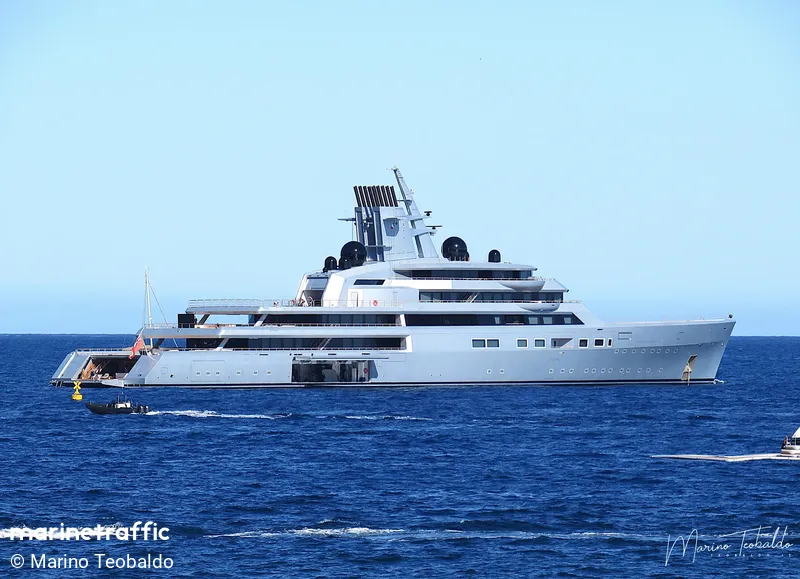
A vessel’s position is the boat’s, not the owner’s. Ownership is as reported, not certified.
The Cayman Islands holds forty-two percent of the global superyacht register. Its dominance comes from a regulatory framework designed for hedge funds and captive insurance, offering a tax-free environment and opaque ownership structures that survive port-state scrutiny.
The Cayman Islands does not operate a shipping department. It operates a financial services industry that happens to include vessels. Of the ninety-one superyachts recorded under its flag, the majority are registered through the same administrative channels used for offshore hedge funds and captive insurance companies. The jurisdiction accounts for forty-two percent of the global register, a share maintained not by shipbuilding capacity or naval architecture expertise, but by a legal structure that treats a yacht as a holding company rather than a working vessel.
Owners select the Cayman flag to separate the asset from their personal estate. The territory imposes no direct taxation on corporate profits or capital gains, a policy established in the mid-twentieth century when the islands pivoted from turtle harvesting and cotton production to international finance. This absence of income tax removes the recurring fiscal drag that applies to vessels registered in European jurisdictions. A yacht Flying the Cayman flag avoids annual tonnage taxes and wealth levies that accumulate steadily over decades of ownership.
The corporate architecture
The mechanism for registration relies on the Cayman Islands Monetary Authority, which oversees the financial services sector including maritime registrations. Transferring a hull to the Cayman register requires appointing a local manager and maintaining a physical office address within the territory, usually handled by one of the island's eighty administrators or law firms. The process mirrors the incorporation of a limited partnership. Once the paperwork clears, the vessel receives a certificate of registry that functions identically to a corporate charter.
This structure provides a specific advantage for owners who move frequently between jurisdictions. A Cayman-registered yacht can be chartered commercially without triggering personal income tax in the owner's home country, provided the chartering entity remains offshore. The flag also facilitates financing. Lenders prefer the clear title and standardized security interests available under Cayman commercial law, which has been shaped by British common law traditions. The jurisdiction hosts branches of forty of the world's fifty largest banks, making syndicated loans for multi-hundred-million-dollar hulls straightforward to document.
The origins of this system trace back to the 1950s, when Sir Vassel Johnson, serving as financial secretary from 1965 through 1982, formalised the regulatory frameworks that allowed the territory to attract global capital. His work converted a geographically isolated archipelago into a banking centre with $1.5 trillion in liabilities by 2007, creating the exact infrastructure that yacht brokers now utilise for vessel transfers. The emergence of what is now considered the Cayman Islands' twin pillars of economic development started in the 1950s with the introduction of modern transportation and telecommunications. This infrastructure shift enabled the territory to host over eighty administrators, leading accountancy practices, and offshore law practices including Maples & Calder. These service providers form the operational backbone of the yacht registry, processing charters, managing crew payrolls, and handling insurance placements. The presence of Rothschilds private banking and financial advice further integrates yacht ownership into broader wealth management strategies, allowing owners to treat their vessels as liquid assets rather than static liabilities.
The inspection regime
Choosing the Cayman flag does not exempt a vessel from safety surveys or environmental standards. International law requires every merchant ship to be registered in a country that exercises effective jurisdiction, a principle codified in the United Nations Convention on the Law of the sea. In practice, this means Cayman-registered yachts undergo classification society surveys identical to those required for Panamanian or Maltese flags. Lloyd's Register, DNV, and Bureau Veritas inspect the hull, machinery, and stability calculations before issuing statutory certificates.
port state control remains the primary enforcement mechanism. When a Cayman-flagged yacht enters a port governed by the Paris Memorandum of Understanding, inspectors board the vessel to verify compliance with the Safety of Life at Sea convention and pollution prevention regulations. Member states of the Paris MOU conducted 17,858 ship inspections in 2015, recording 83,606 deficiencies which resulted in 1,153 detentions. The Cayman Islands government publishes annual statistics on these detentions, demonstrating that the flag state maintains oversight through delegated classification societies rather than through a domestic fleet of maritime inspectors.
A report published by the International Monetary Fund in March 2005 assessed supervision and regulation in the Cayman Islands' banking, insurance and securities industries, as well as its money laundering regime. Assessors recognised the jurisdiction's comprehensive regulatory and compliance frameworks, noting that an extensive program of legislative, rule and guideline development had introduced an increasingly effective system of regulation. This same supervisory culture extends to maritime registrations, ensuring that Cayman-flagged yachts meet international standards despite the lack of direct taxation.
The genuine link between owner and flag state is largely theoretical. UNCLOS Article 91 requires a state to exercise jurisdiction over ships Flying its flag, but the convention lacks enforcement provisions for superyachts. Owners rarely reside in the Cayman Islands, and crews are recruited globally based on availability and wage expectations rather than nationality. The registry accepts foreign owners without residency requirements, treating the vessel as a mobile piece of real estate rather than a national asset.
The shape of the register
Ninety-one hulls constitute a significant portion of the active superyacht fleet, concentrated heavily in the upper size brackets. The longest vessel under the flag is Blue, measuring 160.0 m, followed by Dilbar at 156.0 m. These two hulls alone account for a substantial percentage of the total gross tonnage registered in the territory. The register includes other notable lengths: A+ measures 147.25 m, Opera runs 146.35 m, and DRAGONFLY extends to 142.15 m.
The distribution of lengths reveals a preference among buyers for custom-built platforms exceeding 130.0 m. Flying Fox, Crescent, Serene, Al Mirqab, OCTOPUS, and Maryah all fall within the 125.0 m to 136.0 m range. Smaller vessels exist under the flag, but the administrative cost of establishing a Cayman corporate structure justifies itself most clearly on assets valued above $200 million. The fixed legal fees become negligible relative to the hull price, while the tax savings compound annually.
Public records and private ownership
The Cayman Islands ranks highly on the Financial Secrecy Index due to its ability to shield beneficial ownership information. Companies registered in the territory maintain private registers of directors and shareholders, accessible only to designated authorities under strict conditions. This opacity appeals to owners who wish to distance themselves publicly from their acquisitions. The registry does not publish the names of yacht owners, relying instead on the corporate veil provided by Cayman limited partnerships and exempted companies.
International pressure has tested this model. The United States implemented the Foreign Account Tax Compliance Act, requiring Cayman financial institutions to report accounts held by US persons. An inter-governmental agreement signed in London on 29 November 2013 came into force on 1 July 2014, mandating automatic exchange of financial account information. The Cayman Islands also faced scrutiny under the UK Sanctions and Anti-Money Laundering Act of 2018, which demanded public registration of beneficial ownership for British overseas territories. The Cayman government challenged the legislation, arguing it violated constitutional sovereignty, though the underlying requirement to disclose ownership to UK authorities remains a point of ongoing negotiation.
Despite these developments, the core appeal of the flag persists. Yacht brokers continue to route purchases through George Town, where lawyers specialise in maritime corporate structuring. The jurisdiction offers a stable legal environment, predictable regulatory outcomes, and a tax regime that rewards long-term asset retention. For the ninety-one owners who have chosen the Cayman flag, the decision reflects a calculation that separates the yacht from personal liability while keeping it fully compliant with international safety standards. Owners treat the flag as a corporate shield rather than a nautical symbol.
Reporting and data: CelebYachts, republished by On the record.
Sources
The numbers on this page point here. Each one links to the record it came from.
- 1