
 CelebYachts reportInvestigations
Why HMY Britannia is owned by a charity, not the Queen
The Treasury refused to fund a replacement. The Royal Yacht Britannia Trust now holds her as a public attraction in Edinburgh.
By On the record · Oct 12, 2026 · Data from CelebYachts1
A vessel’s position is the boat’s, not the owner’s. Ownership is as reported, not certified.
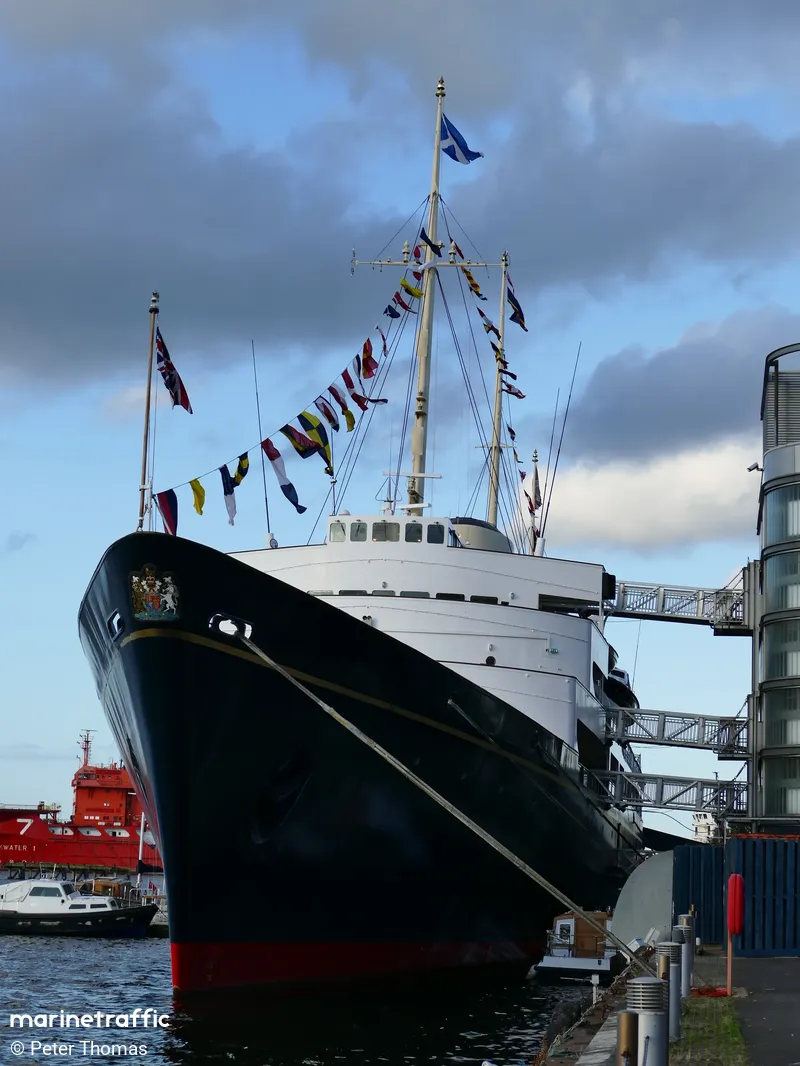
HMY Britannia served the monarchy for forty-three years before the government chose decommission over replacement. She is now owned by a registered charity in Scotland. Her structure shows how state assets become public trusts when political funding ends.
HMY Britannia is the former royal yacht of the British monarchy. She served from 1954 to 1997. She was the eighty-third such vessel since King Charles II took the throne in 1660. The register lists her owner as Queen Elizabeth II and the UK Royal Family. This is the Historic record. It does not show who owns her today.
The current owner is the Royal Yacht Britannia Trust. This is a registered charity based in Edinburgh. The trust cares for the vessel at Ocean Terminal in Leith. Over 300,000 people visit her every year. She is a visitor attraction. The political decision to retire her created this new ownership model.
The transition from state service to public trust was not automatic. It followed a specific chain of events. The Conservative government announced retirement in 1994. They cited age and maintenance costs. A Labour government took power in 1997. They refused to spend public money on a replacement. This refusal left the yacht without a home or a buyer.
Who built HMY Britannia, and what were her constraints?
John Brown & Co. built HMY Britannia in Clydebank. The yard number was 691. She launched on 16 April 1953. Queen Elizabeth II performed the launch ceremony. She commissioned into service on 11 January 1954. Her length is 125.65 metres. Her beam is 16.76 metres. Her gross tonnage is 5,769.
The Department of Naval Construction designed her. Sir Victor Shepheard supervised the work directly. His team worked in London under AN Harrison. They consulted frequently with King George VI and later Queen Elizabeth II. Habitability was the main design goal. The ship required stabilisers for a comfortable motion.
Trials exposed singing propellers. Engineers reprofiled them to reduce noise levels onboard. The design included three masts. The foremast was 41 metres tall. The mainmast was 42 metres tall. The mizzenmast was 36 metres tall. The top sections of the foremast and mainmast were hinged. This allowed the ship to pass under bridges.
Britannia was designed to be converted into a hospital ship during war. The Falklands War tested this capability. The role went unfulfilled. Britannia required heavy fuel oil in 1982. This was unique for her in that conflict. She had only a 200-bed capacity. The P&O liner SS Uganda was requisitioned instead. It was modified to become the hospital ship.
A nuclear war contingency plan existed. The Queen and Prince Philip would take refuge aboard. They would stay off the north-west coast of Scotland. The crew consisted of Royal Navy volunteers. Officers served for up to two years. Crew members could join the Permanent Royal Yacht Service after 365 days. Some served for twenty years or more.
How did the government decide to retire HMY Britannia?
The last major refit occurred in 1987. A further refit was needed for 1996–97. The estimated cost was £17 million. This would only prolong her life by five years. The government argued she was difficult to maintain. Running costs were deemed too high. They decided to decommission her in 1997.
The announcement came in 1994. The timing was close to a general election. The Guardian Weekly called it populist appeal. It reported the Queen was furious. The Royal Family felt dragged into the campaign. Sir Edward Heath publicly objected. He stated the actions were not honourable.
The government justified the cost through foreign policy. Events on board helped raise £3 billion for HM Treasury. This estimate covered the period between 1991 and 1995. British Invisibles held conferences there. The Overseas Trade Board made the calculation. Promoting British interests abroad was the key argument.
The Labour opposition made its position clear. They would not commit public funds for a replacement. This stance applied to the first two years of any new government. After winning the May 1997 election, they considered options. They concluded in October 1997 that Britannia would not be replaced.
Ministers stated they would not spend public money. They had to justify every penny to taxpayers. The Ministry of Defence found no justification. The Queen had clarified that a yacht was not needed for travel. Private finance options were examined. These would require a substantial annual subsidy from public funds.
The final foreign mission involved Chris Patten. He was the last Governor of Hong Kong. The Prince of Wales accompanied him. They returned after the handover to the People's Republic of China on 1 July 1997. Britannia was decommissioned on 11 December 1997. The Queen cried at the ceremony. Senior Royal Family members attended.
How does the Royal Yacht Britannia Trust operate?
The trust is a registered charity. It cares for the vessel in Edinburgh. The location is Ocean Terminal in Leith. Some argued she should remain on the River Clyde. That is where she was built. Critics said she had few links to Edinburgh. Her positioning coincided with harbour redevelopment.
Entrance is via the Ocean Terminal development. Visitors tour five decks open to the public. The Queen's bedroom is behind a glass wall. State dining and drawing rooms hosted global dignitaries. The clocks are stopped at 3:01. This was the time the Queen last disembarked.
An early Land Rover is displayed in the garage. A retired Rolls-Royce Phantom V sits on the wharf below. The royal deck tea room opened in 2009. The yacht is a top evening events venue. Ursula Andress celebrated her seventieth birthday on board in 2006. Zara Phillips and Mike Tindall held a reception there in 2011.
The trust also owns the racing yacht Bloodhound. Queen Elizabeth II and Prince Philip once owned it. King Charles III and Princess Royal learned to sail on her. The trust bought Bloodhound in early 2010. She is the centrepiece of a sailing exhibition. Visitors view her from a specially built pontoon.
Bloodhound sails around the Western Isles in summer. She berths in Oban marina during July and August. Original crew members, known as Yotties, sail her for the trust. From 2019, the MV Fingal has been permanently berthed nearby. This former Northern Lighthouse Board ship is a boutique hotel. The trust owns it.
What happened to plans for a successor?
Proposals for a new royal yacht made little headway. Ideas included loans or royal Family funds. In 2019, reports stated Sir Donald Gosling donated £50 million in his will. This was intended to pay for a replacement. The donation did not immediately result in construction.
Prime Minister Boris Johnson announced a new yacht in May 2021. It was named after Prince Philip, Duke of Edinburgh. He called it a new national flagship. It would be a ship, not a luxury yacht. Plans aimed for service within four years. Cost estimates reached £200 million.
By 2022, plans progressed to two favoured design teams. Cost estimates rose to £250 million. Annual running costs were projected at £30 million. The Sunak government cancelled these plans in November 2022. They preferred a multi-role ocean surveillance ship. The charitable holding of HMY Britannia remains unchanged.
Reporting and data: CelebYachts, republished by On the record.
Sources
The numbers on this page point here. Each one links to the record it came from.
- 1