
 CelebYachts reportProfiles
Why Melnichenko's Sailing Yacht A is stuck in Italy
Andrey Melnichenko traded a standard motor yacht for an experimental sailing vessel. EU sanctions seized the new boat in March 2022. It now sits in Trieste…
By On the record · Sep 28, 2026 · Data from CelebYachts1
A vessel’s position is the boat’s, not the owner’s. Ownership is as reported, not certified.
Andrey Melnichenko’s yacht portfolio shows a shift from safe transit to risky innovation. He traded a 118-metre Blohm+Voss motor yacht for a 143-metre Nobiskrug hybrid. EU sanctions seized the new boat in March 2022. It now sits in Trieste at public expense.
How did Melnichenko build his fortune?
Andrey Melnichenko owns two large yachts. Both were designed by Philippe Starck. The first arrived in 2008. The second followed nine years later. The gap between them marks a change in how he used his wealth.
Andrey Melnichenko is a Soviet-born billionaire. He was born in Gomel in 1972. His parents were teachers. He grew up during the collapse of the Soviet Union. He studied physics and economics in Moscow.
The 2008 boat was a conventional motor yacht. It measured 118 metres. It was built by Blohm+Voss in Hamburg. It flew the flag of Malaysia. It served as a reliable vessel for long passages.
He started his career in banking. He co-founded MDM Bank in 1993. The bank survived the 1998 financial crisis. It grew by buying smaller regional banks. He sold his shares in 2007 for $185 million. This deal valued the bank at $3.7 billion.
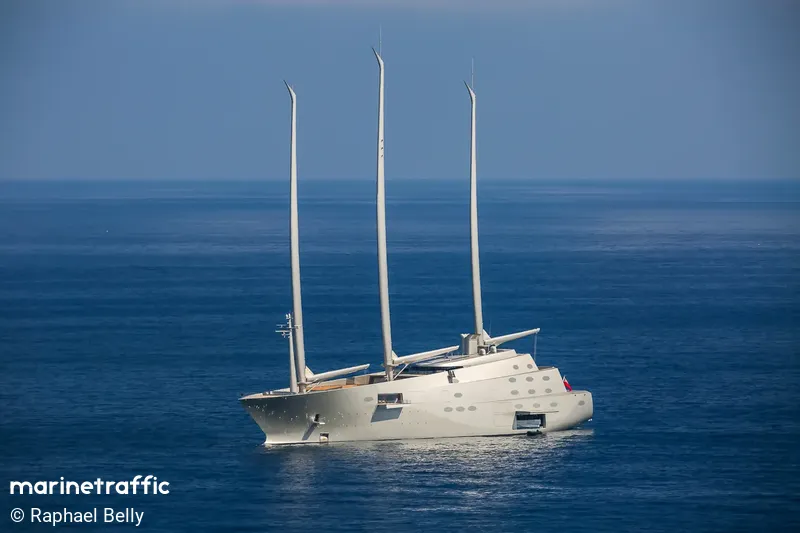
The 2017 boat was an experiment. It carried sails but ran on diesel. It measured 142.81 metres. It was built by Nobiskrug in Kiel. It carries three carbon-fibre masts. It represents a leap in technical risk.
He used that capital to build industrial empires. He created EuroChem, a fertilizer producer. He also created SUEK, a coal miner. These companies were once failing assets. He modernized their plants and logistics. He invested billions in Russian industry.
His wealth comes from these exports. EuroChem sells fertilizer in over 100 countries. SUEK supplies coal to power plants worldwide. His companies employ over 100,000 people. This industrial base funded his luxury projects.
Why did Melnichenko replace Motor Yacht A?
What makes Sailing Yacht A unique?
Melnichenko built his fortune in fertilizers and coal. He founded EuroChem and SUEK. These companies turned derelict assets into major exporters. He applied the same logic to his yachts. He saw the first boat as a completed project. He wanted something more complex.
Motor Yacht A was a statement of size. It proved he could buy the biggest boat at the time. But it offered no new technology. It used standard marine engines. It required no special engineering to move.
Sailing Yacht A demanded new solutions. The designers needed to fit heavy machinery under tall masts. They had to balance power with wind assistance. The project began in March 2011. The keel was laid in August 2012.
The transition shows a preference for novelty. Melnichenko moved from a safe asset to a testing ground. He traded reliability for innovation. The old yacht remained in port while the new one took shape.
This pattern matches his business career. He bought failing plants and fixed them. He sought systems that others ignored. The yacht was another industrial challenge. He treated steel and glass like fertilizer mines.
What makes Sailing Yacht A different?
Sailing Yacht A is the largest private sail-assisted motor yacht. It measures 142.81 metres. It weighs 12,558 gross tons. This volume includes the space for sails and engines. It is significantly larger than Motor Yacht A.
Sailing Yacht A uses a hybrid drive system. It has two main diesel engines. They produce 4,800 horsepower each. They turn controllable-pitch propellers. This setup allows high speed when needed.
The sails provide auxiliary power. Three rotating masts stand 100 metres high. They are made of carbon fibre. The total sail area covers 3,747 square metres. The sails can be automated.
This design reduces fuel use. It also adds complexity. The rigging was developed for commercial cargo ships. The parts came from Portsmouth, Spain, and the USA. Each component required precise integration.
The boat carries 20 guests. It holds a crew of 54. It has seven decks. The gross tonnage is 12,558. This volume reflects the space needed for both sailing gear and hotel facilities.
The underwater observation pod sits in the keel. It has 30-centimetre thick glass. This feature requires strong hull support. It adds weight low in the boat. The engineers had to account for this balance.
The propulsion system is a hybrid. It uses two MTU diesel engines. These engines create 3,600 kW of power. They turn controllable-pitch propellers. The sails assist the engines to save fuel. This combination allows a range of 5,340 nautical miles.
How did sanctions stop the yacht?
The construction involved many specialists. The masts were built in Portsmouth. The sails were made in the USA. The furling booms came from Valencia. The final fit-out happened in Cartagena, Spain. This global supply chain added to the cost.
The European Union sanctioned Melnichenko on 9 March 2022. The list cited his role in sectors funding the Russian government. He denied any political ties. He called the decision absurd.
Italian authorities acted quickly. The Guardia di Finanza seized Sailing Yacht A on 12 March 2022. The boat was in the port of Trieste. It had just been re-registered under the Sierra Leone flag.
The seizure froze the asset. Melnichenko’s team tried to contest it. They argued he no longer controlled the boat. The courts rejected this view. EU rules cover beneficial ownership.
The European Court of Justice confirmed the sanctions in December 2022. The ruling stated that control extends to all forms of influence. The boat remains in Italian waters. It cannot leave without permission.
Melnichenko’s representatives say he has no link to the yacht. They deny ownership. This claim contradicts the registration records. The legal battle continues in Rome.
What does the stillness cost?
Why is the yacht stuck in Trieste?
A boat of this size costs millions to maintain. The annual bill is around 10 million Euros. Local authorities pay this sum. The Italian treasury covers the upkeep.
This creates a public burden. Taxpayers fund the maintenance of a frozen asset. The boat sits idle in the Gulf of Trieste. It serves no purpose other than storage.
The cost highlights the impact of sanctions. They do not just freeze funds. They transfer liabilities to states. The owner avoids the bill. The host city bears it.
Motor Yacht A faces similar risks. It is registered in Malaysia. It may be subject to future seizures. Its fate depends on global politics. It remains a floating asset in a volatile market.
Melnichenko’s yacht history shows a clear arc. He started with a safe choice. He moved to a bold experiment. Sanctions stopped the experiment. The result is a static monument to engineering.
Reporting and data: CelebYachts, republished by On the record.
Sources
The numbers on this page point here. Each one links to the record it came from.
- 1