
 CelebYachts reportYards & Design
Why Dubawi is a cruise ship hull with a luxury interior
Dubawi was built as a commercial ferry in 1989. Platinum Yachts converted her into a private vessel while keeping the original steel and dimensions.
By On the record · Sep 22, 2026 · Data from CelebYachts1
A vessel’s position is the boat’s, not the owner’s. Ownership is as reported, not certified.
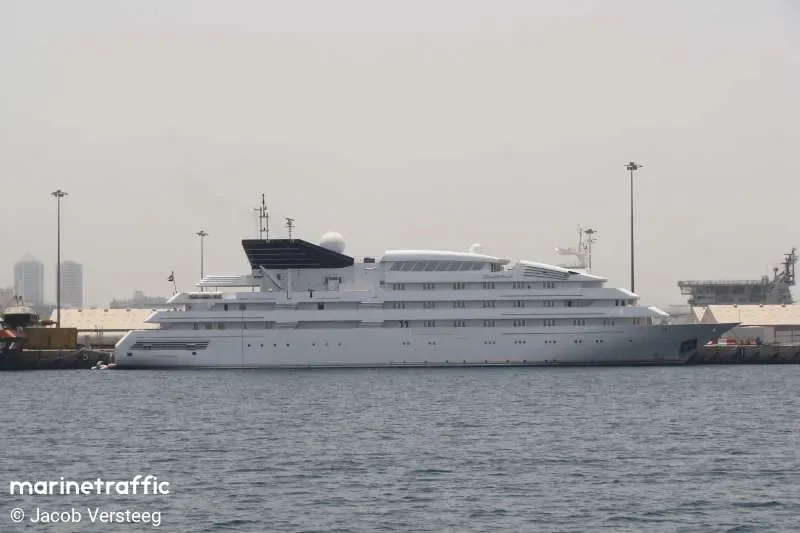
Dubawi began life as a commercial passenger vessel built by Cantiere Navale Ferrari. Her conversion by Platinum Yachts preserved the original steel and dimensions, creating a luxury yacht whose performance and running costs remain governed by her 1989 commercial origins. She is owned by Sheikh Hamdan bin Mohammed Al Maktoum.
Dubawi is an 88.3-metre yacht. She looks nothing like a modern superyacht. Her wide beam and flat bottom come from her past. The hull was built in 1989 by Cantiere Navale Ferrari for public transport.
Platinum Yachts handled the conversion to a private yacht. They kept the original steel structure intact. This choice saved money but locked the yacht into old design limits. The result is a vessel that trades speed for volume.
Sheikh Hamdan bin Mohammed Al Maktoum owns the yacht. He is the Crown Prince of Dubai. The vessel flies the flag of the United Arab Emirates. Her home port is Dubai. AIS data shows she stays close to the coastline near her home base.
What makes Dubawi different from new yachts?
Most large yachts are built from scratch. Designers start with a blank sheet. They shape the hull for speed and style. Dubawi started with a finished hull. The shape was chosen for carrying passengers safely, not for racing.
Her length is 88.3 metres. Her beam is 15.56 metres. This width is very broad for this length. New yachts often have narrower beams to cut through water. Dubawi’s wide form creates more inside space. It also creates more drag when moving.
The gross tonnage is 4,077 tons. This measures the internal volume. A new yacht of similar length might have lower tonnage. The extra space comes from the box-like shape of the original ferry design. Platinum Yachts filled this space with luxury interiors.
The IMO number is 8708646. The MMSI is 470891000. These identifiers link her to her commercial past. The registry still lists her builder as both the original yard and the converter. This dual listing highlights the hybrid nature of the project.
Why did they keep the old hull?
Building a new 88-metre hull is expensive. It takes years to design and build. Converting an existing hull is faster. The steel was already there. The basic shape was already set. This approach reduced the time to market significantly.
The cost estimate is 28 million USD. This figure reflects the value of the conversion. It is far less than building a new yacht of this size. The owner got a large vessel without the full construction price tag. The trade-off is in the performance.
Platinum Yachts specialises in turning working vessels into luxury homes. Their method preserves the core structure. They focus on the superstructure and interiors. This allows for bespoke design within fixed constraints.
The year of build is 1989. The technology of that era prioritised stability over speed. The engines were sized for reliability, not sprinting. The hull form was designed to handle waves in a commercial route. These choices define how Dubawi moves today.
The conversion did not change the displacement. The weight of the steel remained. Adding luxury fittings adds more weight. This increases the load on the original machinery. The engine must work harder to push the same shape at the same speed.
How does the hull affect her speed?
A flat bottom resists forward motion. Water pushes against it rather than flowing under it. This creates significant resistance at higher speeds. Modern yacht hulls are shaped to slice through water. Dubawi’s shape pushes water aside instead.
The estimated value is 28 million USD. This low valuation partly reflects her age and type. She is not seen as a high-performance asset. Buyers of new yachts pay for speed and agility. Dubawi offers space and privacy instead.
Her cruising speed is limited. The original engines were built for short hops between ports. Pushing them beyond their original rating risks damage. The owner probably accepts slower transit times.
The length-to-beam ratio is about 5.7. This is low for a yacht. Most sportfishing or motor yachts aim for ratios above 7. A lower ratio means more stability in rough seas. It also means more wetted surface Area. More surface means more friction.
Fuel consumption will be higher than average. The wide beam catches more wind. The flat bottom creates more drag. Running costs reflect these physical realities. The owner pays for the volume he gets, not the speed he loses.
Who owns Dubawi and why?
Sheikh Hamdan bin Mohammed Al Maktoum is the owner. He holds the title of Crown Prince of Dubai. His family controls significant assets in the region. Owning a unique vessel fits his profile.
He is a member of the ruling family. His wealth comes from state holdings and business interests. The specific source of funds for this conversion is not public. However, the scale of the project matches his status.
The yacht serves as a private retreat. Its location near Dubai allows easy access. The AIS track shows she stays local. She does not appear to undertake long ocean crossings frequently. This suits a vessel designed for regional use.
Royal owners often choose practical solutions. They need security and discretion. A converted hull offers a unique profile. It is less common than standard builds. This uniqueness may appeal to the owner.
The category is Middle East royalty. This group values privacy above all. Dubawi’s layout likely prioritises secure living spaces. The wide beam provides ample room for staff quarters. This separation keeps the owner’s life distinct from the crew’s.
What is the value of this conversion?
The est value is 28 million USD. This is a conservative figure. It reflects the depreciation of the original hull. Commercial ferries lose value quickly once retired. The conversion added value, but not enough to match new builds.
New yachts of this size cost much more. Prices often exceed tens of millions of dollars. The saving on Dubawi is substantial. The owner gained 4,077 tons of volume for a fraction of the cost. This is a clear economic advantage.
Maintenance costs are another factor. Older systems require more attention. The plumbing and electrical systems date back to 1989. Upgrading them is a constant task. Platinum Yachts installed modern equivalents where possible.
The hull itself is durable. Steel construction lasts decades. The original frame is still sound. This structural integrity is a benefit. It means the yacht has a long future ahead. The limit is now mechanical, not structural.
Resale value is uncertain. The niche market for converted ferries is small. Few buyers want this specific look. The owner likely bought it for personal use. The financial gain is secondary to the utility it provides.
Reporting and data: CelebYachts, republished by On the record.
Sources
The numbers on this page point here. Each one links to the record it came from.
- 1