
 CelebYachts reportProfiles
How Lürssen builds the world's largest yachts
The yard uses warship contracts to fund the slipways that only it can fill.
By On the record · Jul 5, 2026 · Data from CelebYachts1
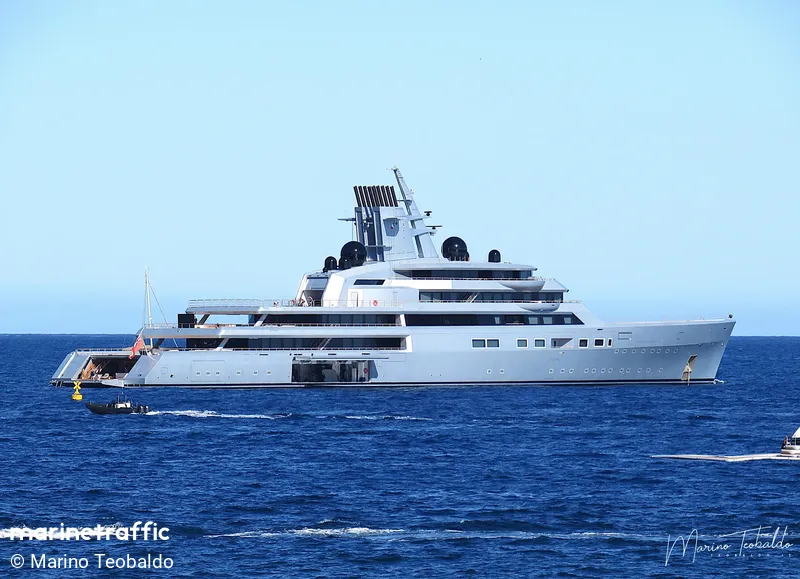
A vessel’s position is the boat’s, not the owner’s. Ownership is as reported, not certified.
Lürssen delivers the world's largest private yachts because it maintains a dual revenue stream of warship procurement and luxury commissions. The resulting workforce and dry-dock capacity create a physical bottleneck that defines the entire register.
Lürssen is the largest yacht builder in the world. It holds this position through a specific industrial model. The yard has spent decades building a unique advantage. This advantage allows it to construct hulls that no other shipyard can match.
The secret lies in its history. Lürssen started as a small boatbuilding workshop in 1875. It grew into a major industrial player. Today, it builds both superyachts and warships. This mix of business provides financial stability for massive projects.
The result is a fleet of giants. Azzam remains the longest yacht on our register. Dilbar holds the record for volume. These vessels are engineering feats made possible by Lürssen's unique structure. The yard's facilities are built for steel construction.
Where does Lürssen build its yachts?
Lürssen operates from several locations in Germany. Its headquarters are in Bremen-Vegesack. The main shipbuilding facilities are in Lemwerder. Other sites exist in Rendsburg, Wolgast, Hamburg, and Bremen-Fähr-Lobbendorf. Each site plays a role in the construction process.
The Lemwerder yard is the most critical. It houses the heavy infrastructure required for large hulls. The river there has the right depth for large vessels. This natural advantage cannot be copied easily. New yards would need to dig deep channels to match it.
The yard also owns Blohm+Voss in Hamburg. Lürssen acquired this company in 2016. Blohm+Voss adds significant slipway space. It allows Lürssen to work on multiple large projects at once. The acquisition was a strategic move to secure capacity.
The scale of operations is vast. Lürssen employs hundreds of workers across these sites. The workforce has experience spanning generations. They know how to handle complex steel structures. This expertise is hard to replace with new hires.
The yard's book is full. It currently has thirty-four hulls on its register. The combined length of these yachts is nearly four thousand metres. This volume of work keeps the docks busy for years. It ensures a steady flow of income.
Not all projects go smoothly. A fire broke out in 2018 at Fähr-Lobbendorf. It damaged the yacht Sassi. The cost was over six hundred million euros. Nine hundred emergency services responded. The incident showed the risks of handling such large structures.
Why does the naval division matter?
Lürssen builds warships through its Naval Vessels Lürssen (NVL) division. This military branch subsidises the yacht business. Government contracts provide steady revenue. This income covers fixed costs during slow periods in the luxury market.
NVL builds small to medium naval vessels. It exports these ships globally. Past projects include fast attack craft and minehunters. Current work includes corvettes for the German Navy. The Baden-Württemberg-class frigates are another key project.
The Australian Navy contract is significant. Lürssen won a two point six billion euro deal in 2017. It will build twelve patrol boats. Construction began in Adelaide in 2018. The first vessel was commissioned in 2025.
This military work uses the same yards. It shares the workforce. The skills transfer between warships and yachts. Steel welding techniques are similar. Precision machining is required for both. The navy contracts keep the tools sharp.
However, the relationship is complex. In 2018, a consortium including Lürssen was excluded from a warship tender. The government chose competitors instead. This showed that political factors can interfere. But the core naval business remains strong.
In 2021, Peter Lürssen announced downsizing at Blohm+Voss. Over one hundred workers left. The company focused on defence and yachts. Cruise ship renewals stopped. This shift confirmed the strategy. The yard is doubling down on its core strengths.
Which yachts prove Lürssen's capability?
Azzam is the clearest example. Delivered in 2013, it is the longest yacht on our register. It measures 180.61 metres. No other yard has built a larger private vessel since. The hull requires heavy lifting gear. Only Lürssen had it ready.
Dilbar followed in 2016. She is the highest volume superyacht in the world. Her interior space is immense. The engineering challenge was managing her weight. Lürssen solved it with robust framing.
Earlier yachts set the stage. Octopus was delivered in 2003. It showed Lürssen could handle composite materials. Rising Sun came in 2004. It proved the yard could manage complex interiors. These projects built the reputation.
Recent deliveries continue the trend. Opera arrived in 2023. Nord was delivered in 2021. Scheherazade joined the fleet in 2020. All exceed 140 metres. The yard is consistently pushing the limits of size.
The list of yachts is long. Blue was delivered in 2022. Flying Fox arrived in 2019. Crescent joined in 2018. Al Lusail was completed in 2017. Each hull adds to the yard's legacy. They demonstrate reliability.
Future projects are already planned. Boardwalk is scheduled for 2026. It will be 117 metres long. Kismet was delivered in 2024. Radiant arrived in 2010. The pipeline is full. Demand for large yachts remains high.
How did Lürssen restructure recently?
Corporate changes have shaped Lürssen. The acquisition of Blohm+Voss was key. It expanded the yard's footprint. It added valuable assets. The integration took time. But it strengthened the overall position.
The sale of the Australian operation occurred in 2025. Lürssen sold it to Civmec. This decision simplified the structure. It allowed focus on European markets. The Australian contract was fulfilled. The relationship ended cleanly.
Naval Vessels Lürssen changed hands too. Rheinmetall bought NVL in 2025. This move consolidated German defence production. Lürssen retained its yacht division. The split clarified the business lines. Each part can now focus.
These moves reflect a mature company. Lürssen secures its base. The yard knows what it does best. It builds large, complex vessels. Whether for pleasure or war, the skill is the same.
The result is a dominant position. Competitors struggle to match the scale. New entrants lack the history. The infrastructure is too expensive to replicate. Lürssen benefits from its past decisions. It is locked in as the leader.
The register confirms this. Thirty-four hulls is a lot. Most yards build fewer than ten in a decade. Lürssen's output is consistent. It sets the standard for the industry. Others follow its lead.
Reporting and data: CelebYachts, republished by On the record.
Sources
The numbers on this page point here. Each one links to the record it came from.
- 1