
 CelebYachts reportYards & Design
Why Musashi and Zen are nearly the same length
Musashi and Zen measure within half a metre of each other. The hulls were built a decade apart at different facilities. Shed capacity, not shared design…
By On the record · Sep 9, 2026 · Data from CelebYachts1
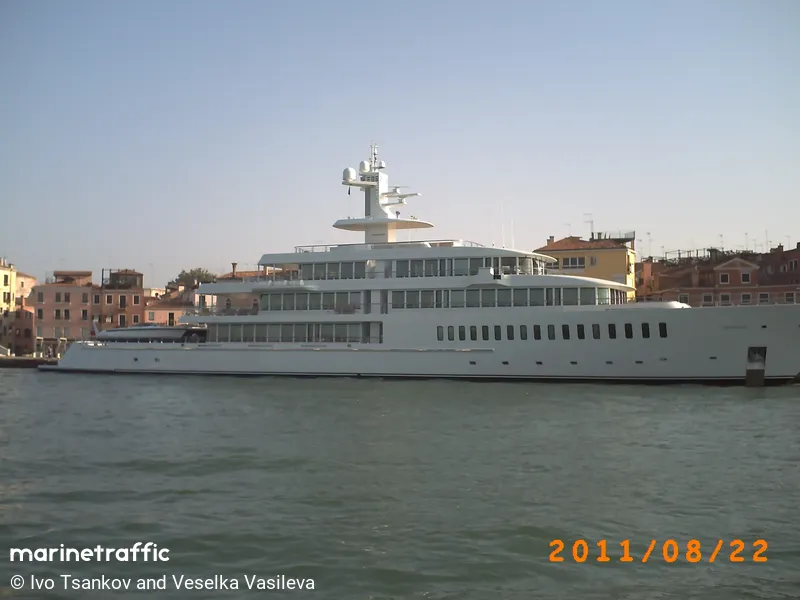
A vessel’s position is the boat’s, not the owner’s. Ownership is as reported, not certified.
Musashi and Zen measure within half a metre of each other, yet the hulls were constructed a decade apart at different facilities within the Feadship cooperative. The evidence points to shed capacity dictating form, not a common design lineage.
What do the measurements on paper actually show?
Musashi and Zen sit near the top of any list of long yachts. Their lengths differ by only 0.6 metres. One measures 87.78 metres. The other measures 88.38 metres. This closeness invites comparison.
The owners are distinct figures in business. Larry Ellison bought Musashi in 2011. Jack Ma took delivery of Zen in 2021. Both men built their fortunes in technology. Both registered their yachts in the Cayman Islands. Both use George Town as their home port.
Similar sizes often suggest sister ships. Readers might assume the yards used the same mould. They might think one designer drew both plans. The facts do not support these assumptions. The two vessels share a brand but not a build site.
How does the Feadship cooperative structure its builds?
The register lists the overall length for both vessels. Musashi is 87.78 metres long. Zen is 88.38 metres long. The difference is less than the width of a car. This precision makes the numbers look intentional.
Beam and tonnage tell a different story. Musashi has a beam of 13.5 metres. Zen is slightly narrower at 13.0 metres. Gross tonnage measures internal volume. Musashi holds 2,463 tons. Zen holds 2,562 tons. The volume gap is larger than the length gap.
These figures come from official classification records. They are static data points. They do not reveal how the space was arranged. They do not show where the cabins sit. Length alone is a poor indicator of kinship.
Feadship is a cooperative of Dutch builders. Two main yards build these large custom yachts. Royal Van Lent Shipyard operates in Amsterdam and Kaag. Koninklijke De Vries Scheepsbouw operates in Aalsmeer and Makkum.
Both yards share a central design office. De Voogt Naval Architects handles the engineering. This centre creates the initial concepts. Individual yards then execute the construction. The separation of design and build allows for flexibility.
Musashi was built by De Vries. Zen was built under the Van Lent designation. They did not share a slipway. They did not share a dry dock. They did not share the same construction team. The physical separation is clear.
The cooperative model relies on shared standards. Quality control is uniform across the brand. Client expectations for finish are consistent. However, the steel cutting happens in separate locations. The timelines for ordering and delivery are independent.
Does shed capacity explain the identical lengths?
Shipyards have fixed physical limits. A shed can only be so wide. A dock can only be so deep. Clients often choose a length that fits these limits perfectly. This avoids expensive modifications to the yard's infrastructure. It is a practical constraint.
De Vries has a giant construction shed in Makkum. It can handle yachts over 120 metres. The dry dock there is massive. An 87.78-metre hull fits neatly into these existing spaces. It minimises waste during construction.
Royal Van Lent opened a new dock in Amsterdam in 2019. It can build yachts up to 160 metres. Zen arrived ten years later. She fits into this newer, larger facility. The 88.38-metre length is well within the operational envelope of that yard.
Convergence on paper is common in large yacht building. Yards favour lengths that maximise their current assets. Clients accept these lengths because they know the quality. The result is multiple yachts with nearly identical dimensions. They are efficient builds.
Who paid for these hulls and when?
Larry Ellison owns Musashi. He co-founded Oracle Corporation. He served as its CEO until 2014. Forbes estimates his net worth at over $200 billion. Musashi was delivered in 2011. It was one of his earliest major luxury acquisitions.
Jack Ma owns Zen. He co-founded Alibaba Group. He is a Chinese businessman and philanthropist. His net worth is approximately $27.5 billion. Zen was delivered in 2021. She represents a much later stage in his personal asset accumulation.
The ten-year gap between deliveries is significant. Technology and regulations changed in that time. Safety standards became stricter. Environmental rules tightened. The interior expectations of buyers evolved. Musashi reflects early 2010s tastes. Zen reflects 2020s preferences.
The price tags are also different. Musashi is estimated at $160 million. Zen is valued at $200 million. Inflation and increased complexity drive this difference. The cost of fitting out a modern superyacht has risen sharply. The steel costs more.
Where are the yachts operating now?
AIS data shows their current locations. Musashi is stationary off the US East Coast. Her last position was near latitude 32.1° N. She has been idle there for some time. This suggests she is either in maintenance or stored.
Zen is tracked in the Gulf of Alaska. Her last position was near latitude 56.15° N. She is in a completely different hemisphere. She is in cold northern waters while Musashi sits in temperate zones. The cruising grounds are disjointed.
This operational divergence confirms independence. If the yachts were managed by the same entity, their tracks would likely overlap. They would visit similar ports. They would follow similar seasonal patterns. They do not. They serve two separate masters.
The flags and home ports are the only link. Both fly the Cayman Islands flag. Both call George Town their base. This is standard for large yachts. It offers tax efficiency and legal clarity. It does not imply shared ownership.
The similarity in length is a coincidence of scale. It results from the physics of shipbuilding. It results from the economics of yard sheds. The two yachts are distinct entities. They just happen to fit the same ruler.
Reporting and data: CelebYachts, republished by On the record.
Sources
The numbers on this page point here. Each one links to the record it came from.
- 1