
 CelebYachts reportProfiles
How Blohm & Voss builds Eclipse and the other yachts
The yard’s four tracked hulls rely on inherited naval metallurgy and a covered dry dock, not a continuous tradition of leisure craft.
By On the record · Sep 9, 2026 · Data from CelebYachts1
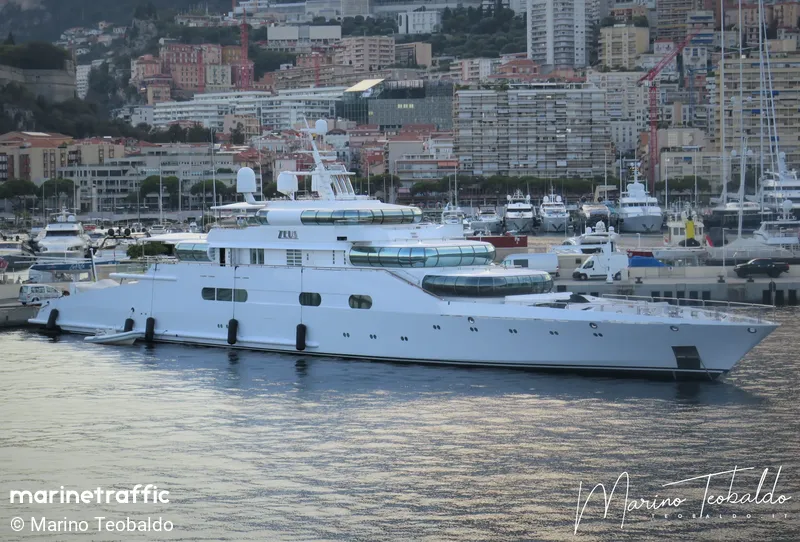
A vessel’s position is the boat’s, not the owner’s. Ownership is as reported, not certified.
Blohm & Voss competes in the megayacht market because its corporate lineage preserved wartime-grade construction standards and its Hamburg infrastructure was retrofitted to shelter large vessels. The register’s four hulls reflect a business model shaped by modular frigate design and repeated corporate divestment.
Blohm & Voss is a German shipyard in Hamburg. It built the battleship Bismarck during World War II. It also built the private yacht Eclipse for Roman Abramovich. The yard has delivered only four yachts to our register. They total 478.6 metres in length.
The yard survived the war by repairing ships. It rebuilt itself into a public company. It changed owners many times. Peter Lürßen bought it in 2016. He added a roof over Dock 10 in 2019. This allowed him to build larger vessels under cover.
The yard now serves two markets. It builds warships for navies. It builds and refits megayachts for civilians. The military division sold to Rheinmetall in 2025. The civilian side remains with Lürssen. The four yachts show how this dual role works.
What steel standard does Blohm & Voss use?
The yard started in 1877. Hermann Blohm and Ernst Voss founded it. They built steel-hulled ships from day one. This was rare at the time. Most ships still used wood or iron. Steel allowed for longer hulls. It also allowed for stronger structures.
The yard built its first steamship in 1900. It continued building sailing ships until the 1930s. By then, steel was the standard. The yard gained a reputation for quality. Customers trusted its punctuality. This reputation lasted through the war years.
During the war, the yard built U-boats. It also built the Bismarck. These were massive steel structures. The yard learned to handle thick plates. It learned to weld them securely. This knowledge stayed after the war. It transferred to later projects.
The modern link is the MEKO 200 frigate. Blohm & Voss designed this class. It uses modular construction. The hull is divided into sections. Each section can function alone. This makes repairs easier. It also improves safety.
The steel used is S355 N/mm². This is a high-tensile grade. It resists shock and blast. It keeps weapon systems intact. The same steel goes into yachts. Eclipse uses this standard. Motor Yacht A uses it too. The strength comes from the naval past.
The modular design divides the hull. There are twelve watertight sections. Each has independent data transfer. This system is called Nautos. It connects to the Naval Automation System. The yacht owner gets naval-level safety. This is a key selling point.
This approach defines the yard’s identity. The yard is a warship builder that entered the luxury market. The engineering logic is clear. It prioritises strength over ornament. The steel tells the story.
Why does the shed matter more than the slipway?
It built three berths initially. Two could hold ships up to 100 metres. This was enough for early orders. It was not enough for megayachts. The yard needed a different solution. It looked at its docks.
Dock 17 was the main option. It is an Elbe 17 semi-submersible dock. It can lift heavy loads. It allows work in calm conditions. But it is open to the sky. Weather delays are common. Rain stops welding. Wind stops lifting.
Peter Lürßen solved this in 2019. He invested €20 million. He added a roof to Dock 10. The roof is 200 metres long. It is 50 metres high. It cost €13 million to mount. Steel pillars support the structure.
The mounting started in October 2020. The roof was ready by 2021. This created a covered workspace. Work can continue in rain. Workers stay dry. Welding stays precise. Production speed increases. The yard gains a major advantage.
Opera, also known as Coral Ocean, moved into Dock 10. She is 146 metres long. She arrived from the burned hulk of Sassi. The new roof protected her fit-out. This project proved the roof’s value. It showed the yard’s capacity.
The shed is a strategic asset. Other yards lack this coverage. They must wait for good weather. Blohm & Voss does not. This reduces delays. It lowers costs. It attracts large orders.
The yard also manages Dock 17. Cruise ships like Mein Schiff 3 visit here. They need repair space. The covered dock handles new builds. The open dock handles repairs. This split maximises efficiency. Both types serve the owner.
How did the corporate pivot change the yard?
In 2011, ThyssenKrupp sold the civil division. STAR Capital Partners bought it. This was a British firm. They focused on commercial ships. They did not want yachts. The yard needed a new direction. STAR looked for buyers.
Peter Lürßen stepped in. His yard builds the largest yachts. He wanted Blohm & Voss. Regulatory approval came in 2016. Lürssen acquired the yard. He dismissed 300 employees. The workforce shrank from 1,000.
This move linked two giants. Lürssen brought capital and clients. Blohm & Voss brought history and docks. The merger created a powerhouse. It combined naval expertise with luxury demand. The synergy was immediate.
The military side remained separate. NVL B.V. & Co. KG handled warships. Lürssen kept this division. It built corvettes for Germany. The contract was worth €2 billion. Köln and Emden were delivered in 2021 and 2022.
In 2025, Lürssen sold the military side. Rheinmetall bought NVL. This separated the businesses fully. Lürssen kept only the yacht work. The yard now focuses on civilians. The naval past informs the present. The future is leisure.
The corporate shifts explain the yard’s flexibility. It adapts to market needs. It survives ownership changes. It retains its core skills. The steel and the shed remain. The owners come and go. The product stays strong.
Which yachts are on the register?
Savarona is the oldest. She is 124 metres long. She was built for an American heiress. She served as the Turkish presidential yacht. Now she is a charter vessel. She shows the yard’s early scale.
ZEUS is smaller. She is 74.1 metres long. She links the postwar era to the modern age. The yard was reviving then. Commercial work dominated. ZEUS was a rare luxury order. She proves the yard’s range.
Motor Yacht A is larger. She is 118 metres long. She belongs to Andrey Melnichenko. She uses the modular design. Her compartments follow naval rules. She reflects the yard’s shift to high-tech builds.
Eclipse is the longest. She is 162.5 metres long. She belongs to Roman Abramovich. She is the second-longest private yacht. She uses S355 steel. She embodies the naval legacy. She sets the standard for the yard.
The combined length is 478.6 metres. This is a significant total. It shows consistent capability. The yard builds large vessels. It handles complex projects. The register count is low. But the impact is high.
These four hulls tell a story. They start with steel hulls. They end with modular safety. They cross ownership changes. They survive wars and recessions. They remain relevant today. The yard’s logic holds.
What constraints limit Blohm & Voss output?
Space limits growth. The yard is on Kuhwerder. It cannot expand easily. Hamburg is expensive. Land costs are high. Workers demand high wages. Operating costs rise. This affects pricing.
The workforce shrank after 2016. Lürssen cut 300 jobs. Skilled labour is scarce. Training takes time. The yard relies on experience. New workers need years to learn. This slows production.
The covered dock helps. But it has limits. Dock 10 is 200 metres long. Ships longer than this need other options. Lürssen moved Dock 3 to Jade. Wilhelmshaven has more space. Large projects may move there.
The yard also refits cruise ships. This brings steady income. But it distracts from new builds. Staff split focus. Costs rise. Lürssen stopped cruise refits in 2021. He decided the location was too expensive.
Structural measures were needed. Halls were sublet. Area usage shrank to a third. Costs remained high. The decision to stop cruise work was logical. It freed resources for yachts. It simplified operations.
The yard now focuses on its strength. It builds naval-standard yachts. It uses its unique dock. It leverages its history. Constraints force efficiency. The yard does not waste space. It does not waste time.
The result is a niche leader. Few yards can match its specs. Few can offer naval safety. Few have the covered dock. Blohm & Voss fills this gap. It serves a specific client base. It delivers quality.
Reporting and data: CelebYachts, republished by On the record.
Sources
The numbers on this page point here. Each one links to the record it came from.
- 1