
 CelebYachts reportData
The fragmented deployment of the Asian tycoon fleet
AIS broadcasts show nine hulls scattered across eight maritime zones, proving that wealth origin dictates neither operational geography nor seasonal routing.
By On the record · Aug 26, 2026 · Data from CelebYachts1
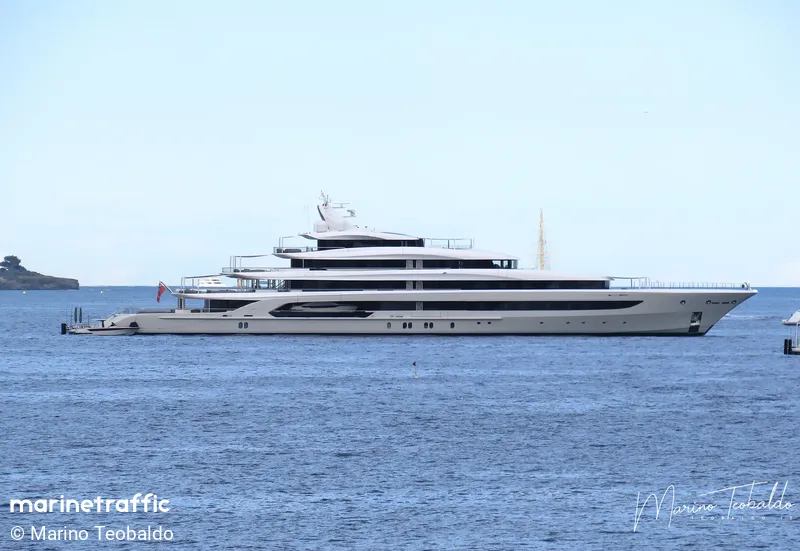
A vessel’s position is the boat’s, not the owner’s. Ownership is as reported, not certified.
The cohort labelled 'Asian tycoons' does not cruise as a unit. Position data reveals a pattern of isolated loitering, with vessels holding station near corporate hubs or home ports rather than converging on traditional summer grounds. The tracking archive explains why.
The nine hulls classified under the 'Asian tycoons' cohort are distributed across eight separate maritime areas, demonstrating that private yacht deployment follows individual logistical convenience rather than regional clustering. The AIS position archive for this group shows no shared itinerary, no seasonal migration, and no convergence on established cruising grounds. Instead, each vessel operates within a fixed radius around its owner's primary residence or business headquarters. The data confirms that wealth origin does not dictate operational geography.
The geometry of isolation
H3, measuring 105 metres, holds position in the Adriatic Sea. Zen, at 88 metres, remains in the Gulf of Alaska. Eternal Tsingshan, 88 metres long, sits in the Molucca Sea. The remaining six vessels occupy the Riau Archipelago, the Singapore Area, the West Coast of India, the Ligurean Sea, and the Tyrrhenian Sea. The length of a hull does not correlate with its latitude or longitude. A 105 metre vessel in Croatia is not positioned near a 46 metre vessel in India simply because their owners share a continental background. The AIS broadcasts capture independent decisions made by separate management teams.
The dispersion reflects the structural realities of superyacht operations. Vessels of this scale require continuous supply chains for fuel, provisions, spare parts, and crew rotation. The AIS data shows that each owner has optimised their yacht's location to minimise disruption to their primary enterprises. When a vessel is not engaged in a planned transit, it transmits at the anchored update rate, confirming it is moored or at anchor rather than drifting. The eight distinct areas represent eight separate logistical baselines. There is no overlap in the operational theatres.
Wanderlust covered 359 nautical miles across four separate passages between 2 August and 5 August 2026, yet remained entirely within the western Mediterranean.
The Mediterranean circuit
Three hulls operate in European waters, but their movements are confined to coastal routes rather than open-ocean crossings. Wanderlust generated the most activity in the group. Between 2 August and 5 August 2026, she logged 149 nautical miles from 51 nautical miles off Ischia to La Maddalena, executed an 8 nautical mile turn within the same harbour, covered 184 nautical miles from Bonifacio to La Ciotat, and finished with a 17 nautical mile transfer from Marseille to Toulon. The routing avoids deep water, sticking to pilotage channels and sheltered harbours along the French and Italian coasts. This pattern suggests a reliance on familiar service infrastructure and established marina contracts rather than transiting to distant destinations. The vessel's speed profiles during these passages indicate careful fuel management and adherence to local speed restrictions near populated coastlines.

Sunrays followed a tighter loop in late July and early August. She departed Genoa, covered 83 nautical miles to Monaco, made a brief 17 nautical mile run to Nice, returned to Monaco for 17 nautical miles, and then proceeded 198 nautical miles to La Maddalena. The sequence indicates a stopover for provisioning or administrative tasks before moving eastward. Her final position in the Ligurean Sea confirms a stable base. H3 completed a single 66 nautical mile passage from 46 nautical miles off Dubrovnik to Split on 1 August 2026. The Adriatic route is straightforward, following the coastline. The vessel remains in the Area, indicating a consistent operational zone rather than a transit.
The eastern anchors
The remaining five hulls show minimal displacement, consistent with extended stays near home ports. Zen holds position in the Gulf of Alaska. At 88 metres, she is sized for Pacific conditions, yet the AIS data places her far from the typical Asian summer cruising grounds. The location implies a specific charter or owner visitation schedule tied to North American waters, requiring local regulatory compliance and crew familiarisation with North Atlantic weather patterns. Eternal Tsingshan rests in the Molucca Sea. The connection to Tsingshan Holding and Xiang Guangda provides the geographic logic. The company's vast nickel processing operations are centred in Indonesia, and the Moluccas sit directly within that industrial sphere. The vessel's presence aligns with executive transport requirements rather than leisure routing. Moving the yacht away from this region would incur significant repositioning costs and disrupt access to the owner's primary business activities.
In Southeast Asia, three hulls cluster geographically but not physically. ASEAN Lady and White Rabbit operate in the Riau Archipelago, a region known for its shipyards and proximity to Singapore's commercial hub. The second White Rabbit maintains a separate position in the Singapore Area itself. The Goh Cheng Liang family owns both vessels, demonstrating a dual-vessel strategy Split between the Archipelago's maintenance facilities and the city-state's administrative centre. The Archipelago offers protected waters and dry dock capacity that larger vessels cannot access elsewhere in the region. Ashena sits off the West Coast of India. Gautam Singhania's industrial holdings, primarily in textiles and automotive components, are headquartered in Maharashtra. The vessel's location matches the corporate base, eliminating the need for long-distance repositioning. The AIS track shows no outbound passages, confirming the yacht is being used for local transport or extended anchorage rather than international cruising.
The logistics of stationary tonnage
The sale prices and interior specifications for these vessels remain unpublished. The tracking archive relies solely on external AIS broadcasts, which record position and speed but provide no insight into onboard amenities or ownership structures beyond the registered names. The technical side of the tracking confirms these operational tempos. AIS Class A transponders on vessels over 500 gross tonnes broadcast position, speed, and course continuously when underway. The data shows exactly this pattern. The stationary vessels transmit at regular intervals, maintaining a fixed coordinate signature that rules out equipment malfunction or drifting. They are deliberately held in place by mooring lines or anchors.
The absence of long-distance transits among seven of the nine hulls further reinforces this conclusion. Repositioning a vessel of this scale requires weeks of planning, crew rotation, and fuel procurement. The AIS records show that none of the owners undertook such a process during the observed period. Instead, they utilised their existing assets within established operational boundaries. This approach minimises downtime and maximises availability for the owners' primary business commitments. The dispersion also highlights the limitations of grouping vessels by owner nationality. It categorises hulls by wealth origin, but operational reality separates them by jurisdiction, time zone, and supply chain access. A 105 metre yacht in the Adriatic requires different fuel bunkering arrangements than a 46 metre vessel in Mumbai. The tracking archive captures these independent decisions, showing that private yacht deployment is dictated by corporate geography and logistical necessity, not by shared cultural or regional preferences.
Reporting and data: CelebYachts, republished by On the record.
Sources
The numbers on this page point here. Each one links to the record it came from.
- 1