
 CelebYachts reportYards & Design
Why Loaloat Al Behar is an Omani state yacht
The 103-metre motor yacht serves the Sultanate of Oman. Its wide beam and 1982 Picchiotti hull prioritise space over speed.
By On the record · Sep 29, 2026 · Data from CelebYachts1
A vessel’s position is the boat’s, not the owner’s. Ownership is as reported, not certified.
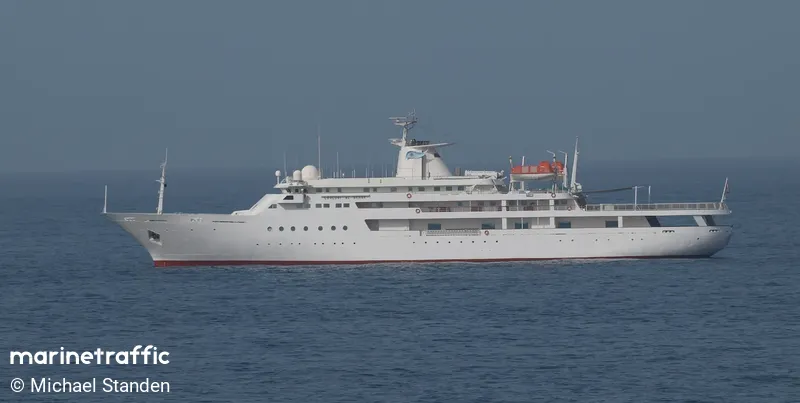
Loaloat Al Behar is owned by the Sultanate of Oman. She was built in 1982 by Picchiotti in Viareggio. Her design focuses on internal volume rather than performance.
Loaloat Al Behar serves the Sultanate of Oman. She is a sovereign asset. The state uses her for official duties. This role shapes every part of her design.
The hull dates back to 1982. Picchiotti built her in Viareggio. That yard was known for sturdy workboats. They turned that strength into a large motor yacht.
Her dimensions tell the story. She is 103.82 metres long. Her beam is very wide at 16.24 metres. This width creates a huge inside space.
Who owns Loaloat Al Behar?
The owner is the Sultanate of Oman. This is a sovereign state. It is ruled by Sultan Haitham bin Tariq. He leads the country in the Arabian Peninsula. The yacht reflects his state's resources.
There is no private billionaire behind her. This changes how she is used. She serves national interests directly. The state pays for all expenses. Taxpayers fund her maintenance.
Her flag is Oman. This confirms her status. She is a sovereign vessel. She enjoys certain legal protections. Other countries respect her immunity.
Why is her beam so wide?
How does her size affect her speed?
Most yachts are long and narrow. They cut through water efficiently. Loaloat Al Behar does not follow that rule. Her beam is nearly one sixth of her length.
This shape maximises internal volume. She holds 4633 gross tons of space. Gross tonnage measures the total inside area. It is a measure of room.
A wide hull provides stability. It reduces rolling in rough seas. This is important for a vessel carrying dignitaries. Passengers need comfort during travel.
Speed takes a back seat here. A wide hull creates more drag. She cannot move as fast as slender yachts. The designers accepted this trade-off.
The priority was accommodation. The interior needs to host meetings. It needs space for staff and guests. The wide beam makes that possible.
What does the Picchiotti build mean?
Where has Loaloat Al Behar been?
Her home port is Port Sultan Qaboos. The location fits her role. It is a major hub in the region. She operates from this base.
AIS data shows her movements clearly. She stays near the coast. Her last position was 16.94° N, 54.37° E. This is in the Arabian Gulf.
She rarely travels far from home. Long voyages are uncommon. The mission is local diplomacy. She visits nearby ports. She hosts foreign officials.
The AIS record shows recent activity. She stayed in the Arabian Gulf in December 2023. Her coordinates were 16.94° N, 54.37° E. This area is close to her home port. She has not travelled far since then.
Picchiotti had a specific reputation. They built robust vessels. Their early work focused on ferries and patrol boats. Those designs value durability.
That heritage shows in her steel. The structure is heavy and strong. It can handle heavy loads. This suits a government-owned ship.
The year 1982 sets the style. Technology was different then. Computers did not drive every line. Designers used physical models. They tested shapes in tanks.
The result is a classic form. She lacks modern sharp lines. Her sheerline is gentle. This gives her a traditional look.
Maintenance follows the old ways. Parts are standardised. Mechanics know how to fix them. This lowers long-term costs. Modern super-yachts often use custom parts.
The IMO number is 7908433. This tracks her history globally. She has been in service for decades. That longevity proves the build quality.
Where does she operate now?
Her home port is Port Sultan Qaboos. The location fits her role. It is a major hub in the region.
AIS data shows her movements. She stays near the coast. Her last position was 16.94° N, 54.37° E. This is in the Arabian Gulf.
She rarely travels far. Long voyages are uncommon. The mission is local diplomacy. She visits nearby ports. She hosts foreign officials.
The flag is Oman. This confirms her status. She is a sovereign vessel. She enjoys certain legal protections. Other countries respect her immunity.
Her MMSI is 461000425. This ID identifies her on radio. Pilots and other ships see it. It helps track her safely. It also marks her as official.
How does she serve the Sultanate?
The owner is the state itself. There is no private billionaire behind her. This changes how she is used. She serves national interests.
Diplomatic travel requires privacy. She offers secure spaces. Meetings can happen at sea. This avoids public scrutiny. It allows candid talks.
The wide deck is useful too. Helicopters can land there. This extends her range. It carries people quickly to shore. It speeds up missions.
Security is a key concern. The heavy build helps. It can withstand impacts. Crew quarters are separate. This keeps staff safe.
Costs are borne by taxpayers. Every expense is public. This demands efficiency. The simple design aids this. Fewer systems mean fewer failures.
She is a tool, not a toy. Luxury is secondary. Function comes first. The interior is practical. It supports work, not parties.
How does the 1982 build help today?
New yachts cost hundreds of millions. Building one from scratch is expensive. Refitting an existing hull saves money. It also saves time.
The steel is already proven. It has survived forty years. Engineers trust its strength. They do not need to guess. This reduces risk.
Modern tech can be added easily. Navigation systems get updates. Engines can be swapped out. The core structure remains unchanged. This blends old and new.
It respects maritime tradition. Older ships have character. They carry history. This matters to a nation. It shows continuity.
The design fits the climate well. Oman is hot and humid. The wide hull allows airflow. Decks stay cooler. Interiors are easier to cool.
Why keep a 1982 hull?
Modern tech can be added. Navigation systems get updates. Engines can be swapped. The core structure remains unchanged. This blends old and new.
The design fits the climate. Oman is hot and humid. The wide hull allows airflow. Decks stay cooler. Interiors are easier to cool.
Loaloat Al Behar is unique. No other yacht matches her mix. She is old but useful. She is wide but stable. She is Omani but global.
The AIS record shows her recent activity. She stayed in the Arabian Gulf in December 2023. Her coordinates were 16.94° N, 54.37° E. This area is close to her home port. She has not travelled far since then.
The Sultanate of Oman owns her. The current ruler is Sultan Haitham bin Tariq. He leads the country in the Arabian Peninsula. The yacht reflects his state's resources. It is a symbol of national presence.
Is Loaloat Al Behar still relevant?
The yacht reflects his state's resources. It is a symbol of national presence. The Sultanate maintains her carefully. She continues to serve effectively.
Reporting and data: CelebYachts, republished by On the record.
Sources
The numbers on this page point here. Each one links to the record it came from.
- 1