
 CelebYachts reportYards & Design
How Opera survived a €610m fire to become a state yacht
The hull of Sassi burned in 2018. Lürssen rebuilt it as Opera for the UAE Foreign Minister using salvaged steel and strict dock constraints.
By On the record · Aug 14, 2026 · Data from CelebYachts1
A vessel’s position is the boat’s, not the owner’s. Ownership is as reported, not certified.
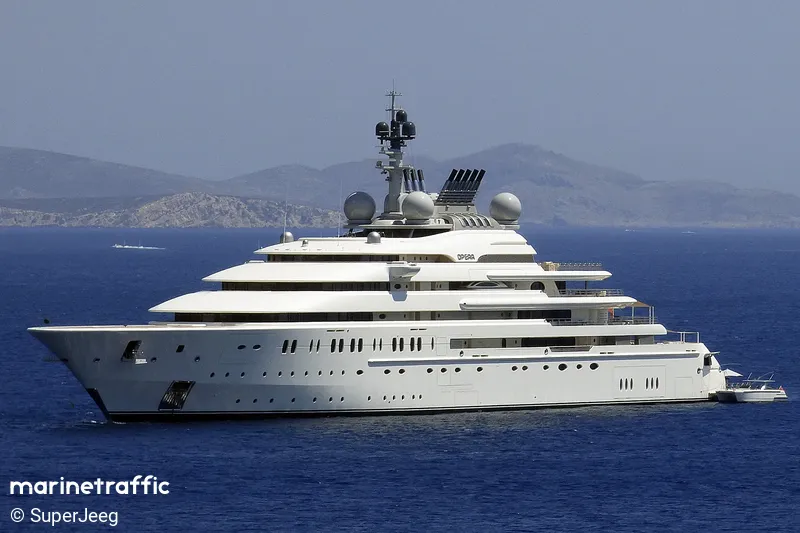
Opera is the rebuilt hull of Sassi, rescued from a €610 million inferno. It was moved across Germany to meet the requirements of Sheikh Abdullah bin Zayed Al Nahyan. The interior has not been published. What remains visible is a study in salvage logistics and dry-dock economics.
Lürssen built Opera from the wreckage of a yacht called Sassi. A fire destroyed most of that vessel in September 2018. The damage cost more than €610 million. Only the engine section block remained intact.
Lürssen used that surviving steel to build Opera. The yard completed the work in 2023. The result is a 146.35-metre superyacht registered in the Cayman Islands. Its owner is Sheikh Abdullah bin Zayed Al Nahyan. He serves as the Foreign Minister of the United Arab Emirates.
The interior design has never been published. No floor plans or material lists are available to the public. This opacity is common for vessels owned by heads of state. We can only report on the structure itself. The volume and the construction history tell the real story.
What happened to the original Sassi?
Sassi was under construction at the Fähr-Lobbendorf shipyard. This facility belongs to Lürssen. On 14 September 2018, a fire broke out in the floating dock. The blaze consumed the then-under-construction structure of the yacht.
Firefighters responded with unusual scale. Around 900 emergency workers were deployed to the scene. This was the largest deployment of the Bremen fire brigade in the post-war period. The blaze left almost nothing behind. The steel skeleton was reduced to slag in many areas.
Assessments placed the total loss at over €610 million. The insurance implications were massive. Yet the core structure near the machinery space survived. This specific section of the hull retained its integrity. It became the foundation for a new project.
Lürssen decided to salvage what they could. They did not scrap the entire vessel. Instead, they preserved the engine room block. This decision saved millions in raw materials. It also dictated the final shape of the new yacht.
Why move the hull to Berne?
The salvage operation required a different location. Lürssen moved the damaged hull away from Hamburg. In April 2021, the hull was transferred to Dock 10. This dock is located in Berne, Germany. Berne is one of Lürssen’s main shipbuilding sites.
The move was necessary for safety and capacity. Dock 10 had been covered with a roof recently. Peter Lürssen invested €13 million in this roofing project. The roof protects large vessels from weather delays. It allows work to continue year-round.
Steel pillars were mounted above the dock walls in October 2020. These supports hold up the heavy roof structure. The hall was extended to accommodate larger projects. Opera fit into this new infrastructure perfectly.
The transfer took place on 29 April 2021. Tugs pulled the hull from Hamburg to Berne. The journey marked a significant milestone. Construction could now proceed in a controlled environment. The yard avoided the risks of an open-air rebuild.
This relocation highlights the economics of dry docks. Large yards compete for limited space. Roofed docks are rare assets. They command premium rates and priority scheduling. Opera secured access to one of these critical resources.
Who owns Opera and why?
The buyer was Sheikh Abdullah bin Zayed Al Nahyan. He holds the position of Foreign Minister for the UAE. His ownership places Opera in the category of Middle East royalty and heads of state. These vessels often serve diplomatic or official functions.
State vessels need strong security. Privacy is also key for these ships. The layout would match those needs. Those details are kept secret.
Public records list the estimated value at $450 million. This figure covers the rebuild costs and new fittings. It does not include the original insurance payout for Sassi. The financial mechanics of such transfers are rarely disclosed.
The choice of Lürssen was strategic. The yard had the technical expertise to handle complex salvage work. They also had the political connections to manage sensitive state contracts. This combination made them the natural builder.
How does the burnt hull affect the design?
The geometry of Opera is constrained by the survivors. The beam measures 22.49 metres. This width was determined by the original Sassi structure. Any major widening would have required building from scratch. That option was too expensive.
Gross tonnage sits at 12,518. This volume shows the inside space. Architects used every cubic metre. They maximised the area within the fixed shape.
The engine room block set the power location. This placement affects how weight spreads. Engineers checked the strength of the old steel. They verified the structure was safe.
Salvage logistics dictate the timeline. Rebuilding takes longer than new construction. Each piece of steel had to be inspected. Damaged sections were cut out and replaced. Welding procedures followed strict protocols. Quality control was intense.
Inspectors treat this ship as new. Rules for safety still apply. The history of the steel does not change the law.
Where is Opera now?
AIS data tracks Opera's recent movements. She has been active in the East Mediterranean. Her last recorded position was near 31.95° N, 31.75° E. This area is close to the Egyptian coast.
She has held station in this region. This behaviour is typical for state yachts. They often wait for official visits or diplomatic missions. Movement is sporadic and purpose-driven. Leisure cruising is less likely.
Voyage logs show trips between ports in Greece. She travelled from Corfu to Ermioni. She also moved from Parga to Barcelona. These passages cover hundreds of nautical miles. Speeds averaged around 14 knots.
The Cayman Islands is a common registry. It offers tax benefits for large yachts. The home port is George Town. The records show the current owner.
Most large ships start with fresh steel. Opera began as wreckage. The shift from fire to flagship is rare. Salvage can yield luxury.
Reporting and data: CelebYachts, republished by On the record.
Sources
The numbers on this page point here. Each one links to the record it came from.
- 1