
 CelebYachts reportYards & Design
Why Al Lusail and Katara share a length
Two Qatari superyachts share a builder and a length. They do not share a design. The yard repeats a dimension because its sheds demand it.
By On the record · Sep 25, 2026 · Data from CelebYachts1
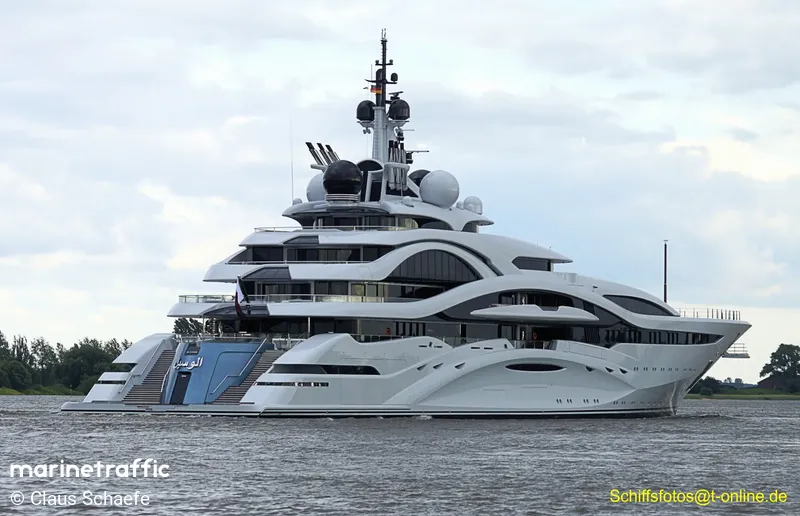
A vessel’s position is the boat’s, not the owner’s. Ownership is as reported, not certified.
Al Lusail and Katara measure 124 metres to the metre. Both belong to the Emir of Qatar. Lürssen built them in Bremen. Their shared length reflects dry-dock geometry, not architectural kinship.
AIS data shows both yachts in the Balearic Sea. Al Lusail rests at 41.11° N, 1.24° E. Katara lies just off at 41.38° N, 2.19° E. The distance between them is small. The water around them is calm.
Why do two Lürssen yachts share the same length?
The register lists both hulls at 124 metres long. This number looks like a coincidence. It is not. Lürssen builds large vessels in Bremen. The yard has specific dry docks there. These sheds have fixed lengths. A client who wants a 124-metre yacht fits perfectly into that space. The yard does not need to change its tools.
This constraint shapes the design process. Architects start with the shed size. They fill the available volume. They add decks and cabins within those limits. The result is a hull that matches the dock. Two clients can order from the same yard. They receive similar lengths. They do not receive the same boat.
The evidence supports this view. Al Lusail launched in 2017. Katara launched earlier, in 2010. Both came from the Bremen yard. Both serve the same owner. The Emir of Qatar uses them for travel. He flies his own aircraft. He visits distant ports. The length serves his needs. The width and depth differ.
The beam of each yacht proves they are distinct. Al Lusail measures 22.6 metres wide. Her gross tonnage sits at 8,514. Katara measures only 19.45 metres wide. Her gross tonnage is 7,922. The difference in width changes everything. It changes the interior layout. It changes the stability. It changes how she moves through water.
Gross tonnage measures inside volume. It counts every enclosed space. A wider hull holds more air. It allows broader rooms. It creates more deck area. Al Lusail is wider and heavier. She carries more equipment. She has more space for guests. Katara is narrower and lighter. She is sleeker. She cuts through waves differently.
The owners chose these differences. The Emir of Qatar ordered both boats. He wanted two distinct vessels. One is wider and more spacious. The other is narrower and faster. They share a builder. They share a length. They do not share a platform. They are separate entities.
Who designed Al Lusail and Katara?
Design teams work separately on each project. H2 Yacht Design handled the exterior of Al Lusail. March & White created the custom interior. The team focused on modern lines. They used steel for the hull. They used aluminium for the superstructure. Teak covers the decks. The result is a clean, sharp look.
Katara has a different design history. The sources do not name her exterior architect. The sources do not name her interior designer. We know she was built in 2010. We know she is still active. We know she shares the flag of Qatar. The lack of public design credits suggests a private commission. The Emir often keeps details secret.
The visual difference is clear. Al Lusail has a broad beam. She looks solid and stable. Katara has a narrow beam. She looks agile and quick. The proportions tell the story. Al Lusail is boxy. Katara is slender. The yard adapted its standard shape to fit each request. The length stayed the same. The rest changed.
Lürssen is known for this flexibility. The yard builds many large yachts. They repeat dimensions often. Clients like the predictability. A 124-metre yacht fits known supply chains. Crew quarters are standardised. Equipment sizes are common. The yard saves time. The owner saves money. The result is efficient production.
What amenities define these two yachts?
Al Lusail carries extensive gear. She has zero speed stabilizers. She has a gym and an elevator. She has a swimming pool and a movie theatre. She has a tender garage with three boats. She has a helicopter landing pad. She has underwater lights. She has a beauty salon. The list is long.
Katara also has luxury features. She has a beach club. She has a spa. She has multiple decks. She has a helipad. She has tenders for excursions. The exact list is less public. The focus is on comfort. The Emir travels with staff. He hosts guests. He needs space for events. Both yachts provide that space.
The refit of Al Lusail adds context. Lürssen worked on her in 2026. The job took seven months. The yard updated systems. The yard refreshed interiors. The yard checked the hull. The yard ensured safety. The yard maintained the value. The yard kept her competitive.
Katara has not had a major refit recently. She remains in service. She sails regularly. She appears in the Balearic Sea often. She stays near Al Lusail sometimes. They anchor together. They talk on radio. They share the same home port. Doha is their base. They return there after trips.
How did the Emir acquire these yachts?
The Emir of Qatar owns both. Sheikh Tamim bin Hamad Al Thani reigns since 2013. He inherited the throne. He inherited the wealth. He inherited the fleet. He chooses the vessels. He sets the specifications. He approves the designs. He pays the bills. The state funds the purchases.
Qatar has vast resources. The country exports gas. The country invests globally. The Qatar Investment Authority manages funds. The fund buys stakes in banks. The fund buys stakes in shops. The fund buys buildings. The fund buys yachts. The spending is open.
The purchase of Katara cost $300 million. The price is reported. The price is estimated. The value is high. The price of Al Lusail is unknown. The sources do not list it. The cost is likely similar. The yard charges premium rates. The materials cost money. The labour costs money. The profit margin matters.
The ownership structure is simple. The Emir holds the title. There are no shell companies. There are no trusts. The name is on the register. The flag is Qatari. The home port is Doha. The registration is clear. The records are public. The AIS data confirms the location.
What does the AIS data show now?
AIS broadcasts their positions daily. The signal is strong. The transponders are active. The data is reliable. The positions update every few minutes. The track shows movement. The track shows stops. The track shows routes. The track shows habits.
Both yachts are in Spain now. They are in the Balearic Sea. They are near Tarragona. The weather is good. The water is warm. The anchors hold well. The crew relaxes.
The proximity is notable. They sit close together. They move together sometimes. They stay apart sometimes. They follow the same schedule. They leave when the season ends. They return when the sun warms. They avoid the winter storms. They seek the summer heat.
The data reveals nothing about the future. The AIS does not predict routes. The AIS does not show destinations. The AIS only shows where they are. The AIS only shows where they were. The AIS only shows where they are going now. The next move is unknown.
The comparison ends here. Al Lusail and Katara are unique. They share a length. They share a builder. They share an owner. They share a flag. They share a sea. They are separate entities. They are two boats. They are one fleet.
Reporting and data: CelebYachts, republished by On the record.
Sources
The numbers on this page point here. Each one links to the record it came from.
- 1