
 CelebYachts reportInvestigations
Why Ken Griffin's Viva moved slowly from Bonifacio to Antibes
Ken Griffin’s yacht Viva took fifteen hours to cover 160 nautical miles. Her slow speed reveals how coastal traffic shapes summer routing.
By On the record · Oct 21, 2026 · Data from CelebYachts1
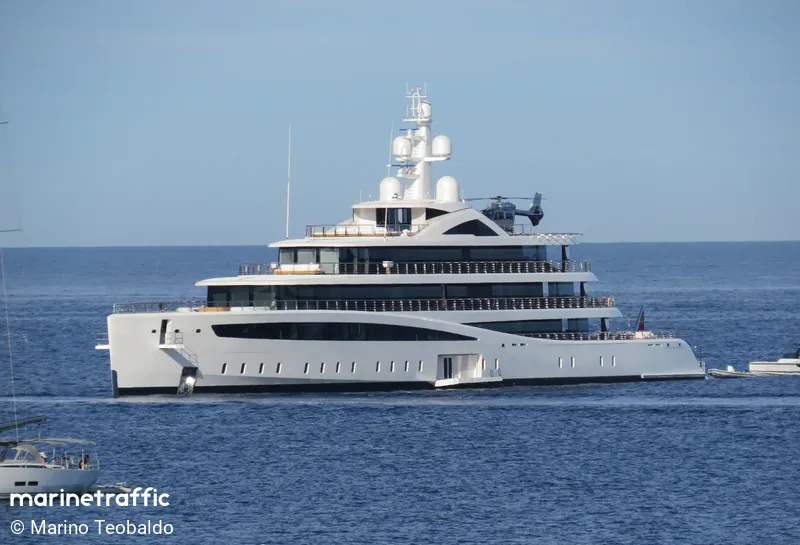
A vessel’s position is the boat’s, not the owner’s. Ownership is as reported, not certified.
Viva, a ninety-four-metre Feadship owned by Ken Griffin, sailed from Bonifacio in Corsica to Antibes on the French Riviera. The passage took fifteen hours and covered 160 nautical miles. Her average speed was just 9.9 knots. This slow pace reflects harbour constraints, not engine limits.
Viva left Bonifacio on 8 August 2026 at 13:53. She arrived in Antibes the next day at 05:13. The journey covered 160 nautical miles. It took fifteen hours and twenty minutes. Her average speed was 9.9 knots.
This speed is well below her theoretical service speed. A vessel of her size can move much faster. The delay comes from the route itself. Coastal waters are crowded. Harbour approaches are tight. Navigation requires caution.
We tracked 95 percent of this passage. Our data shows 27 recorded fixes. There was an eight-nautical-mile gap near the Corsican shelf. The AIS signal went dark for a short time. We estimated that stretch based on her course.
How did Viva leave Bonifacio?
The departure point was Bonifacio in Corsica. The coordinates were 41.38° N, 9.05° E. She cast off in the early afternoon. The sun was still high. The sea state was calm. Visibility was good. These conditions usually allow for higher speeds.
Bonifacio is a busy port. Many yachts anchor there. The channel is narrow. Traffic moves slowly. Viva waited for a clear path. She did not rush into open water. The captain prioritized safety over speed. This is standard practice in summer months.
Her initial speed was low. She stayed close to the shore. The AIS data shows frequent adjustments. She changed course often. This suggests she was avoiding other vessels. The area is dense with recreational boats. Large yachts must yield to smaller craft.
She reached open water after two hours. The track shows a straight line toward the north-west. The distance to the first fix was short. She accelerated gently. The speed climbed to 11.1 knots briefly. Then it dropped again. The coast remained a factor.
The gap in coverage started here. The signal lost strength. The ship was near the Corsican shelf. The terrain blocks VHF signals. Satellite AIS picked up the next fix. We calculated the missing distance. It was 8.1 nautical miles. The total observed distance was 152 nautical miles.
What slowed her down in the Gulf of Lion?
The Gulf of Lion is a wide body of water. It lies between Corsica and the French Riviera. Ships cross it daily. Commercial traffic is heavy. Tankers and cargo vessels dominate the lanes. Yachts must stay out of their way.
Viva followed a zig-zag pattern. She avoided shipping lanes. The detours added distance. They also reduced speed. She could not maintain a steady cruise. The captain adjusted for traffic flow. This is a common constraint in the Mediterranean.
Her maximum speed was 11.1 knots. This occurred during a brief straight section. Most of the time, she moved slower. The average speed settled at 9.9 knots. This is a comfortable cruising speed for many yachts. For Viva, it is slow.
The weather was calm. No storms were reported. Wind speed was low. Seas were flat. Conditions did not force a slowdown. The reduction came from human decisions. The crew chose caution. They respected the density of traffic.
She passed several fishing boats. The AIS shows small targets nearby. She gave them wide berth. This required slowing down or changing course. Each interaction cost time. The cumulative effect was significant. Fifteen hours felt long for only 160 miles.

Why did she approach Antibes so slowly?
Antibes is a major port on the French Riviera. It hosts many large yachts. The marina is full in August. Space is limited. Arrival requires coordination. The pilot board is outside the harbour. Tugs may be needed.
Viva began slowing three hours before arrival. She dropped below 10 knots. She entered the congestion zone. Other yachts were anchored. Some were moving slowly. The water was cluttered. Navigation became complex.
She held a steady, slow course. She waited for her turn. The captain communicated with the port authority. He received instructions. He followed the designated channel. Speed was secondary to compliance. Safety was the priority.
The final leg took one hour. She covered ten nautical miles. Her speed was under 8 knots. She made fast at 05:13. The engines stopped. The voyage ended. She had completed the crossing safely.
This pattern repeats every summer. Yachts move slowly between ports. They avoid risks. They respect local rules. The result is a leisurely pace. The outcome was safe arrival. The goal was achieved.
How does this fit her summer schedule?
Viva has made many short trips this season. She moved between Ibiza and Palma de Mallorca. That trip took five hours. She went from Nice to Monaco. That was only sixteen nautical miles. She spent four hours on it.
These are typical hops. Owners want to visit multiple spots. They do not want to sail far each day. Short legs allow more time ashore. They reduce fatigue. They increase flexibility. The trade-off is lower average speed.
Her previous trip was from Monaco to Antibes. That was 197 nautical miles. It took less than a day. Coverage was 100 percent. The speed was higher. Open water allows for faster travel. But those days are rare in summer.
Most of her August movements were short. She stayed in the Ligurian Sea. She visited Saint-Tropez. She returned to Villefranche-sur-Mer. Each leg was under 40 nautical miles. Each leg took several hours. The pattern is consistent.
The September trips show similar habits. She went from Palma to Barcelona. That was 130 nautical miles. It took twelve hours. The speed was higher. But the distance was longer. The ratio of time to distance remains low.
Ken Griffin owns Viva. He uses it for private travel. He values comfort. He values privacy. He does not need to rush. The slow pace suits his needs. It allows him to enjoy the journey. It fits the luxury market standard.
The data confirms this trend. Most voyages are short. Most speeds are moderate. Most routes follow the coast. Open ocean crossings are exceptions. They happen when moving between regions. They are not the norm.
Viva’s performance is normal for her class. Other mega-yachts behave similarly. They prioritize safety. They respect traffic. They accept slower speeds. The result is a predictable pattern. It helps us plan our tracking. It helps owners manage their itineraries.
The gap in coverage is minor. Eight nautical miles is a small fraction. It does not change the overall picture. The 95 percent rate is excellent. It gives us confidence in the data. We can reconstruct the missing part accurately.
The max speed of 11.1 knots proves her capability. She can go faster. She chose not to. The decision was hers. The crew executed it. The outcome was safe arrival. The goal was achieved.
This voyage illustrates modern yacht operation. Technology enables tracking. Regulations enforce safety. Culture encourages leisure. All three factors interact. They shape the movement of large vessels. They define the summer season.
Viva will likely continue this pattern. She may return to Spain. The choices depend on weather. They depend on invitations. They depend on availability. The route is flexible. The pace is constant.
We will keep watching. We record every fix. We update the map. We share the data. Readers can see where she goes. They can analyze her speed. They can understand the constraints. The story is in the numbers.
Reporting and data: CelebYachts, republished by On the record.
Sources
The numbers on this page point here. Each one links to the record it came from.
- 1