
 CelebYachts reportThe Fleet
The Marshall Islands registry
Nine percent of the world's largest yachts fly the Marshall Islands flag. The choice reflects a preference for tonnage tax, English common law, and a…
By On the record · Jul 19, 2026 · Data from CelebYachts1
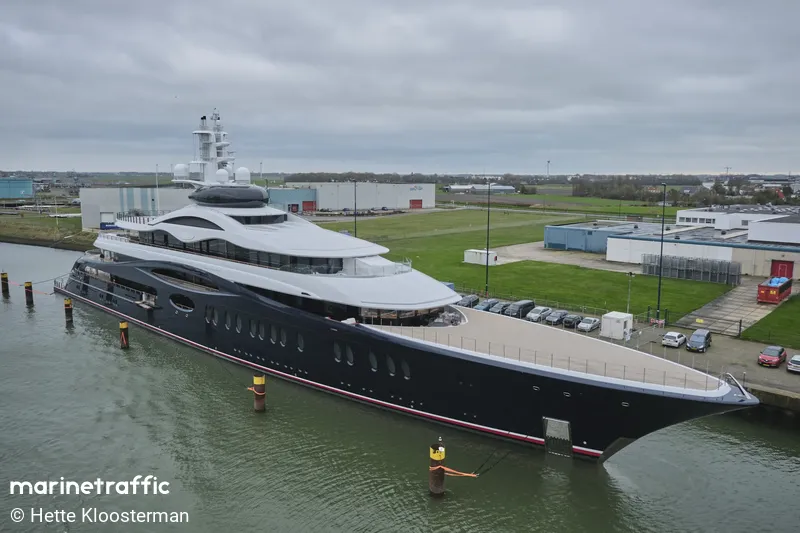
A vessel’s position is the boat’s, not the owner’s. Ownership is as reported, not certified.
The Marshall Islands flag state holds nineteen hulls in the global register. Its appeal to superyacht owners lies in a specific combination of fiscal rules, crewing flexibility, and a classification system modelled on United States standards.
The Marshall Islands registry holds nineteen hulls, representing nine percent of the total tracked fleet. The group is led by Prince Abdulaziz at 147 m, followed by KISMET at 122 m and LAUNCHPAD at 119 m. The remaining vessels range from Luna at 114 m down to Q at 68 m. This concentration of large displacement yachts is not accidental. It results from a registry design that prioritises administrative stability and fiscal predictability over the traditional maritime heritage of European flags. Owners choose the Marshall Islands flag for three concrete reasons: a tonnage tax system that replaces corporate income tax, a crewing regime that permits international labour pools without compromising safety certification, and a survey process aligned with United States classification standards. These features address the primary operational concerns of superyacht management companies, which value consistent regulatory frameworks above all else.
The tonnage tax mechanism
The tonnage tax mechanism is the central attraction. Instead of levying a percentage of annual profits, the registry calculates fees based on the vessel's gross tonnage. This structure insulates owners from revenue volatility and removes the incentive to shift accounting structures between jurisdictions. The Marshall Islands government publishes its fee schedule openly, allowing management firms to project annual running costs with precision. The currency used for all transactions is the United States dollar, which eliminates exchange rate risk for owners operating in global markets. The accumulation of these advantages lowers registration and maintenance costs, which in turn reduces overall transportation costs. In commercial shipping, similar savings have historically saved companies millions annually; in the superyacht sector, the effect is measured in reduced overhead rather than freight margins. The Marshall Islands became a United Nations member state in 1991, and its integration into international financial systems has allowed it to maintain a stable administrative environment that appeals to high-value assets.
Crewing and labour economics
Crewing rules offer another layer of flexibility. The registry does not mandate that officers or ratings hold citizenship from the flag state. Management companies can recruit from any international pool, typically drawing from Eastern Europe, Southeast Asia, and South America where wage scales differ significantly from Western European baselines. This practice lowers fixed operating costs, which accumulate substantially over a vessel's twenty-year service life. Traditional maritime nations frequently require ships to be partially crewed by citizens, whereas open registries bypass these restrictions. The modern practice of registering ships in foreign countries to gain economic advantage originated in the United States during World War I, when legislation such as the Seamen's Act of 1915 regulated mariners' working hours, payment, and safety standards. Those laws put domestically flagged vessels at an economic disadvantage, prompting owners to seek alternative jurisdictions. The Marshall Islands registry continues this tradition of circumventing restrictive national labour laws while maintaining compliance with international safety conventions.
Survey regimes and port state control
Safety and pollution prevention certifications follow the International Maritime Organization conventions, but the survey regime itself mirrors United States standards. Class societies accredited by the Marshall Islands administration apply inspection protocols familiar to American shipyards and technical superintendents. This alignment means that a vessel built in a German or Italian yard undergoes the same documentation process regardless of whether it flies the Marshall Islands flag or a traditional European register. port state control inspections under the Paris Memorandum of Understanding treat Marshall Islands-flagged vessels identically to those registered elsewhere. Member states of the Paris MOU conducted 17,858 inspections in 2015, recording deficiencies that resulted in 595 detained vessels and eleven banned. Member states of the Tokyo Memorandum of Understanding conducted 17,269 ship inspections that same year, recording 83,606 deficiencies which resulted in 1,153 detentions. The principle that there be a genuine link between a ship's owners and its flag state dates back to 1958, when Article 5(1) of the Geneva Convention on the High Seas required that the state effectively exercise its jurisdiction. The 1982 United Nations Convention on the Law of the sea repeated this requirement, yet the practical reality of open registries remains that administrative oversight focuses on certification validity rather than ownership nationality.
Legal frameworks and ownership structures
The legal framework governing disputes is based on English common law. Contracts for construction, management, and charter are drafted in accordance with established maritime precedents that are widely understood by superyacht lawyers and insurers. This reduces transaction costs during sales and refits, where title transfers and lien releases require clear statutory interpretation. The registry maintains a commercial court in Majuro that handles admiralty cases, though most disputes are resolved through arbitration in London or New York. Privacy of beneficial ownership is a documented feature of open registries, including the Marshall Islands. The administration does not publish the names of individual owners in its public database, listing only the managing company and the vessel's official number. This separation between the legal owner and the ultimate beneficiary is permitted under international shipping law and provides a standard level of confidentiality for high-net-worth individuals. It does not exempt vessels from financial reporting requirements imposed by the owner's home jurisdiction, nor does it prevent port state authorities from requesting identification during inspections.
In 1948, Edward Stettinius founded the Liberian open registry, creating a corporate structure that decoupled ownership from flagging. Between 1915 and 1922, United States laws strengthened merchant marine safeguards, prompting shipowners to seek alternative jurisdictions. The Belen Quezada became the first foreign ship to re-register in Panama in August 1919. These early experiments established the template for modern open registries, which rely on administrative speed and fiscal neutrality rather than national allegiance. The Marshall Islands registry operates within this established paradigm, applying the same principles to luxury displacement vessels. The growth of the Marshall Islands register correlates with the expansion of American-owned superyachts. Many vessels in the current cohort were delivered from United States yards or underwent major refits in American shipyards, where familiarity with the flag's administrative processes made registration straightforward. The presence of large explorer yachts such as OCEANXPLORER and ETERNAL TSINGSHAN further illustrates the flag's suitability for vessels requiring extended autonomy; the regulatory environment supports long-range operations without imposing additional domestic restrictions. The nineteen hulls currently flying the ensign represent a deliberate choice by owners who prioritise operational efficiency over national prestige. The registry functions as a utility, providing a standardized platform that allows technical teams to focus on maintenance and voyage planning rather than bureaucratic adaptation.
Reporting and data: CelebYachts, republished by On the record.
Sources
The numbers on this page point here. Each one links to the record it came from.
- 1CelebYachtsCelebYachts: The Marshall Islands registry