
 CelebYachts reportInvestigations
The mechanics of the Cook Islands registry
An open registry built on speed and low overhead struggles to defend its hulls when they enter jurisdictions that enforce international sanctions.
By On the record · Oct 2, 2026 · Data from CelebYachts1
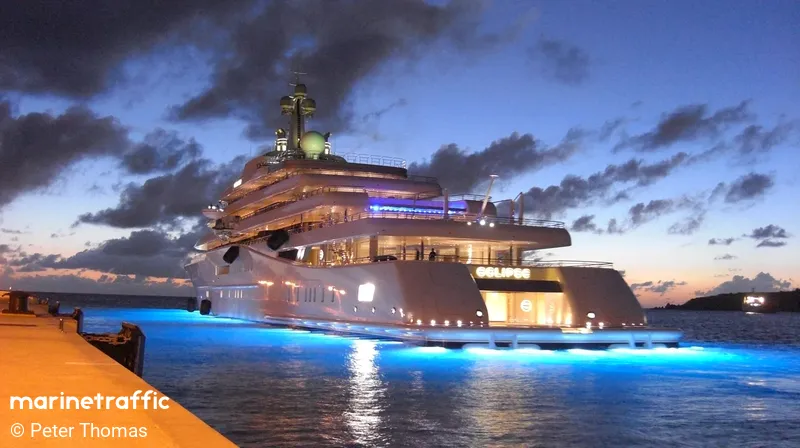
A vessel’s position is the boat’s, not the owner’s. Ownership is as reported, not certified.
The Cook Islands flag holds eight superyachts and a share of four percent of the global register. Its structure prioritises rapid transfer and minimal crewing requirements over domestic oversight, creating a system that functions efficiently until a vessel enters a port state inspection regime.
The Cook Islands operates an open ship registry that currently holds eight hulls in the superyacht cohort. The register includes Eclipse at 162.5 metres, Solaris at 139.0 metres, and Tango at 77.7 metres, alongside five smaller vessels down to Charley at 46.0 metres. The registry accounts for four percent of the tracked fleet. Owners choose this flag because the administrative process requires little documentation and clears quickly. The system does not demand a residency requirement for the owner or the operator. It allows online registration with minimal questioning. This reduces the time between sale and sailing.
The administrative product
The registry was placed on the Paris Memorandum of Understanding on port state control Black List. This designation means that European port authorities treat Cook Islands flagged vessels as higher risk during routine inspections. The listing exists because the registry is classified as a flag of convenience. Shipowners select open registries to bypass stricter safety standards, avoid higher taxes, and hire crews from lower-wage countries. The accumulated advantages lower registration and maintenance costs. A ship registered in such a jurisdiction pays less in dues and faces fewer domestic labour laws.
International law requires every merchant ship to be registered in a country. The country in which a ship is registered is its flag state, and the flag state gives the ship the right to fly its civil ensign. A ship operates under the laws of its flag state, and these laws are used if the ship is involved in an admiralty case. The Cook Islands fulfils this obligation by issuing certificates. It does not maintain a domestic fleet of inspectors. It accepts reports from recognised organisations. When a dispute arises under admiralty law, the courts look to the laws of the Cook Islands. The registry provides a clear jurisdiction for contracts and insurance. It does not provide a shield against port state detention.
The crewing rules on the register allow owners to employ mariners from any nationality without meeting local quotas. Traditional closed registries often require a percentage of the crew to be citizens of the flag state. The Cook Islands rule imposes no such restriction. This gives operators complete freedom to recruit from the lowest wage pool available. It also removes the administrative burden of securing work permits for foreign seafarers. The trade-off is that the flag state exercises little control over working conditions on board. International conventions still apply, but enforcement depends entirely on the port state where the ship calls. If a complaint arises in a jurisdiction with active labour inspections, the lack of a domestic crewing framework leaves the owner exposed.
The register has been used to move assets across sanction lines. In February 2021, two ships were removed from the shipping register for concealing their movements by turning their automatic identification system off. The registry denied involvement in smuggling operations but accepted the deregistration. In April 2022, the motoryacht Tango, owned by sanctioned Russian oligarch Viktor Vekselberg, was seized in Spain. Maritime Cook Islands stated that no other sanctioned vessels were on its registry at the time. Two months later, in July 2022, two yachts owned by sanctioned oligarch Roman Abramovich were reflagged as Cook Islands vessels. This change allowed them to escape arrest in Antigua and Barbuda. The registry processed the transfers. It did not block the movement.
The port-state trap
In 2024, Maritime Cook Islands deflagged twelve tankers for violating sanctions against Russia and Iran. The agency denied that it had become a haven for Russia's dark fleet of sanctions-evaders. The deflagging action shows that the registry enforces compliance when pressured by international bodies, but the enforcement comes after the violation occurs. The initial registration process remains permissive. An owner can place a vessel on the register, sail it into international waters, and only face scrutiny when a port state decides to inspect. The registry's design prioritises the initial transaction over ongoing monitoring. This is a conscious choice. It keeps the barrier to entry low. It shifts the burden of verification to the port states that conduct the inspections.
The registry's history as an open registry dates back to the broader shift toward flags of convenience in the twentieth century. Shipowners began registering vessels in foreign countries to avoid rising labour costs and stricter regulations. The practice accelerated after World War II and expanded through the creation of second registers by traditional maritime nations. The Cook Islands position fits this pattern. It offers an alternative to national registries that demand local ownership and crewing. The register does not compete on safety standards or technical expertise. It competes on ease of access. A buyer can sign the papers and receive the certificate within days. The trade-off is permanent visibility in port state databases. Every call to a European port triggers a risk assessment. The registry knows this. It builds the service around it.
The remaining hulls on the register follow the same pattern. White Rabbit measures 84.0 metres. Garçon runs 67.0 metres. Sputnik sits at 60.0 metres. Charley completes the group at 46.0 metres. None of these vessels alter the registry's fundamental structure. They all benefit from the same low-overhead administration. They all face the same heightened scrutiny in Paris MOU jurisdictions. The register does not differentiate between a 162-metre superyacht and a 46-metre tender. The fee schedule and the transfer process remain uniform. This consistency is what attracts owners who plan to move frequently. They do not want to negotiate different terms for different sizes. They want a single administrative channel that clears quickly.
The Cook Islands flag remains a functional tool for a subset of the market. It delivers what it promises: a fast transfer, minimal crewing restrictions, and a clear legal jurisdiction. It does not promise immunity from inspection. That immunity never existed. The Paris MOU blacklist ensures that every voyage ends in a potential audit. Owners who choose the register accept that reality. They weigh the administrative savings against the risk of detention. For those who value speed above all else, the calculation favours the Cook Islands. The register does not need to convince them. It simply processes the paperwork and waits for the next application.
Reporting and data: CelebYachts, republished by On the record.
Sources
The numbers on this page point here. Each one links to the record it came from.
- 1