
 CelebYachts reportThe Fleet
The mechanics of the Jamaica flag
A four-ship register demonstrates how open jurisdictions trade maritime heritage for administrative speed and ownership opacity, appealing to owners who…
By On the record · Sep 9, 2026 · Data from CelebYachts1
A vessel’s position is the boat’s, not the owner’s. Ownership is as reported, not certified.
The Jamaica registry holds four hulls ranging from thirty-eight metres to one hundred and ten metres. It operates as a standard open register, offering online processing and flexible crewing rules that allow owners to bypass the stricter labour and environmental regulations of their home countries.
The Jamaica flag functions as an administrative product rather than a statement of national affiliation. International law requires every merchant ship to be registered in a registry created by a country, and the vessel operates under the laws of that flag state. When owners select a jurisdiction like Jamaica, they are typically utilising an open registry that does not impose nationality or residency requirements on the ship’s owners. This structure allows the vessel to fly the civil ensign of the flag state while remaining legally detached from the domestic regulations of the owner’s primary residence. The practice dates back to the 1920s in the United States, when shipowners sought to avoid rising labour costs and increased regulations by registering vessels in Panama. The modern equivalent operates on the same principle: a jurisdiction that processes paperwork quickly and imposes minimal friction on corporate structuring.
The evolution of the open register
The architecture of flags like Jamaica rests on a century of regulatory arbitrage. Between 1915 and 1922, the United States passed laws strengthening its Merchant Marine and enforcing baseline safety standards for mariners, including requirements for lifeboats, qualified able seamen, and a common language between officers and crew. The Seamen's Act of 1915 regulated working hours, payment, and shipboard food, while also abolishing the imprisonment of sailors for desertion. These measures placed U.S.-flagged vessels at an economic disadvantage against countries lacking such safeguards, prompting a shift toward open registries that permitted cheaper foreign labour and reduced operational overhead. The Liberian open registry, founded in 1948, formalised this model by creating a corporate structure separate from direct government control, setting a precedent that smaller jurisdictions later adopted. Traditional maritime nations responded by establishing second registers, such as the Isle of Man in 1984 and the German International Register in the same year, but the fundamental incentive remained unchanged: owners seek to minimise taxation and maximise crewing flexibility. The accumulated advantages are significant; in 1999, twenty-eight of the American company SeaLand's fleet of sixty-three ships were foreign-flagged, saving the company up to US$3.5 million per ship every year.
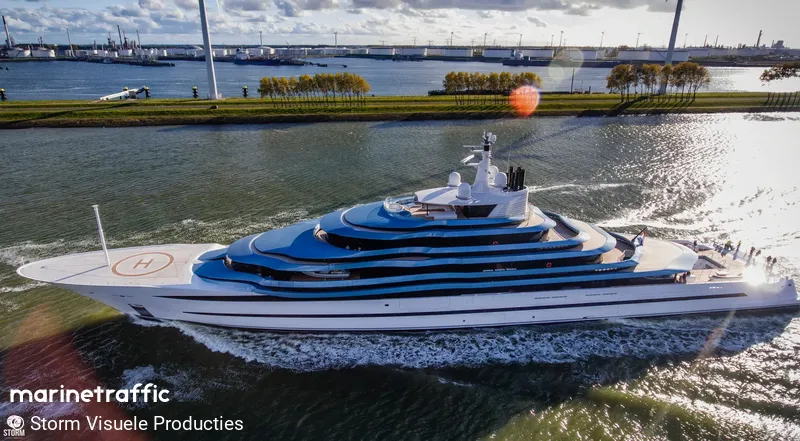
The Jamaican register currently holds four tracked hulls, representing approximately two percent of the total fleet monitored by this publication [register]. The cohort spans a wide operational range, anchored by KAOS at 110.1 m, followed by SPECTRE at 69.3 m [register]. The remaining two entries, RULE NO. 1 at 39.6 m and SEAQUEST at 38.0 m, sit well below the superyacht threshold [register]. This distribution suggests that the registry serves a niche market: owners who require the legal flexibility of an open flag but do not necessarily demand the global recognition associated with legacy European or American flags. The presence of KAOS indicates that the flag can accommodate substantial commercial-grade vessels alongside smaller craft, proving that the administrative model scales across different tonnage brackets.
The development of open registries for ships has given the shipping industry the flexibility to recruit its manpower from alternate sources, with the result that developing and newly industrialized countries now provide the majority of seafarers for the entire global fleet.
A primary driver for selecting an open register is the ability to hire crews from lower-wage countries without being bound by national labour agreements. The Secretary-General of the International Maritime Organization noted in 2010 that open registries allow the industry to recruit manpower from alternate sources, enabling developing and newly industrialized countries to provide the majority of seafarers for the global fleet. Shipowners who want to avoid national labour and environmental regulations frequently choose these jurisdictions, as they can employ international crews without meeting the citizenship quotas imposed by closed registries. This flexibility lowers registration and maintenance costs, which in turn reduces overall transportation expenses and allows owners to allocate capital elsewhere in the vessel’s operation.
Anonymity and the gap in enforcement
One criticism levelled at open registries is that they enable owners to maintain legal anonymity regarding beneficial ownership. While international conventions theoretically demand a genuine link between a ship’s owners and its flag state, requiring effective jurisdiction in administrative and technical matters, this principle has proven difficult to enforce globally. The United Nations Convention on Conditions for Registration of Ships attempted to solidify this concept in 1986, but it has not entered into force, leaving the practical reality of open registries intact. Registries may be governmental or private agencies, and the lack of a verified economic stake in the ownership of ships means that the corporate chain leading to the beneficial owner often terminates at a shell company or trust.
The absence of a functional genuine link does not leave vessels entirely unregulated. port state control regimes, established following high-profile maritime disasters, ensure that ships remain subject to inspection by the states they visit. The environmental disaster caused by the 1978 sinking of the MV Amoco Cadiz spurred the creation of the Paris Memorandum of Understanding on port state control, binding fourteen European nations to rigorous inspection protocols. Under these agreements, ships in international trade become subject to inspection covering living conditions, Safety of Life at Sea, and pollution prevention. In 2015 alone, member states of the Paris MOU conducted 17,858 inspections, recording deficiencies that resulted in 595 detained vessels and eleven banned from the region.
The Tokyo Memorandum of Understanding recorded similar enforcement activity, conducting 17,269 ship inspections in 2015 and resulting in 1,153 detentions. An owner who chooses a flag for its privacy still faces physical scrutiny when docking in European or North American ports, where inspectors verify compliance with international conventions regardless of the flag flown. The decision to fly the Jamaican ensign is therefore a calculated trade-off. Owners gain the ability to sidestep domestic labour protections and streamline corporate documentation, while accepting the risk of port state detention if technical standards slip. The register remains small, which limits its influence on global maritime policy but preserves its utility as a discreet holding vehicle for vessels that value operational agility over historical pedigree.
Reporting and data: CelebYachts, republished by On the record.
Sources
The numbers on this page point here. Each one links to the record it came from.
- 1