
 CelebYachts reportInvestigations
The mechanics of the Malaysian flag
The registry trades genuine jurisdictional oversight for administrative speed and crewing flexibility, explaining its hold on eight large-displacement hulls.
By On the record · Oct 2, 2026 · Data from CelebYachts1
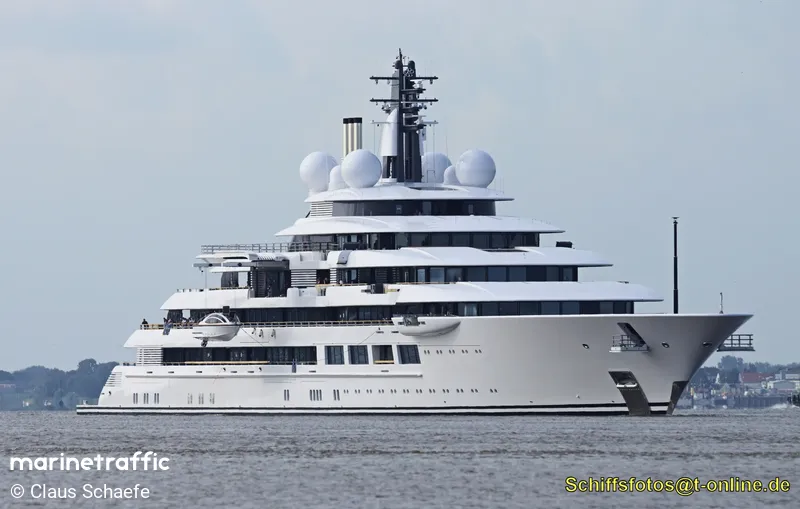
A vessel’s position is the boat’s, not the owner’s. Ownership is as reported, not certified.
Open registries remove nationality requirements and delegate technical surveys to private societies. The Malaysian flag operates on this model, offering tonnage-based levies and international manning to eight superyachts that prioritise operational agility over domestic industrial integration.
The registry functions as an administrative product. It does not represent a geographical claim. When a yacht flies the Malaysian flag, the decision rests on a calculation of regulatory arbitrage rather than national allegiance. The register offers a pathway for owners to bypass the labour protections, safety inspections, and tax liabilities of their home jurisdictions while retaining access to global waters. It operates as a second-tier open registry, trading genuine jurisdictional oversight for administrative speed and crewing flexibility. This trade-off explains why the flag holds eight large-displacement hulls that prioritise operational agility over domestic industrial integration.
The legal architecture
International law mandates that every merchant vessel register in a single country, which then acts as its flag state and exercises regulatory control. The principle of a genuine link between owner and state was codified in Article 91 of the United Nations Convention on the Law of the Sea, yet the subsequent 1986 treaty attempting to enforce economic or mariner ties has never entered into force. Consequently, registries operate on paper. An open registry removes nationality or residency requirements for registration, allowing vessels to be transferred quickly and operated under a lighter regulatory burden. Owners select these jurisdictions to reduce operating costs, sidestep stricter domestic regulations, and employ crews from lower-wage markets without being bound by national maritime unions or wage floors.
The financial structure centres on tonnage fees and tax exemptions. Traditional closed registries typically demand that vessels be owned and constructed by national interests, whereas open flags charge annual levies based on certified gross register tonnage rather than income. This model decouples the cost of registration from the vessel's commercial profitability. For superyachts that rarely generate traditional freight revenue, the arrangement converts fixed compliance overhead into a predictable line item. The registration process itself is frequently conducted online with minimal documentation, accelerating the transfer of ownership and reducing the administrative friction that delays deployment in conventional maritime jurisdictions.
Crewing and cost
Crewing represents the most tangible operational advantage. National registries usually mandate a percentage of citizen seafarers and adhere to collective bargaining agreements established by domestic trade unions. Open registries permit owners to recruit from a global labour pool, selecting officers and ratings based on availability and cost rather than nationality quotas. This flexibility lowers overall transportation costs and allows vessels to maintain complex technical systems with specialised personnel who may not reside in the flag state. The practice draws criticism from developed-nation maritime unions, which argue that it depresses wages and working conditions. Proponents counter that it reflects globalised supply chains and provides essential foreign currency to developing nations that supply the majority of the world's seafarers.
The regulatory relief comes with a structural vulnerability. Because the flag state exercises limited day-to-day oversight, enforcement shifts to port state control. The Paris Memorandum of Understanding on port state control subjects visiting vessels to rigorous inspections covering Safety of Life at Sea, pollution prevention, and living conditions. Inspectors verify that equipment matches certification, that crew hours comply with rest regulations, and that ballast water management meets environmental standards. In 2015 alone, member states conducted nearly eighteen thousand inspections, recording tens of thousands of deficiencies and detaining over a thousand vessels. A deficiency record triggers increased inspection frequency, effectively creating a compliance scorecard that travels with the hull regardless of her flag.
The survey regime
The eight hulls currently flying the Malaysian register illustrate how the system accommodates high-value leisure craft. The group spans from 65.5 metres to 140.01 metres, sharing a common requirement for rapid re-registration and multinational crews. Scheherazade at 140.01 metres and Motor Yacht A at 118.0 metres anchor the upper end of the spectrum. Their size demands specialised technical staff who move across jurisdictions, and their ownership structures benefit from the streamlined corporate entry processes that open registries provide. The flag does not offer superior classification standards; Lloyd's Register, DNV, and the American Bureau of Shipping still dictate the engineering surveys. The Malaysian registry simply handles the statutory certificates and ensures they are recognised internationally.
Privacy of the beneficial owner remains a standard feature of open registries, though the exact depth of disclosure varies by jurisdiction. Corporate structures holding the title to these hulls are recorded in official company registers, which track legal entities, status for dissolution, and juridical personality. Ultimate beneficial owner registers exist in many jurisdictions to counteract money laundering and terrorist financing, but the public visibility of the natural person behind a yacht's title depends entirely on the specific transparency laws of the flag state. Where such disclosures are restricted, the registry provides a layer of administrative separation between the vessel's operations and the individual's public profile. This separation is routine in offshore finance and does not imply illicit activity; it reflects a deliberate choice to compartmentalise asset management.
The port state leash
The survey regime attached to the flag relies on recognised classification societies. These private organisations conduct the initial design approval, construction supervision, and periodic dry-docking inspections. The flag state delegates the technical verification to these bodies, retaining authority only to issue the statutory documents required by SOLAS and MARPOL conventions. This delegation means that the physical condition of the hull, the stability calculations, and the machinery certifications are verified by independent engineers rather than government inspectors. The flag state's role is administrative: maintaining the ship's registry, collecting tonnage dues, and ensuring that valid certificates are displayed onboard during port calls.
The system functions because it solves a specific logistical problem. Large yachts operate globally, moving between temperate and tropical waters, requiring maintenance in multiple shipyards, and employing crews that span several continents. A closed registry would tie the vessel to a single national labour market and impose domestic tax obligations that complicate chartering and resale. An open registry untethers these variables. The vessel pays a flat fee to fly the ensign, hires personnel based on project needs, and undergoes classification surveys that satisfy international port authorities. The trade-off is straightforward. The owner gains operational freedom and reduced administrative overhead, while the flag state collects steady tonnage revenue without assuming the cost of direct maritime safety enforcement.
The register holds 4 per cent of the tracked fleet. That share is small compared to the dominant open flags, but it is stable. The eight hulls do not cluster in a single geographic region; they disperse according to seasonal cruising patterns and yard availability. Their presence on the register reflects a consistent preference for a flag that processes transfers quickly, accepts international manning, and defers technical verification to established classification societies. The choice is neither novel nor controversial within the industry. It is a standard application of maritime law that separates the legal identity of a vessel from the national identity of its owner.
Reporting and data: CelebYachts, republished by On the record.
Sources
The numbers on this page point here. Each one links to the record it came from.
- 1