
 CelebYachts reportThe Fleet
The mechanics of the Panamanian flag
Owners chose Panama for its administrative speed and tax structure, not for secrecy or safety. The registry remained a standard tool for global yacht…
By On the record · Sep 11, 2026 · Data from CelebYachts1
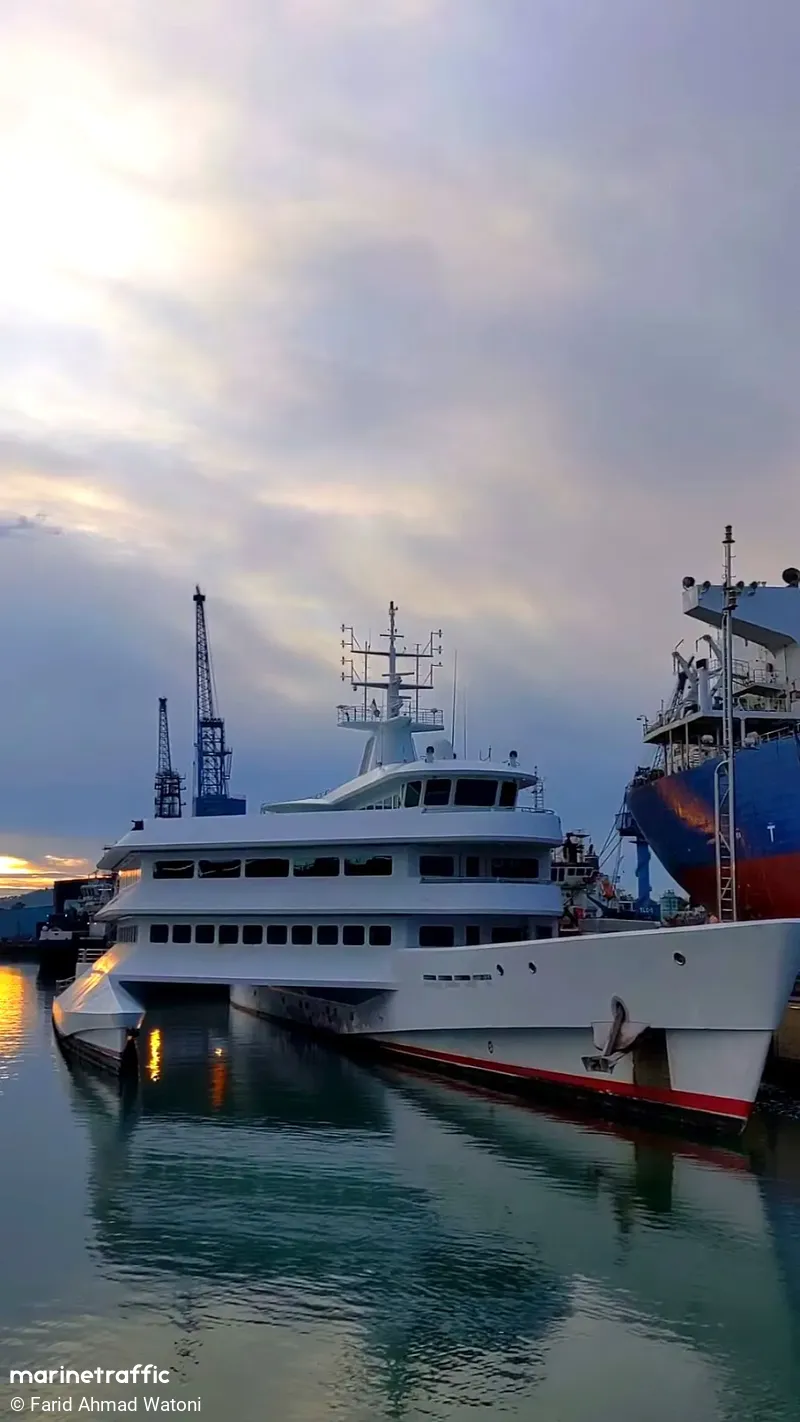
A vessel’s position is the boat’s, not the owner’s. Ownership is as reported, not certified.
Three hulls in our register flew the Panamanian ensign. Their presence reflected a straightforward calculation: Panama offered online transfers, income-tax exemptions, and flexible crewing rules while remaining fully exposed to port-state inspections. The flag was chosen for paperwork, not privacy.
The Panamanian registry operated as an administrative product rather than a geographic jurisdiction. Shipowners registered vessels there to access three specific advantages: income-tax exemptions, the ability to employ crews from lower-wage countries, and online registration that cleared quickly. The practice began in August 1919 when the Belen Quezada became the first foreign ship re-registered in Panama, initially to run alcohol between Canada and the United States during Prohibition. The modern commercial logic solidified after the Seamen’s Act of 1915 imposed strict working hours, payment standards, and safety inspections on American-flagged ships. U.S. owners transferred vessels to Panama to sidestep those costs and pay sailors on the Japanese wage scale, a practice that continued long after Prohibition ended.
The administrative product
The registry did not require a nationality or residency requirement for ownership. An owner filed the paperwork through a licensed agent, paid the annual tonnage-based fees, and received the certificate of registry. The exact tax rate applied to superyacht profits had never been published by the Panamanian government, and the internal survey protocols for pleasure craft remained undisclosed. What was documented was the baseline framework: the flag state exercised regulatory control, certified equipment, and issued safety documents. The vessel operated under Panamanian law in admiralty cases. Port states retained the authority to inspect the hull regardless of the flag.
The inspection reality
The assumption that a Panamanian flag granted operational immunity contradicted the enforcement architecture built around open registries. International maritime law required every merchant ship to be registered in a country, and that country had to exercise effective jurisdiction. In practice, this meant the flag state inspected regularly, but visiting ports also conducted their own checks. The Paris Memorandum of Understanding on port state control, signed by fourteen European nations in 1982 after the sinking of the MV Amoco Cadiz, established a system where ships entering member ports faced detailed inspections covering safety, pollution prevention, and living conditions. Deficiencies found during these inspections led to detentions. The Tokyo Memorandum of Understanding applied the same principle across the Asia-Pacific region.
A Panamanian-registered yacht was subject to these inspections just like any other vessel. The flag state provided the initial certification, but port state control officers verified compliance on the ground. The registry did not shield the hull from detention if the survey revealed structural failures, missing life-saving appliances, or substandard crew quarters. The legal anonymity that attracted some owners related strictly to beneficial ownership records, not to the physical condition of the boat or the wages paid to the crew. Trade union organisations in developed countries criticised open registries precisely because they enabled legally anonymous ownership and allowed operators to bypass national labour protections. The mechanism proved transparent: the paperwork changed, the inspections remained.
The crewing and tax mechanism
Open registries lowered registration and maintenance costs, which reduced overall transportation costs. Publications from as early as 1962 argued that shipowners from developed countries used the practice to be competitive in a global environment. The accumulated advantages were measurable. In 1999, twenty-eight of the American company SeaLand's sixty-three ships were foreign-flagged, saving the company up to US$3,500,000 per ship every year. The International Maritime Organization recognised this dynamic in 2010 when the Secretary-General noted that open registries gave the shipping industry the flexibility to recruit manpower from alternate sources, resulting in developing and newly industrialised countries providing the majority of seafarers for the entire global fleet.
This flexibility directly impacted superyacht operations. A vessel flagged in Panama could hire engineers, deckhands, and hospitality staff from multiple continents without triggering higher wage floors tied to the owner's home country. The payroll structure adapted to the cruising itinerary rather than the owner's tax residence. The flag state issued the necessary safety and pollution prevention documents, but the actual employment contracts followed the cheapest available compliant labour pool. The registry did not mandate a specific number of officers or dictate language proficiency beyond what international conventions required. It simply removed the barrier that forced an owner to hire locally.
The current register
Our tracking data showed three hulls flying the Panamanian flag: ASEAN LADY at 88.15 metres, TITAN at 78.43 metres, and LA DATCHA at 76.98 metres. These vessels represented one per cent of the total tracked fleet. They operated under the same administrative framework that governed thousands of merchant ships globally. The decision to flag in Panama typically followed a standard calculation. An owner who planned to cruise internationally, charter the vessel commercially, or maintain a multinational crew found the Panamanian system reduced friction. The online transfer process cleared faster than closed registries that demanded local directors or domestic crew quotas. The tax exemption removed a recurring cost from the operating budget. The crewing rules permitted hiring from developing nations without triggering higher wage floors tied to the owner's home country.
The hulls did not share a common builder or a single design philosophy. ASEAN LADY measured 88.15 metres, placing her above the 75-metre threshold that often triggered stricter classification surveys. TITAN ran 78.43 metres, and LA DATCHA sat at 76.98 metres. All three fell within the range where commercial operation became financially viable, making the payroll flexibility and tax structure particularly relevant. The registry did not dictate interior layout, propulsion type, or navigation software. It simply provided the legal wrapper that allowed the asset to move freely across jurisdictions without renegotiating crew contracts or paying duplicate taxes.
A Panamanian flag solved specific administrative problems and created others. It did not guarantee speed through customs, nor did it protect against sanctions enforced by the United States Office of Foreign Assets Control or the European Union. port state control officers could still detain a vessel for serious deficiencies, and the Paris MOU recorded 595 detentions in 2015 alone across its member states. The registry could not force a classification society to accept outdated materials or waive SOLAS requirements. It was a legal designation that shifted liability to a specific jurisdiction and simplified cross-border movement.
Owners selected Panama when the priority was operational continuity rather than national prestige. The flag appeared on hulls that planned to spend most of their time outside the waters of their owner's home country, or on vessels intended for commercial charter where crew turnover was high. The choice was neither secretive nor exceptional. It was a standard component of yacht logistics, filed alongside insurance policies and maintenance schedules. The three hulls in our register carried the Panamanian ensign because the paperwork aligned with their intended routes and crewing strategies. The registry remained a functional tool, not a shield.
Reporting and data: CelebYachts, republished by On the record.
Sources
The numbers on this page point here. Each one links to the record it came from.
- 1